




Miniature Painted Box
A miniature painted box brings small-scale craftsmanship to a desk or dressing table, offering detailed hand painting in a tiny, portable format.
Miniature Painted Box
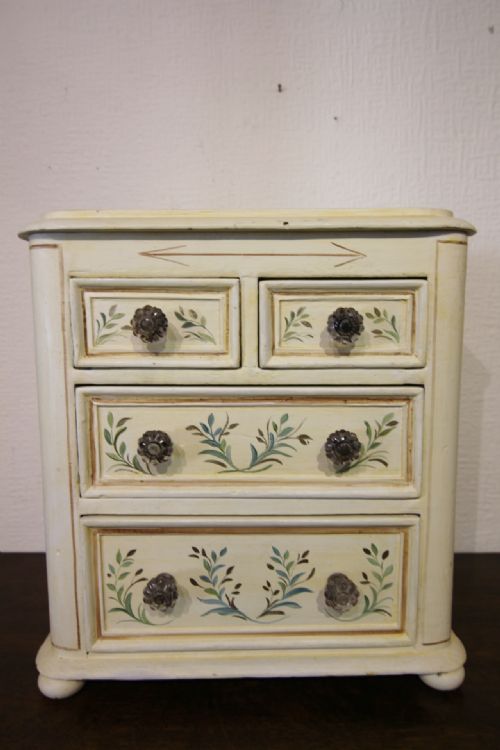
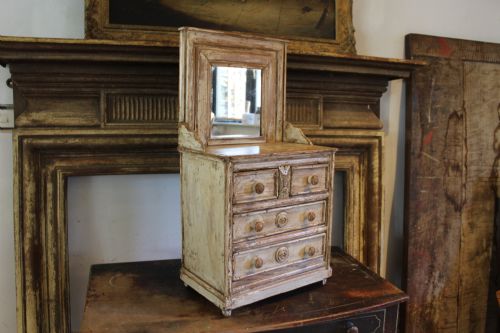
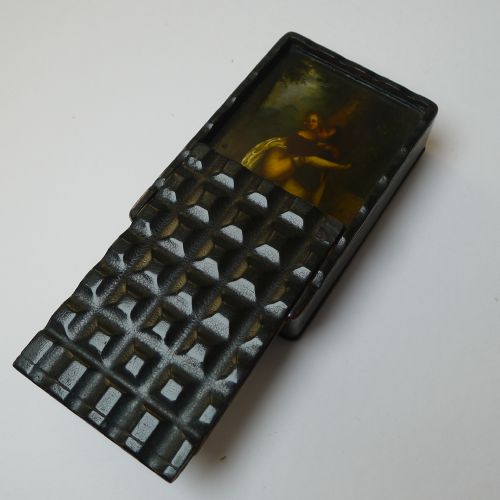
A miniature painted box encompasses diverse forms from the eighteenth and nineteenth centuries, including apprentice chests of drawers, snuff boxes, and small table cabinets. These pieces were made to serve domestic and personal functions on a small scale, ranging from desk accessories to pocket containers.
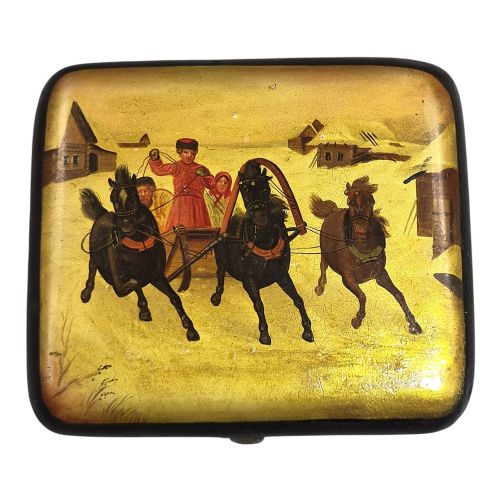
The pieces appearing on this page span several regional traditions, including English enamel and penwork, Russian lacquered papier-mâché, and Viennese enamel work. Buyers will encounter both utilitarian trinket containers and decorative objects showing detailed hand-painted surfaces.
Forms vary from lidded snuff boxes and cigarette cases to miniature chests with secret drawers and small spice cupboards. Each object reflects the decorative tastes and cabinet-making standards of its period, from Georgian styles through the nineteenth century and into the early twentieth century.
Materials and construction
Papier-mâché and wood form the primary structural bases for many examples, often combined with layers of lacquer or paint to create smooth surfaces for decoration. Workshops utilised materials like brass, copper, and gold leaf to accent hinges, mounts, and intricate painted panels.
Enamelwork and fine brushwork required skilled artisans to apply pigments directly onto metal or prepared grounds before sealing the finish. The construction of miniature drawers and secret compartments demonstrated the same joinery techniques used in full-sized furniture.
Miniature Painted Box Retail Price Guide 2026
Typical asking prices for miniature painted box among the pieces listed under this phrase on Sellingantiques today, from the lower quarter to the upper quarter. They describe what is for sale here now, not the wider market.
Listings feature items from the eighteenth and nineteenth centuries, incorporating materials such as enamel, lacquer, papier-mâché, and wood.
Assessing quality and execution
Quality in a miniature painted box is found in the precision of the hand-painted detail and the stability of the foundational material, whether wood, lacquer, or papier-mâché. Finer examples display deliberate brushwork and well-fitted components like drawers, lids, and hinges that operate smoothly.
The preservation of the painted surface significantly influences the overall character of the piece, with superior items retaining crisp lines and original colour depth. Construction details, such as concealed drawers or hand-cut joinery, distinguish standard domestic items from more ambitious workshop pieces.
Vishnyakov Workshop·Stobwasser
The Miniature Painted Box Glossary
- Apprentice piece
- A small-scale item created by a trainee to demonstrate mastery of cabinet-making skills. These often replicate full-sized furniture forms like chests of drawers.
- Enamel
- A glassy substance fused to a metal base through firing, providing a durable and colourful surface for detailed miniature paintings.
- Lacquer
- A durable resin finish applied in multiple layers and polished to a hard sheen, typical of Russian and Asian decorative boxes.
- Papier-mâché
- A composite material made from paper pulp or reinforced sheets mixed with binding agents, pressed into moulds, and dried to form a sturdy base for painting.
- Penwork
- A decorative technique using fine ink drawings on wood, often finished with varnish to create detailed patterns resembling inlay.
Miniature Painted Box: Frequently Asked Questions
What were miniature painted boxes used for?
These small containers served personal and domestic purposes, holding items like snuff, cosmetics, small trinkets, writing implements, or cigarettes.
Their portable size made them suitable for pockets, writing desks, or dressing tables during the eighteenth and nineteenth centuries.
How do I care for papier-mâché and lacquer boxes?
Keep these pieces away from direct sunlight, high humidity, and extreme temperature fluctuations to protect the delicate painted surfaces and lacquered finishes.
Dust them gently with a dry, soft cloth and avoid using liquid cleaners or abrasive materials.
How can I tell the period of a miniature box?
Examine the materials, construction methods, and painting styles, comparing them against known regional traditions from periods like the Georgian era or the nineteenth century.
Hand-cut joinery, specific types of hinges, and signature decorative motifs often provide clues to an item's age.
Are apprentice chests actually furniture?
Apprentice chests are miniature functional replicas of larger furniture forms, constructed with working drawers and sometimes secret compartments.
They were built by woodworkers to prove their technical proficiency rather than for dollhouses or children.