



Miniature Dresser Chest
A miniature dresser chest distills the presence of full-scale cabinetmaking into a compact form that sits comfortably on a desk or table.
Miniature Dresser Chest
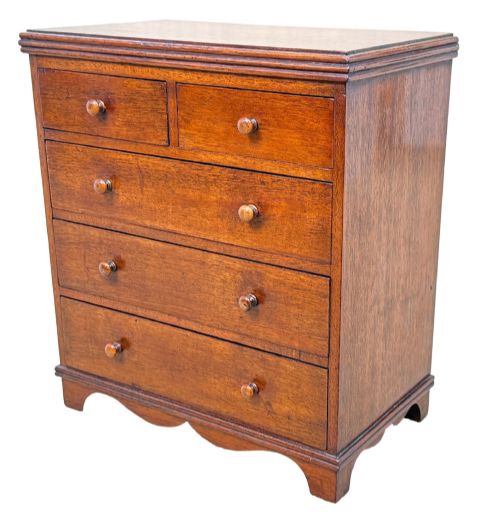
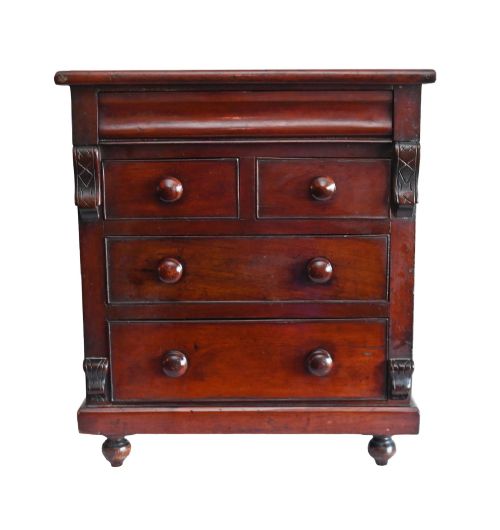
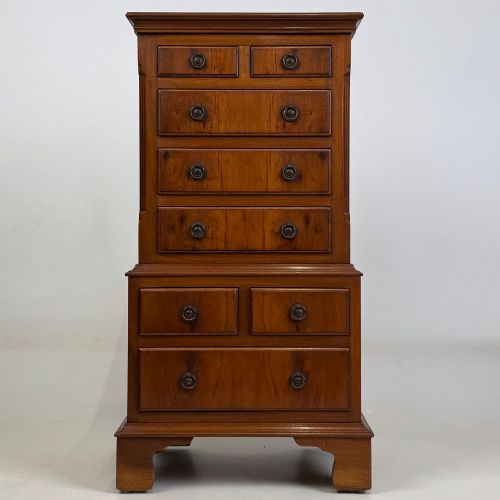
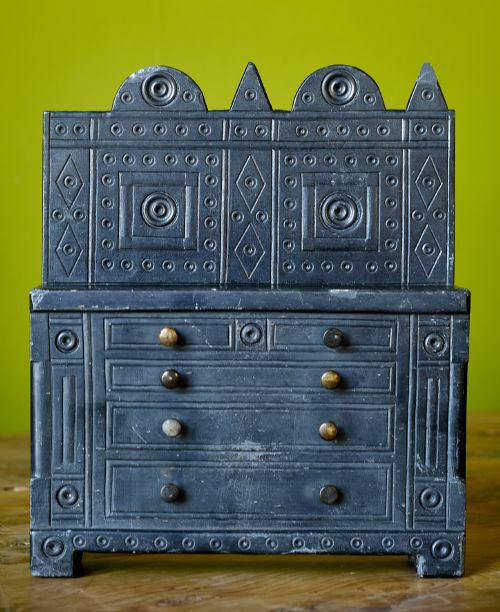
The pieces appearing on this page span several distinct eras, including Georgian, Regency, Victorian, and Edwardian periods. Alongside traditional cabinet work, the selection includes folk art models fashioned from materials like carved slate.
Makers utilised these small formats to demonstrate skill, produce samples for clients, or create specialised trinket and jewellery boxes. Such objects served functional storage roles in miniature while mirroring the prevailing styles of domestic joinery.
How they were made
Traditional examples rely on primary furniture woods such as mahogany, oak, yew, and pine, often finished with polished timber surfaces or simple paint. Artisans shaped these domestic timbers using standard joinery techniques suited to fine miniature scale.
Alternative materials appear in specific regional and folk traditions, notably carved slate utilised for solid, sculptural models of chests of drawers. Metal components like brass hardware and silver additions provide functional closures and decorative contrast.
Miniature Dresser Chest Retail Price Guide 2026
Typical asking prices for miniature dresser chest among the pieces listed under this phrase on Sellingantiques today, from the lower quarter to the upper quarter. They describe what is for sale here now, not the wider market.
Listings feature pieces spanning the Georgian, Regency, Victorian, and Edwardian periods, constructed from mahogany, oak, yew, pine, brass, and slate.
What varies in quality
Quality rests upon the fidelity of the proportions and the precision of the miniature joinery. Finer pieces display careful timber selection, such as burr oak or figured mahogany, matched with clean drawer construction.
Regional folk art pieces derive their character from direct, expressive hand-carving in unusual materials like slate rather than formal cabinetmaker symmetry. The presence of integrated functional details, such as secret drawers, elevates the sophistication of the piece.
Reprodux
The Miniature Dresser Chest Glossary
- Apprentice chest
- A small chest of drawers traditionally made by a trainee cabinetmaker to demonstrate proficiency to a guild or master. These items reproduce full-size construction methods on a reduced scale.
- Bow fronted
- A furniture front that curves outward in a convex arc across the width of the drawers. This curved profile requires specialised joinery to shape the timber and fit the drawers.
- Secret drawer
- A concealed compartment built into the carcass of a chest, often accessed by removing a concealing panel or standard drawer. It provided a hidden space for valuables.
Miniature Dresser Chest: Frequently Asked Questions
What are miniature dresser chests?
Miniature dresser chests are small-scale representations of domestic furniture created across the eighteenth, nineteenth, and early twentieth centuries. They replicate the forms of larger chests of drawers, dressers, and cupboards.
Cabinetmakers and folk artists produced these pieces for various purposes, ranging from formal trade samples to decorative storage boxes for jewellery and trinkets.
How were these small chests used?
Historically, these items functioned as desk accessories, tabletop storage for small valuables, or detailed demonstrations of a craftsman's skill. Some served as specialised jewellery boxes or trinket containers.
Today, they are collected and displayed on surfaces where full-sized furniture would not fit, adding traditional character to smaller spaces.
How do I identify the period?
Period attribution relies on the timber used, the style of the feet and handles, and the overall structural characteristics. Georgian and Regency pieces show classical proportions and mahogany or burr oak construction, while Victorian examples often include folk art models in slate or varied pine.
Reference marks, construction joints, and secondary woods inside the drawers also help confirm the age of the piece.
Are these pieces fragile?
Most pieces are constructed from solid hardwoods or slate, making them durable for display purposes. However, miniature joinery and small applied mouldings require careful handling during relocation.
Keeping them away from direct heat sources and extreme humidity preserves the timber and prevents the movement of small glued joints.