

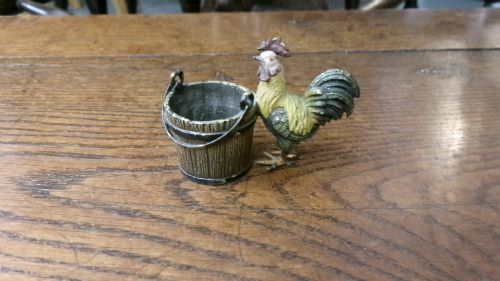
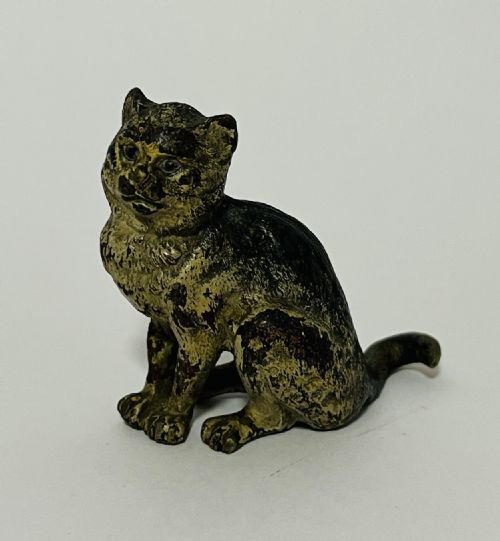


Miniature Bronze Figurine
A miniature bronze figurine brings centuries of small-scale metalwork into your hand, offering detailed animal and human forms crafted for cabinets and desks.
Miniature Bronze Figurine
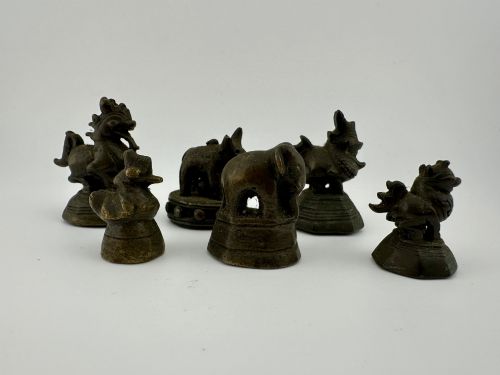
A miniature bronze figurine covers small-scale sculptures, animal figures, and statuettes produced across various centuries and regions. When you search for miniature bronze figurine, you encounter pieces ranging from tiny Victorian and Edwardian desk accessories to Southeast Asian trade weights and continental European animal studies.
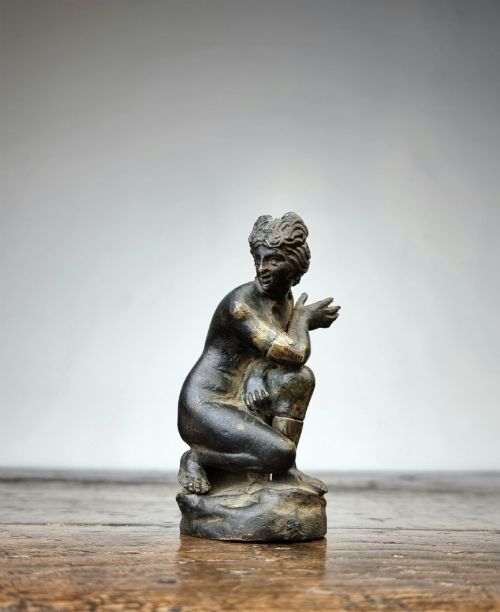
The selections span distinct historical movements, featuring Austrian cold painted animal subjects, Art Deco human figures, and earlier cast metal studies. Vienna bronze workshops and Austrian naturalist makers dominate the animal subjects, while French and Southeast Asian sources provide human statuettes and trade weights.
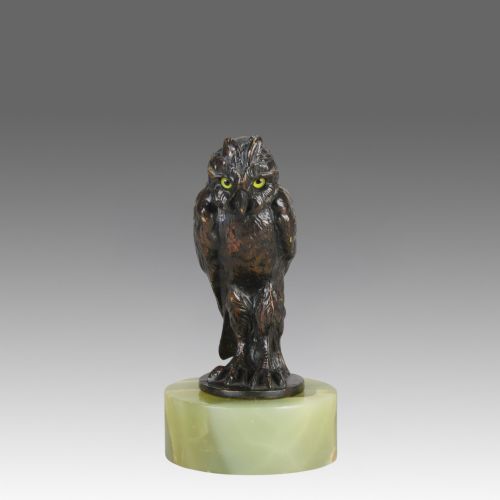
Forms vary from practical desk accessories and opium weights to purely decorative birds, dogs, frogs, and human figures. Many pieces incorporate bases of marble or onyx, while others rely entirely on the cast metal alone.
Materials and construction
Makers shaped these small sculptures primarily through metal casting using bronze and brass. Artisans often applied cold paint or enamel directly onto the metal surface to add colour and realistic detail after the casting process.
Several figures combine bronze with stone bases such as marble and onyx, while others utilise simple metal patination. Surface treatments range from dark patinas to brightly coloured enamel finishes applied to the cast forms.
Miniature Bronze Figurine Retail Price Guide 2026
Typical asking prices for miniature bronze figurine among the pieces listed under this phrase on Sellingantiques today, from the lower quarter to the upper quarter. They describe what is for sale here now, not the wider market.
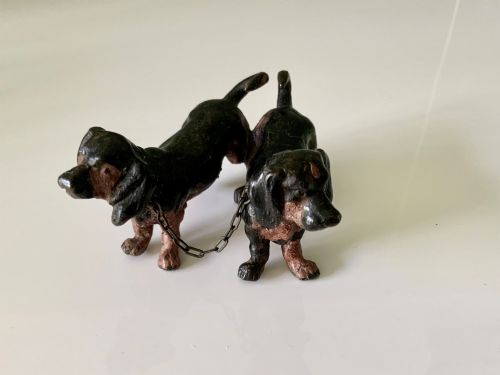
A nineteenth-century dog takes an unhurried pause to cock its leg, immortalised permanently in cold painted bronze.
Factors of quality
Quality depends heavily on the precision of the casting and the preservation of the surface finish. Finer pieces display crisp details in the metalwork and careful application of cold paint or enamel.
The artistic execution of the subject sets finer works apart, particularly in animal studies and human figures where posture and proportion dictate realism. Maker marks and stamps further distinguish works from standard production pieces.
Franz Bergman·H. Chiparus·Edith Parsons·Stephan Buchinger
The Miniature Bronze Figurine Glossary
- Cold painted
- Paint applied to a bronze sculpture after casting without being fired in a kiln. This technique is especially common on Austrian animal figures.
- Patination
- The process of treating the metal surface to alter its colour and texture. A natural or artificial patina protects the bronze and defines its appearance.
- Geschützt
- A German term meaning protected or registered, often stamped on Austrian bronzes to indicate a registered design. It appears on various continental animal figurines.
- Opium weight
- Small cast metal weights used in Southeast Asia for trade, frequently cast in the form of animals. These items served a practical function before becoming collectable sculptures.
- Vienna bronze
- Small, highly detailed bronze sculptures produced in Vienna during the late nineteenth and early twentieth centuries. These pieces frequently depict animals and human figures with cold painted surfaces.
Miniature Bronze Figurine: Frequently Asked Questions
What is a miniature bronze figurine?
A miniature bronze figurine is a small-scale cast metal sculpture depicting animals, humans, or decorative objects. These pieces range from early animal studies to Austrian cold painted subjects and Art Deco figures.
They were designed for desk display, cabinets, or practical use as weights, combining metal casting with surface patination or paint.
What does cold painted mean?
Cold painted means the paint or enamel was applied to the finished metal sculpture without subsequent firing. This method allowed makers to achieve vibrant multicoloured finishes on small bronzes.
Over time, handling can cause this paint to show wear, making well-preserved examples particularly notable.
Where were Vienna bronzes made?
Vienna bronzes were produced by specialised workshops in Vienna, Austria, during the late nineteenth and early twentieth centuries. These foundries became famous for small, characterful animal figures and humorous subjects.
Many of these pieces feature stamps or registration marks like geschützt on the metal.