



Miniature Art Jewellery
Miniature art jewellery brings together diminutive painted portraits and precious metal work, offering portable portraiture and delicate craftsmanship for the discerning collector.
Miniature Art Jewellery
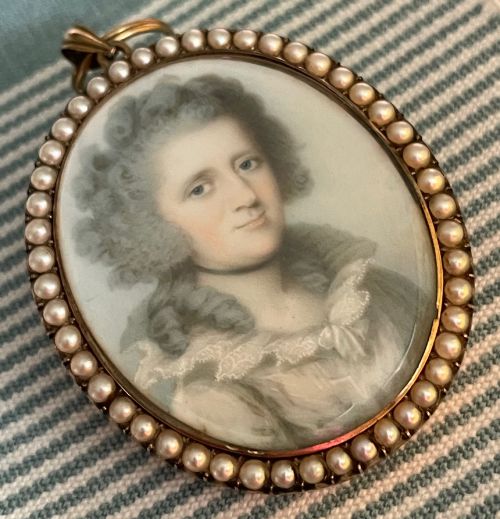
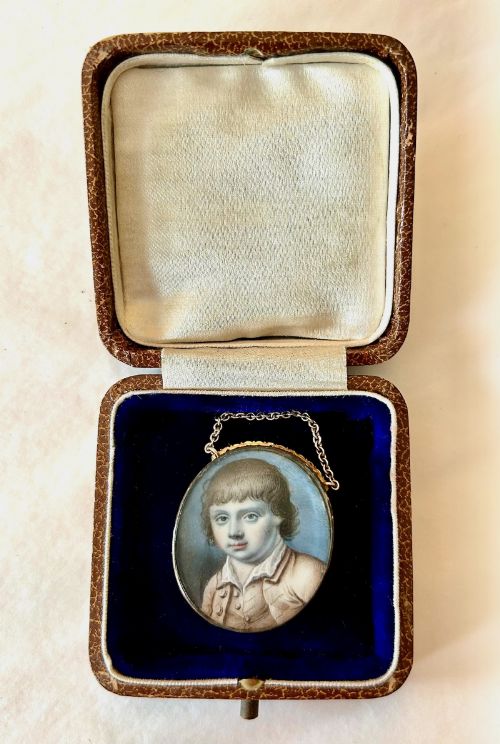
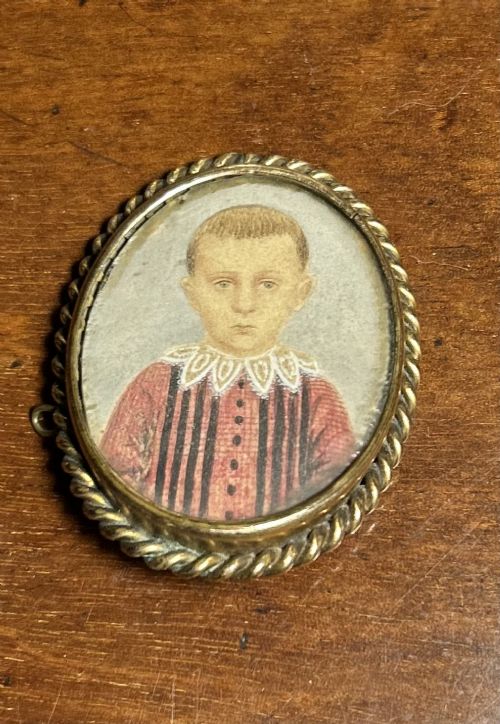
Miniature art jewellery encompasses small-scale wearable pieces and portable objects that feature detailed hand-painted portraits or enamel work. These items span periods from the mid-eighteenth century through to the early twentieth century, capturing likenesses of named individuals, romantic subjects, and historical figures.
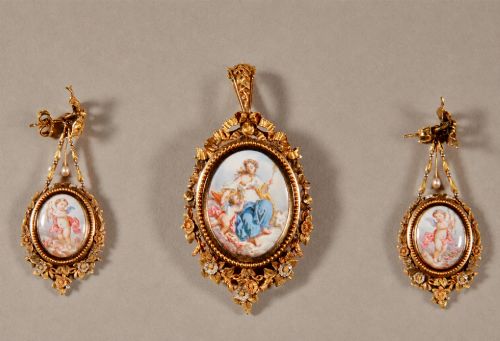
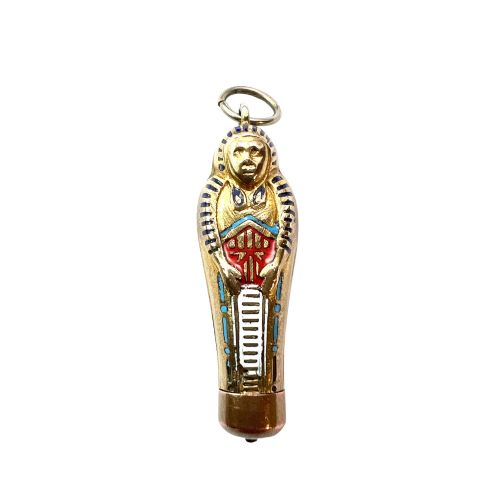
The selections available here frequently take the form of brooches, pendants, and lockets set in gold, silver gilt, and brass. Alongside wearable portrait miniatures, the category extends to novelty pendants such as enamelled Egyptian sarcophagus propelling pencils.
Stylistically, these pieces reflect shifts across Georgian, Victorian, and Edwardian eras, incorporating influences like Egyptian Revivalism and Rococo Revival. Buyers will encounter both refined aristocratic commissions and folk art interpretations executed in varied materials.
Materials and Methods
The creation of these pieces relies heavily on watercolour painting executed on delicate surfaces such as porcelain, ivory, or paper, often protected beneath glass. Artisans mounted these tiny works of art within frames of gold, silver, and gilt metal.
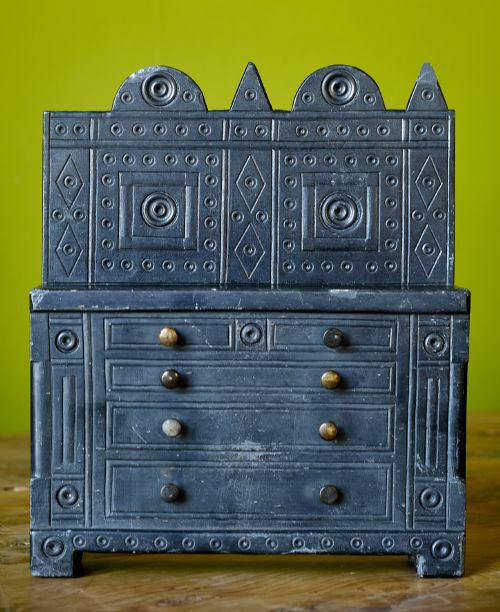
Enamel work provides vibrant colour and lasting durability, frequently utilised alongside precious metals in pendants and brooches. Craftspeople also employed alternative materials including carved slate, soft wood, and painted pine for miniature furniture and folk art objects within the broader grouping.
Miniature Art Jewellery Retail Price Guide 2026
Typical asking prices for miniature art jewellery among the pieces listed under this phrase on Sellingantiques today, from the lower quarter to the upper quarter. They describe what is for sale here now, not the wider market.
Listings span from the mid-eighteenth century to the 1930s, incorporating gold, silver, porcelain, and carved slate.
Assessing Quality
The refinement of the painted miniature dictates much of the piece's success, with superior examples displaying meticulous brushwork, subtle facial expression, and precise anatomical proportions. Lesser works may exhibit hasty execution and simplified linework.
The quality of the metal setting and the integration of the miniature into the brooch, pendant, or locket framework indicate the skill of the original workshop. Secure bezels, thoughtful proportion, and intact enamel without extensive restoration distinguish the finer items.
Christian Friedrich Zincke·Meyle & Mayer
The Miniature Art Jewellery Glossary
- Portrait Miniature
- A small, highly detailed painting of a person, executed on ivory, vellum, porcelain, or card during the eighteenth and nineteenth centuries. These were frequently worn as jewellery or kept in protective cases.
- Parure
- A matched set of jewellery designed to be worn together, typically comprising a necklace, earrings, brooches, or bracelets made from the same materials and sharing a unified decorative theme.
- Enamel
- A glassy substance fused to the surface of metal through firing, used to add permanent colour and decoration to jewellery frames and pendants.
- Silver Gilt
- Silver that has been coated with a thin layer of gold, combining the lustre of gold with a silver base metal core.
- Locket
- A small ornamental case worn on a chain around the neck or pinned to clothing, hinged to open and reveal a tiny portrait or lock of hair.
Miniature Art Jewellery: Frequently Asked Questions
How should I wear antique miniature jewellery?
These pieces require careful handling due to their delicate painted surfaces and glass covers. Pin brooches securely to sturdy fabrics and avoid exposing them to moisture or heavy impact during daily wear.
When not being worn, store them in padded boxes away from direct sunlight to preserve the pigments in the watercolours and enamels.
How do I date an antique miniature piece?
Dating relies on examining the costume and hairstyle depicted in the portrait, alongside the manufacturing techniques of the metal frame. Georgian pieces often feature closed-back settings and delicate watercolour work.
Victorian and later nineteenth-century items introduce bolder revival styles, machine stamping, and different clasp mechanisms that help narrow down the period of production.
Are these portraits usually painted of real people?
Many miniatures depict specific named individuals, family members, or historical figures commissioned by wealthy patrons. Some records identify the sitters directly on the reverse or within accompanying documentation.
Other pieces feature romantic or idealized subjects painted as generic decorative art rather than portraits of actual persons.