

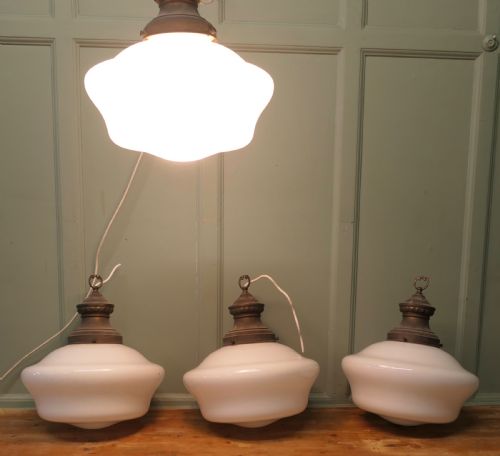


Milk Glass Shade
A milk glass shade diffuses a warm, clean light that suits both period rooms and modern spaces.
Milk Glass Shade
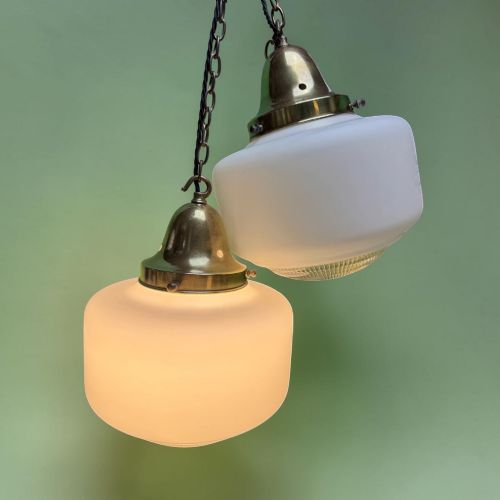
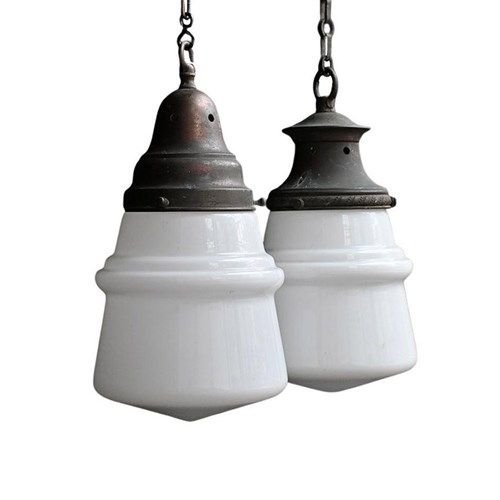
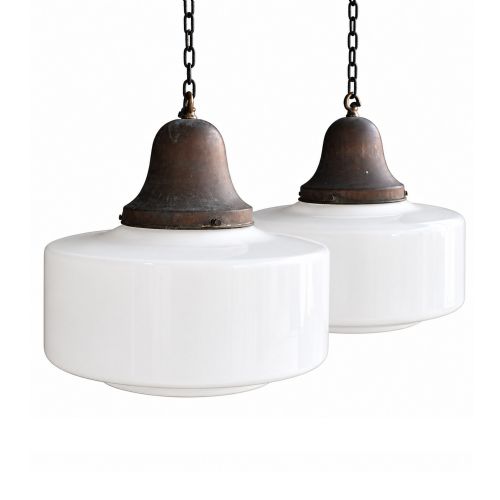
A milk glass shade provides diffused illumination and clean form across pendant lights, oil lamps, and ceiling fixtures. You encounter these pieces in Victorian, Edwardian, and Art Deco styles, spanning eras from the late nineteenth century into the 1930s. The selection includes conical, pear-shaped, and reeded profiles alongside larger chapel and church lights.
Industrial ceiling lights and domestic lamp shades appear frequently in this category. Pieces often incorporate brass galleries or ceramic components, moving from ornate nineteenth-century oil lamps to streamlined 1930s pendants. English and European workshops produced these translucent fittings for both domestic interiors and larger public spaces.
How they were made
Makers produced these shades using specialised glass-blowing techniques, incorporating bone ash, tin, or opacifying agents to achieve the dense, milky opacity. This process creates a smooth, light-softening surface that ranges from glossy opaline to matte moonstone glass.
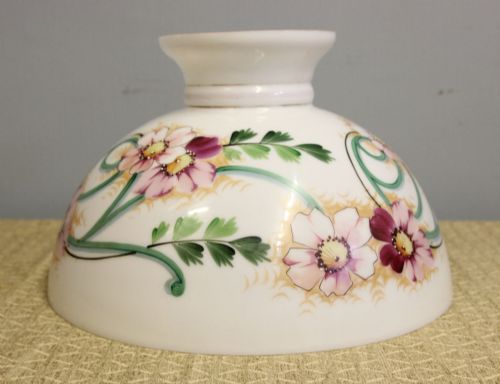
Metal elements such as brass galleries, rings, and mountings secure the glass shades to pendant fittings and oil lamps. Enamel painting and hand-painted details occasionally ornament the exterior of Victorian and Edwardian examples.
Milk Glass Shade Retail Price Guide 2026
Typical asking prices for milk glass shade among the pieces listed under this phrase on Sellingantiques today, from the lower quarter to the upper quarter. They describe what is for sale here now, not the wider market.
Materials documented in these items include opaline glass, moonstone glass, brass, ceramic, and enamel.
What varies in quality
The weight and consistency of the glass distinguish finer examples from standard production. Superior shades display an even distribution of the opacifying agents, ensuring the light diffuses uniformly without thin spots or dark patches.
The sophistication of the form and the quality of associated metalwork mark the upper tier of these pieces. Well-defined mouldings, such as reeded surfaces or fish scale patterns, alongside substantial brass fittings, separate exceptional items from simpler utilitarian equivalents.
The Milk Glass Shade Glossary
- Opaline glass
- A semi-translucent white glass developed in the nineteenth century to mimic porcelain. It diffuses light softly and forms the basis of many period lamp shades.
- Moonstone glass
- A type of glass featuring a cloudy, tactile surface resembling the gemstone. It scatters illumination evenly while maintaining a distinct visual depth.
- Gallery
- The metal collar or rim that holds a glass shade in place on a lamp or pendant fitting. Galleries are frequently cast in brass and secured with thumb screws.
- Pendant light
- A hanging light fixture suspended from the ceiling by a cord, chain, or metal rod. These fixtures direct illumination downwards through an open shade.
- Oil lamp
- A domestic lighting device that burns fuel through a wick. Many survive with their original glass globes or shades intact.
Milk Glass Shade: Frequently Asked Questions
How do I clean an antique shade?
Wash the glass gently in warm, soapy water using a soft cloth. Avoid harsh abrasives that might damage hand-painted details or older enamel work.
Dry the piece thoroughly before reattaching it to any metal gallery or electrical fitting.
How do I date a milk glass shade?
Examine the weight, manufacturing seams, and overall form of the glass. Victorian and Edwardian examples often feature heavier, hand-finished opaline, while 1930s pieces lean towards streamlined Art Deco geometries.
Associated metalwork like brass collars can also offer clues to the period of manufacture.
Can I use these in any room?
The neutral white tone of milk glass suits kitchens, hallways, and living spaces alike. The diffused light reduces harsh shadows, making them practical for task or ambient lighting.
Consider the scale of the shade relative to the room size to ensure balanced proportions.