
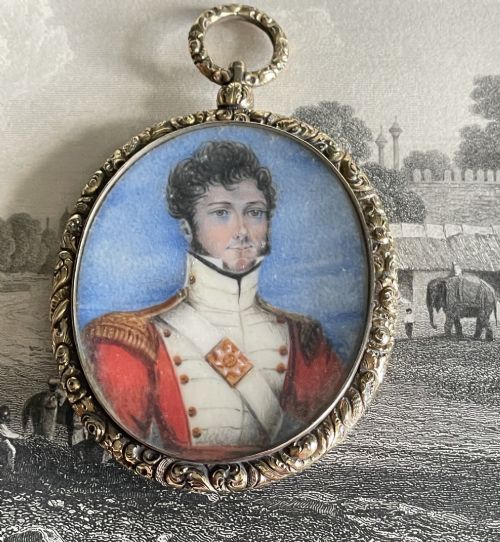


Military Watercolour Portrait
A military watercolour portrait captures the likeness of officers and servicemen across centuries of service.
Military Watercolour Portrait
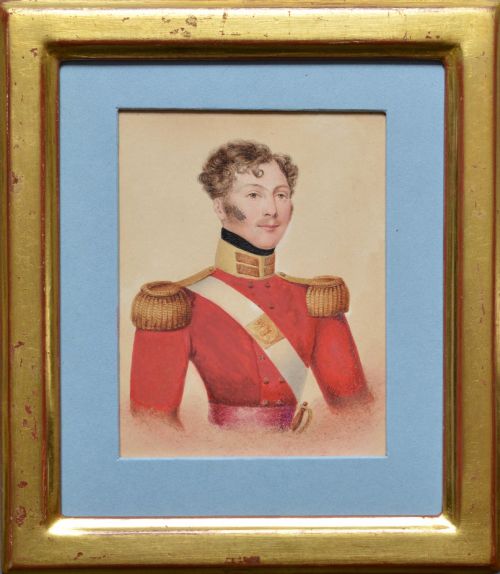
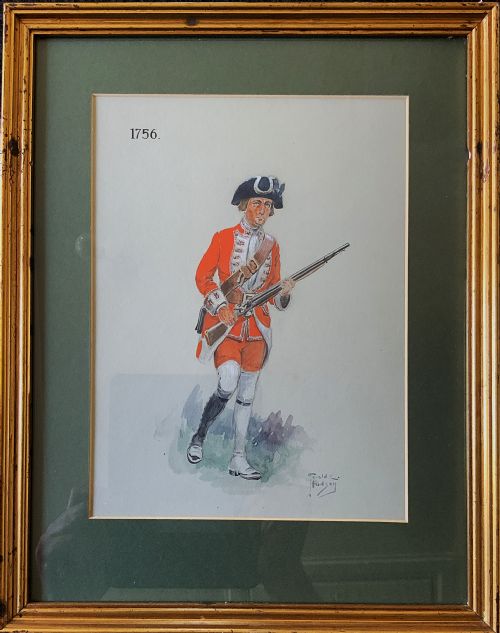
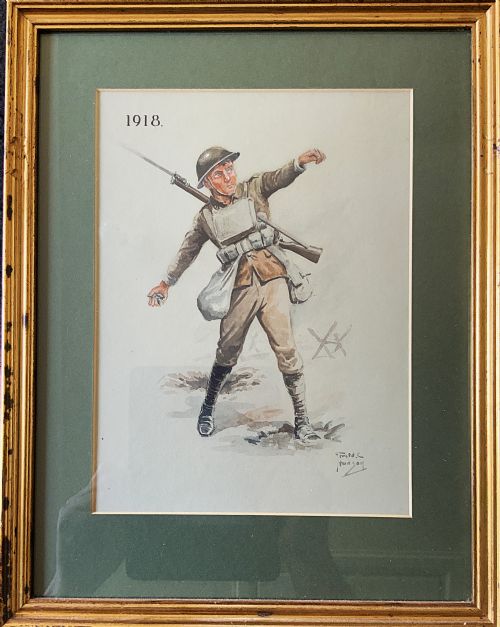
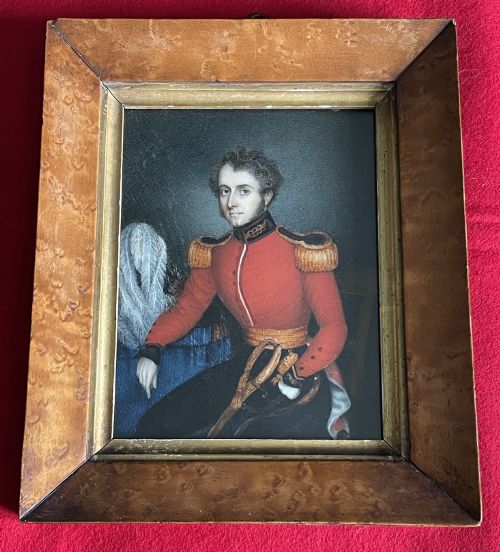
A military watercolour portrait depicts officers and enlisted men from the 18th century through to the early 20th century, rendered on paper or delicate panels. These works range from intimate miniature paintings framed in gold or wood to larger framed artworks and wash drawings recording specific regiments and ranks.
Buyers encountering this genre will most frequently find 19th-century and Victorian examples, alongside Regency officer studies and occasional earlier Georgian or 18th-century miniatures. Subjects span the British Army, Royal Navy, and Indian service, capturing historical uniforms from the Staffordshire 80th Regiment of Foot to the Dragoons.
Materials and application
Finished works were typically preserved behind glass within wooden, gilt wood, or gilt metal frames, sometimes housing miniature portraits within precious metal housings like 18k gold.
Listings feature works spanning the 18th, 19th, and early 20th centuries, executed in watercolour, gouache, and wash.
Determinants of quality
Quality rests upon the precision of the draughtsmanship and the artist's ability to render the distinct details of military uniform and anatomy. Finer examples display meticulous brushwork in facial expressions and uniform insignia, whereas lesser works rely on formulaic execution.
The sophistication of the original housing also elevates a piece, with period-correct gilt frames, gold mounts, or intact glass contributing to the historical integrity of the survival.
J Hardy·Edward Pugh·Sir William John Newton·Leslie Moore·Sir William Charles Ross·John Leech
The Military Watercolour Portrait Glossary
- Gouache
- An opaque watercolour paint that includes a binding agent, allowing for brighter highlights and heavier coverage on paper. It is frequently seen in combination with transparent washes.
- Miniature
- A small-scale portrait painting designed for intimate viewing, often housed in a locket or small frame. These demand exceptional miniaturist skill.
- Wash
- A thin, translucent layer of diluted watercolour pigment spread evenly across paper to create backgrounds or atmospheric depth. It forms the basis of many military sketches.
- Regiment
- A permanent unit of an army commanded by a colonel, whose specific uniform details help date and identify the sitter in a portrait.
Military Watercolour Portrait: Frequently Asked Questions
How do I date a military portrait?
Dating relies heavily on the style of the uniform, specific regimental buttons, and hats worn by the subject. Artists' signatures and period framing offer secondary clues.
Inscribed dates on the reverse or mount further help anchor the year of creation.
What is the difference between watercolour and gouache?
Watercolour uses transparent pigments that allow the white of the paper to reflect light through the colour. Gouache adds white pigment to create an opaque finish.
Artists frequently combined both mediums to achieve depth and bright uniform highlights.
Where were these portraits displayed?
Smaller miniatures were often kept in private domestic spaces, carried on campaigns, or worn as tokens of remembrance. Larger framed works hung in officers' messes and family drawing rooms.
They served as personal records of service and family lineage.
How should I care for these paintings?
These works require protection from direct sunlight to prevent the watercolour pigments from fading over time. Maintaining stable indoor humidity prevents paper degradation and protects the fragile frame.
Displaying them away from heat sources preserves the paper and the original glass housing.