
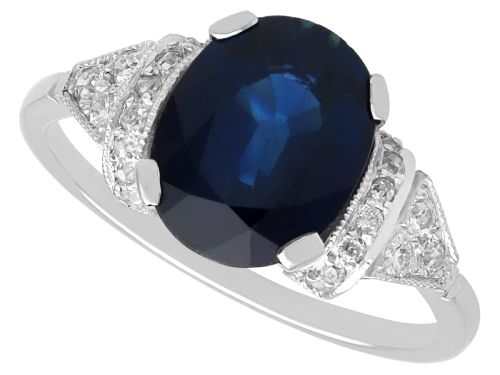
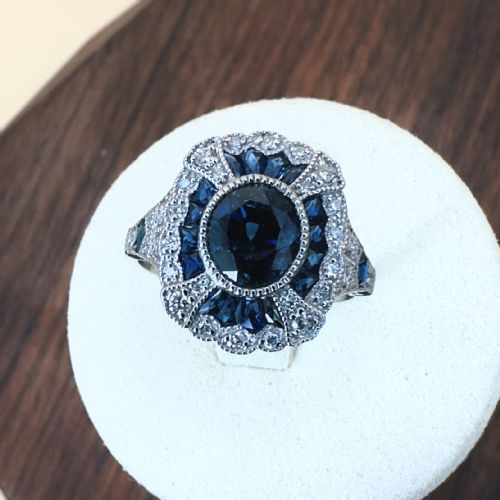


Milgrain Sapphire Diamond Ring
A milgrain sapphire diamond ring brings together crisp geometric metalwork and deep blue stones, offering enduring sparkle for everyday wear.
Milgrain Sapphire Diamond Ring
A milgrain sapphire diamond ring unites bright diamonds with rich sapphires, set within precious metals shaped by distinctive eras.
Most examples appearing here belong to the Art Deco period or carry the clean lines of mid-century design, alongside Edwardian creations.
Makers shaped these jewels into traditional cluster forms, flower motifs, panel configurations, and targeted rings that sit flat upon the finger.
Materials and construction
Goldsmiths utilised durable platinum and eighteen-carat white gold to build secure settings that held contrasting stones firmly in place.
Master artisans formed precise rows of tiny raised metal beads along the edges to create the signature milgrain border characteristic of the style.
Setters positioned old cut, rose cut, and baguette diamonds alongside natural blue sapphires and pink sapphires in symmetrical arrangements.
The listings span platinum and eighteen-carat white gold constructions, incorporating standard blue sapphires alongside rarer pink sapphire varieties.
Judging the work
The fineness of the milgrain decoration distinguishes superior workmanship, showing uniform and neatly raised beads rather than worn or uneven tooling.
Proportion and stone selection determine the overall impact, with well-matched sapphire colour and bright diamond cut elevating the piece significantly.
The crispness of the platinum or white gold metalwork reflects the original hand of the bench jeweller who finished the gallery and shoulders.
The Milgrain Sapphire Diamond Ring Glossary
- Milgrain
- A decorative technique involving a row of tiny raised metal beads bordering the edge of a setting. This adds a delicate texture that softens the geometric lines of early twentieth-century jewellery.
- Cluster ring
- A jewellery design featuring a central gemstone surrounded by a border of smaller stones. This arrangement maximises visual presence and light reflection on the hand.
- Target ring
- A concentric ring style featuring a central stone encircled by distinct rings of contrasting gems. The pattern resembles a bullseye, popular during the height of the Art Deco era.
- Old cut
- A traditional diamond cutting style predating modern brilliant facets. These stones feature higher crowns and smaller tables that catch candlelight effectively.
- Baguette cut
- A step-cut rectangular diamond or gemstone shape with straight parallel facets. Jewellers utilise these stones to create linear borders and geometric contrast.
Milgrain Sapphire Diamond Ring: Frequently Asked Questions
How do I care for a milgrain ring?
Clean these rings gently using warm soapy water and a soft brush to remove everyday oils from beneath the settings. Avoid harsh ultrasonic cleaners that might weaken delicate milgrain borders over time.
Store each piece separately in a fabric-lined box to prevent harder diamonds from scratching neighbouring platinum or gold surfaces.
Are these rings suitable for daily wear?
Platinum and eighteen-carat gold provide durable foundations suitable for regular wear when checked periodically by a professional jeweller. Sapphires rank high on the hardness scale, making them robust enough for everyday use.
Take care to remove the ring during heavy manual tasks to protect the tiny milgrain beads and stone settings from sharp impacts.
What defines Art Deco style?
Art Deco design embraces geometric symmetry, clean straight lines, and sharp contrasts between bright white metals and deeply coloured gemstones. This aesthetic moved away from flowing floral motifs toward architectural precision.
Cluster and panel configurations from this period showcase balanced arrangements that highlight individual diamond cuts.
How can I tell the period?
Examination of the metalwork style, stone cuts, and setting techniques reveals the likely era of creation. Edwardian and 1920s pieces often feature intricate hand-piercing alongside milgrain borders.
Mid-century and later vintage examples from the 1950s and 1960s display robust cluster forms and alternative stone proportions like pink sapphires.