



Middle Eastern Carving
Middle Eastern carving brings intricate geometric patterns and warm timber tones into a room.
Middle Eastern Carving
When you search for middle eastern carving, you encounter richly decorated domestic objects and furniture spanning the eighteenth century through to the mid-twentieth century. The selection ranges from seating and tables to mirrors and decorative vessels.
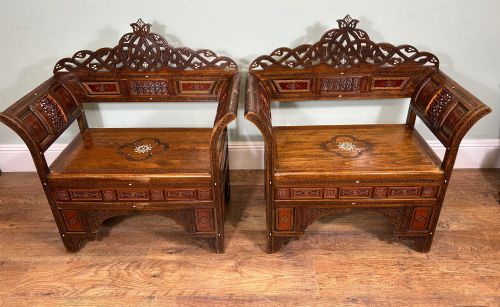
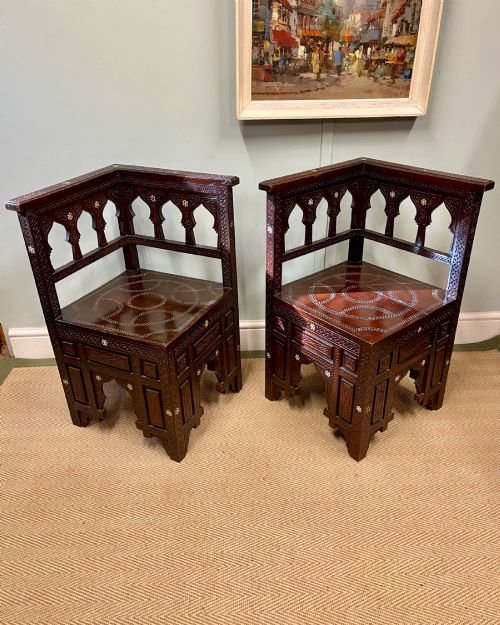
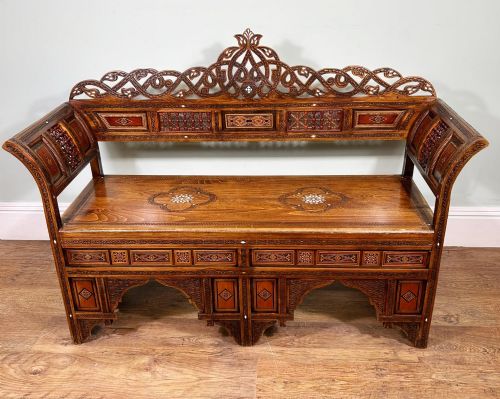
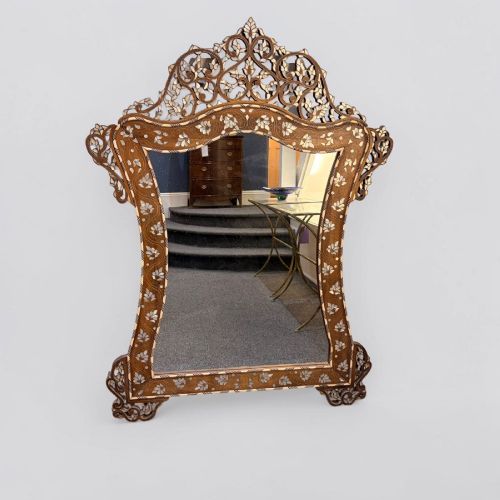
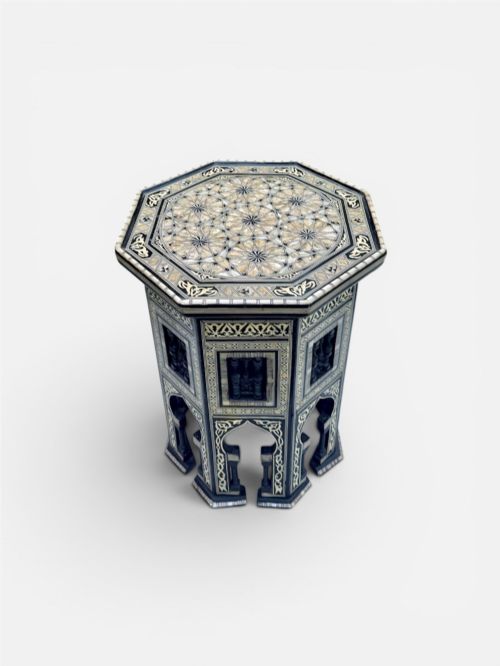
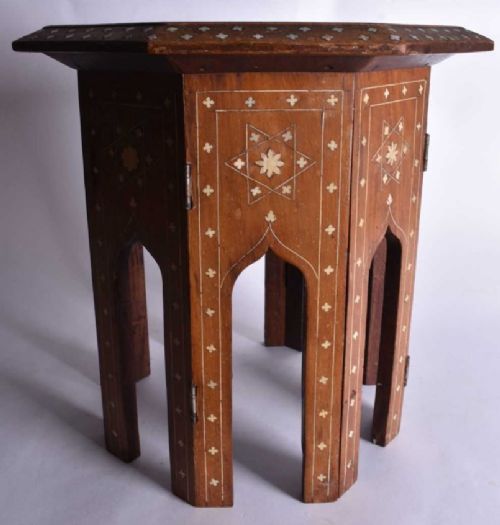
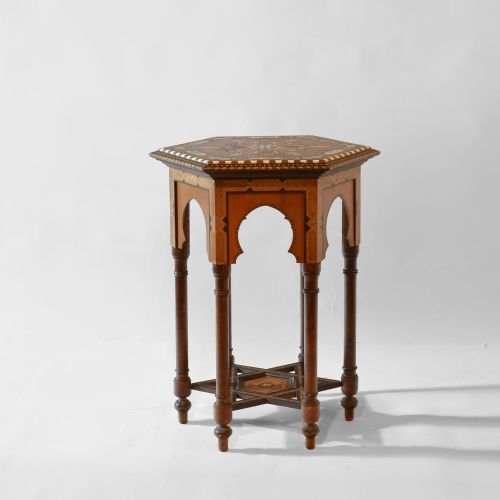
Octagonal folding tables and inlaid side tables appear most frequently, alongside armchairs, benches, and wall mirrors bearing detailed geometric motifs. These forms reflect the domestic traditions of Syrian, Ottoman, and Persian workshops.
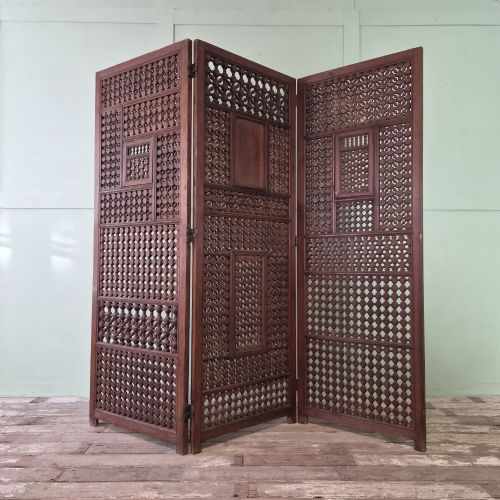
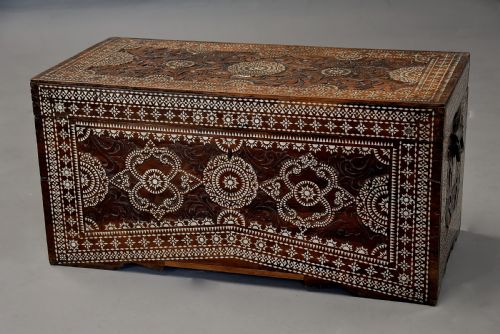
Moorish revival and Syrian styles dominate the physical evidence, often incorporating dense surface ornament. Pieces vary from small accent stools to large panelled room dividers and storage trunks.
Materials and construction
Walnut, hardwood, and fruitwood serve as the primary timber foundations for tables, chairs, and frames. Artisans shape these woods using traditional joinery and hand-carving techniques.
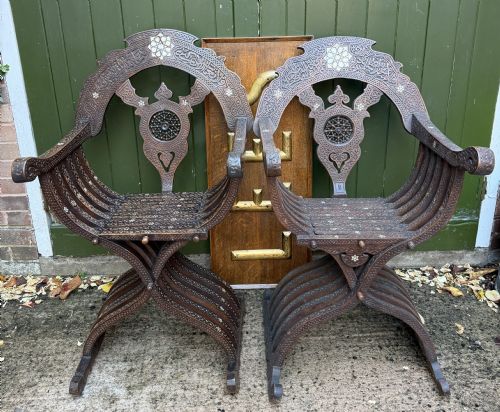
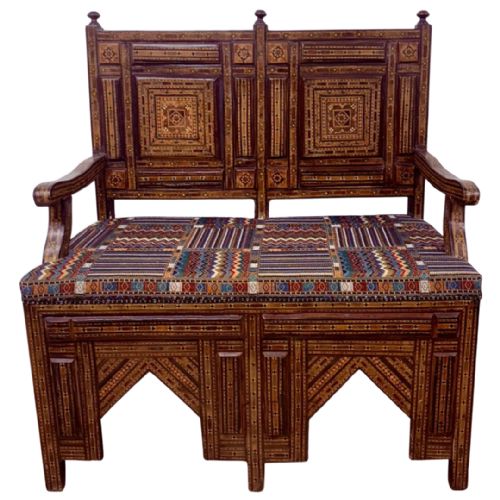
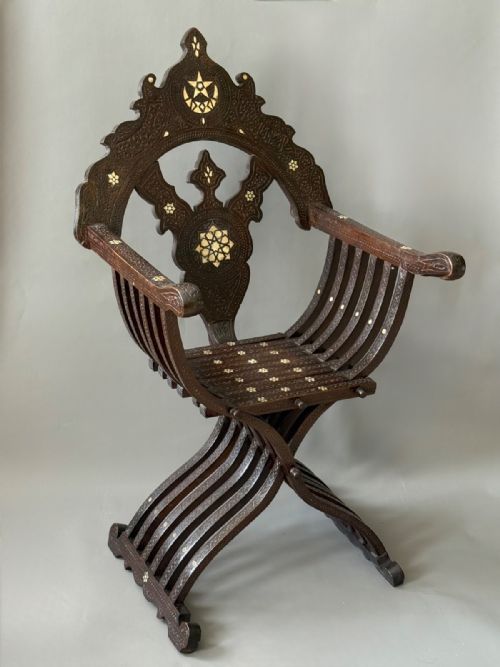
Mother-of-pearl, nacre-shell, and bone form the intricate geometric inlays that catch the light across chair backs and table tops. Brass wire and silver-inlay add further linear contrast to wooden surfaces and engraved copper or brass vessels.
Middle Eastern Carving Retail Price Guide 2026
Typical asking prices for middle eastern carving among the pieces listed under this phrase on Sellingantiques today, from the lower quarter to the upper quarter. They describe what is for sale here now, not the wider market.
The listings span from the eighteenth century to nineteen-forty, utilising walnut, hardwood, bone, mother-of-pearl, brass, and glass.
Assessing quality and execution
The precision and density of the geometric inlay dictate the standard of execution. Pieces featuring tightly fitted mother-of-pearl and bone segments demonstrate superior craftsmanship compared to simpler surface decoration.
The depth and crispness of the hand-carved woodwork separate standard items from exceptional examples. Surviving structural integrity in folding mechanisms and joined frames also marks the better-preserved specimens.
The Middle Eastern Carving Glossary
- Mashrabiya
- A type of architectural turned wood window screen or panel formed from small bobbins fitted together.
- Mother-of-pearl
- The iridescent inner layer of mollusc shell used for geometric mosaic inlays in furniture.
- Ottoman
- Pertaining to the historic empire encompassing parts of southeastern Europe, western Asia, and North Africa.
- Nacre-shell
- Alternative terminology for mother-of-pearl employed in surface ornamentation.
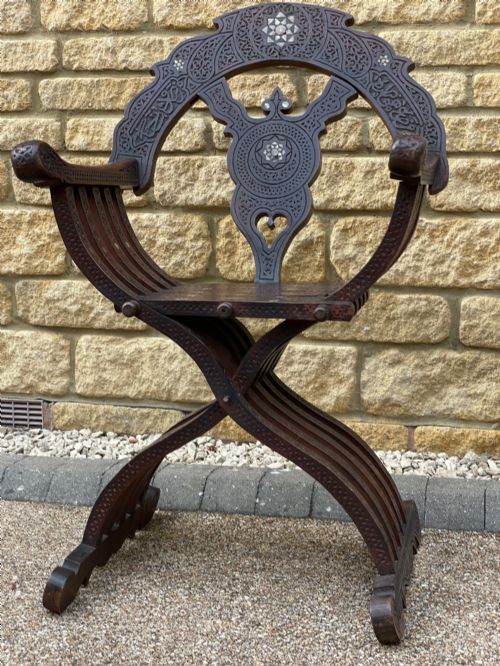
- Savonarola chair
- A folding chair constructed from multiple intersecting curved wooden slats, seen in revival styles.
Middle Eastern Carving: Frequently Asked Questions
How do I care for inlaid wooden furniture?
Keep wooden surfaces away from direct heat sources and sudden humidity changes to protect the delicate bone and mother-of-pearl inlays from loosening.
Apply a minimal amount of appropriate furniture wax occasionally to maintain the timber finish without disturbing the mosaic segments.
Where were these carved items made?
Origin workshops span regions such as Syria, Persia, and Ottoman territories, reflecting distinct local craft traditions.
Damascus and Cairo served as major production hubs for the inlaid tables, mirrors, and seating found in this category.
How do I distinguish different regional styles?
Syrian and Damascan pieces frequently feature dense mother-of-pearl and wire inlay on walnut or hardwood structures.
Persian items often showcase hand-engraved brass work or delicate filigree alongside traditional woodwork.
Are octagonal folding tables stable?
The hinged bases of these tables are designed to interlock securely when opened fully for display.
Placing them on an even surface ensures the octagonal top rests firmly without rocking.