



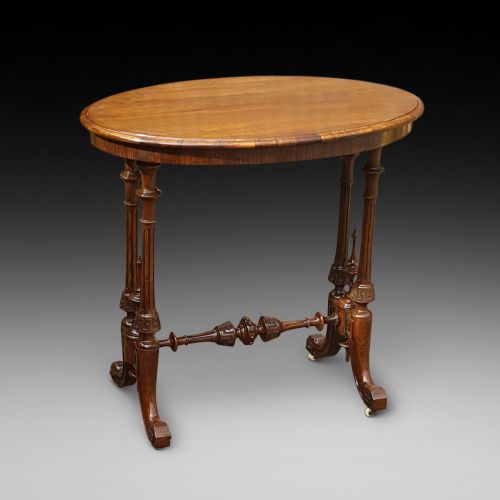


Mid Victorian Wine Table
These mid victorian wine table examples bring compact elegance to a room, offering a sturdy surface for drinks or display.
Mid Victorian Wine Table
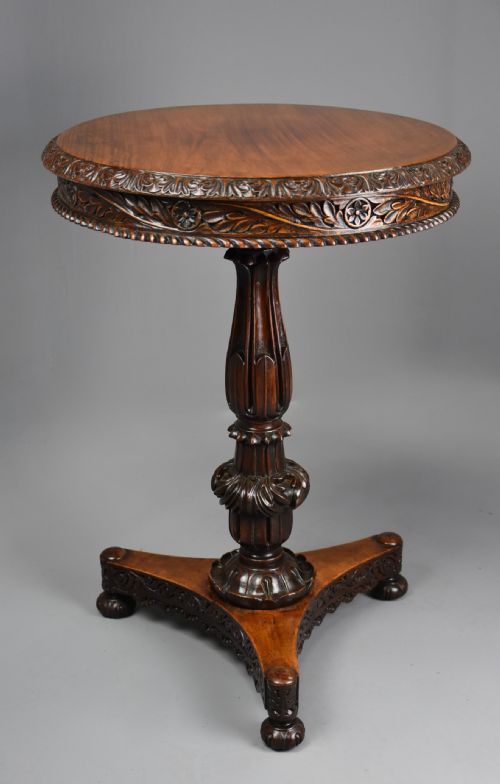
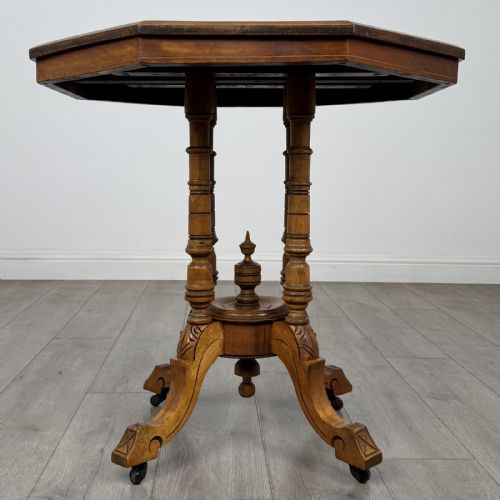
A mid victorian wine table is a compact piece intended for portable refreshment, appearing frequently in walnut, burr walnut, and mahogany across this selection. These pieces span the nineteenth century, with specific dates clustering around 1850, 1860, and 1870, alongside broader Victorian and mid-nineteenth-century designations.
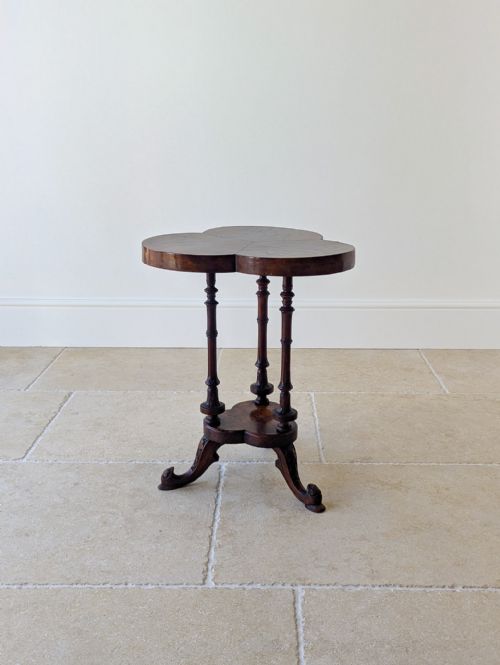
Forms vary from standard occasional and side tables to tilt-top variants, miniature tables, centre tables, and specific forms like jardinieres and wine coolers. Buyers encounter circular tops, scalloped edges, and trefoil configurations, reflecting diverse domestic uses in nineteenth-century parlours and drawing rooms.
Regional and stylistic diversity emerges through examples such as Anglo-Indian padouk tables from the Bombay region, alongside specimens utilising exotic timbers like palm wood, birch root, rosewood, and kingwood.
Materials and construction
Cabinetmakers utilised dense hardwoods including mahogany, walnut, rosewood, and padouk, often selecting burr walnut for highly figured tabletops. Timber preparation relied on traditional joinery methods to stabilize circular and tilt-top mechanisms.
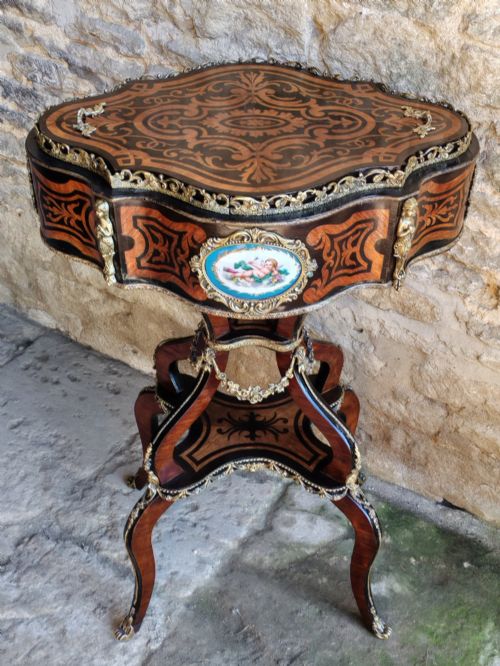
Surface detailing incorporated decorative elements such as brass, ormolu mounts, porcelain inserts, and specimen wood veneers. Finishes were hand-polished to highlight the natural grain patterns of the primary and exotic woods.
Mid Victorian Wine Table Retail Price Guide 2026
Typical asking prices for mid victorian wine table among the pieces listed under this phrase on Sellingantiques today, from the lower quarter to the upper quarter. They describe what is for sale here now, not the wider market.
Some tables double as botanical displays, incorporating intricate specimen woods or porcelain into their compact tops.
Assessing quality
Quality rests upon the selection and matching of timber veneers, particularly on burr walnut or specimen wood tops where grain orientation defines the visual impact. Superior pieces display precise turning on pedestals and sturdy pillar-and-claw or tripod bases that remain level.
The Mid Victorian Wine Table Glossary
- Tilt-top table
- A table with a tabletop that hinges vertically on a catch mechanism, allowing the piece to stand flat against a wall when not in use.
- Burr walnut
- Timber taken from a tree growth or burl, prized by nineteenth-century makers for its swirling, highly figured grain patterns.
- Occasional table
- A small, movable table designed for a specific, intermittent domestic function rather than primary dining or writing.
- Padouk
- A heavy, durable tropical hardwood with a reddish hue, utilised in Anglo-Indian furniture production during the nineteenth century.
- Trefoil
- A decorative shape composed of three overlapping circles or lobes, frequently seen in the configuration of tabletops.
Mid Victorian Wine Table: Frequently Asked Questions
What is a mid victorian wine table used for?
These tables served primarily for holding glasses, bottles, or small decorative items during the nineteenth century.
Today, buyers place them beside seating as functional lamp or occasional surfaces that occupy minimal floor space.
How do I identify a mid victorian wine table?
Look for compact proportions, turned central pedestals, and timber choices typical of the nineteenth century such as walnut, mahogany, and rosewood.
Dates cluster around the middle decades of the nineteenth century, often featuring circular or tilt-top surfaces.
What does tilt-top mean on these tables?
A tilt-top mechanism allows the upper surface to pivot from horizontal to vertical via a brass or wooden catch.
This design enabled nineteenth-century households to store tables compactly against room perimeters when entertainment concluded.
Are all these tables made of mahogany?
While mahogany is common, makers utilised a wide variety of domestic and exotic woods during the period.
Selection includes burr walnut, rosewood, padouk, birch root, and palm wood across different regional workshops.