

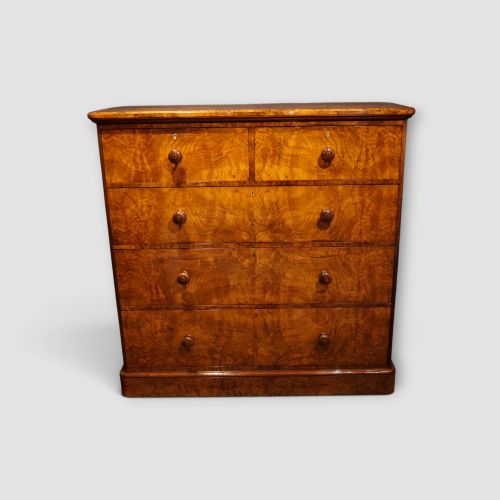
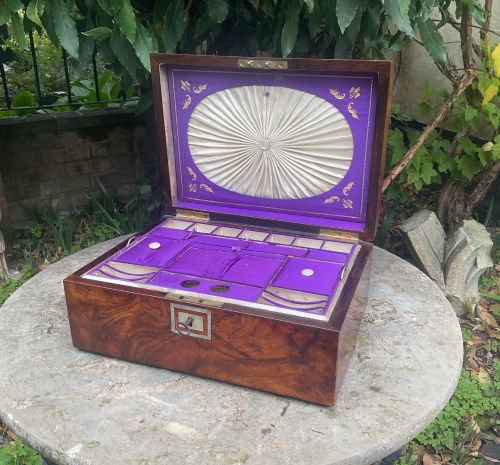
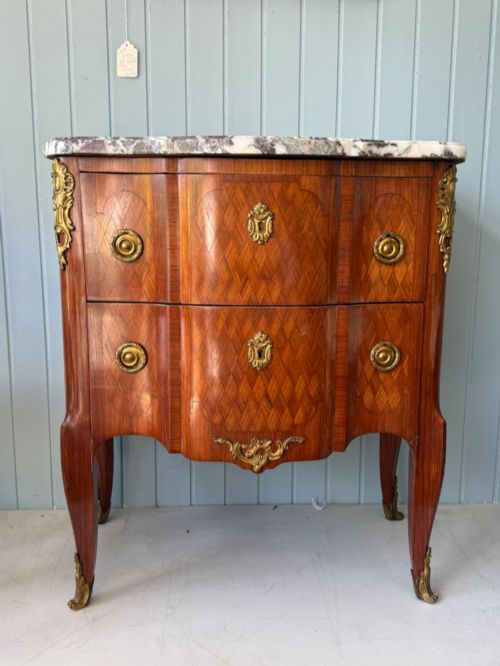
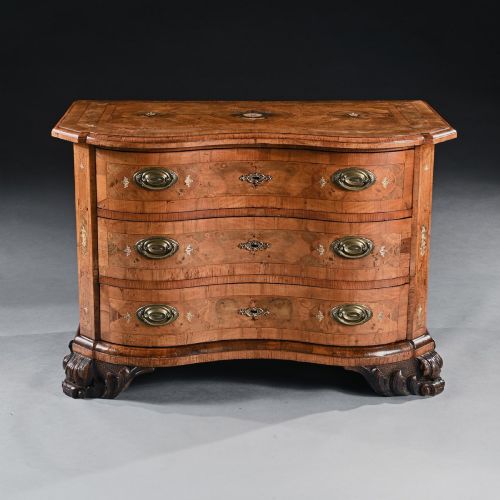




Mid Century Walnut Chest
A mid century walnut chest brings deep timber grain and clean lines to a room, offering practical storage with distinct period character.
Mid Century Walnut Chest
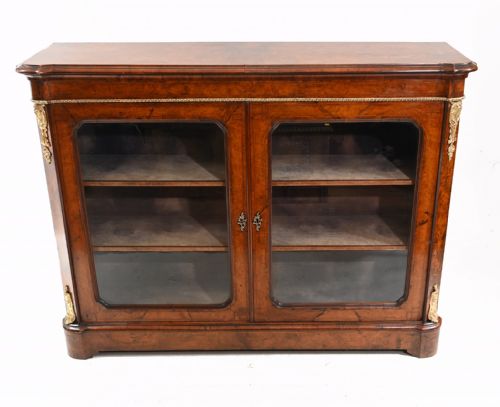
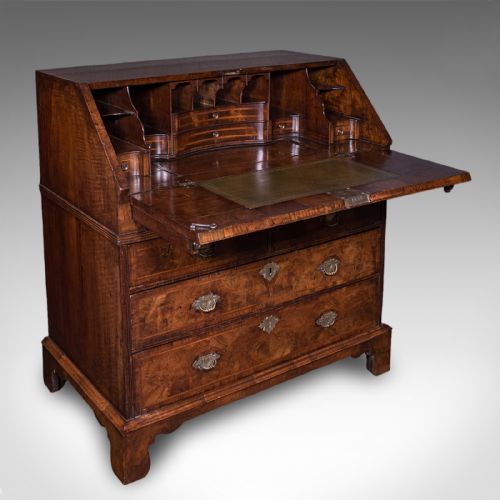
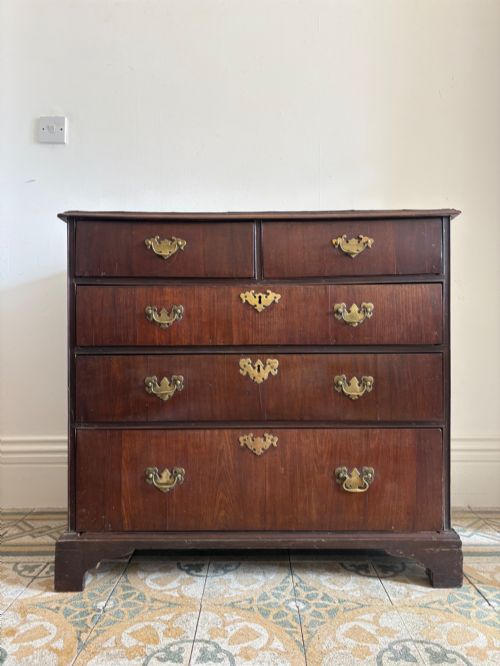
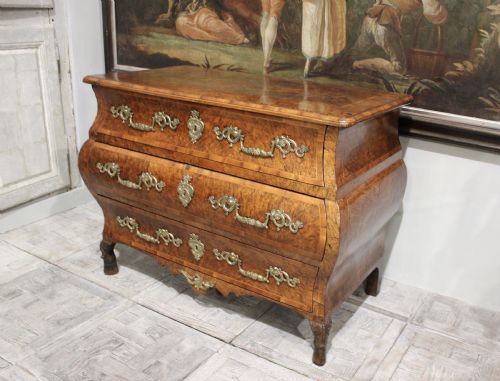
A mid century walnut chest encompasses practical drawer units, tallboys, commodes, and compact bedside tables produced across various European workshops. These pieces range from Georgian chest-on-chest designs to Art Deco bedside pairs and 1930s compact desks.
Buyers encountering this phrase will find a strong representation of 18th-century pieces alongside 19th-century Victorian and Scandinavian examples. The selection spans straightforward English drawer units to continental serpentine commodes featuring intricate marquetry.
Materials and Construction
Cabinetmakers utilised solid walnut and decorative burr walnut veneers over secondary timbers, often pairing the rich timber with brass handles, marble tops, or ormolu mounts. Intricate marquetry involving pewter, ivory, olive-wood, and fruit-wood frequently decorates continental surfaces.
Joinery methods reflect the specific period of manufacture, from dovetail drawer construction on 18th-century tallboys to the streamlined execution seen in later Art Deco items.
Mid Century Walnut Chest Retail Price Guide 2026
Typical asking prices for mid century walnut chest among the pieces listed under this phrase on Sellingantiques today, from the lower quarter to the upper quarter. They describe what is for sale here now, not the wider market.
Listings span multiple centuries, uniting 18th-century Georgian walnut tallboys with 19th-century Victorian commodes, Art Deco bedside units, and 1930s compact desks.
Distinctions in Execution
Quality rests upon the selection of timber figures, particularly the richness of the burr walnut and the alignment of grain across drawer fronts. Superior pieces exhibit precise marquetry work and well-balanced proportions that respect the original design vocabulary.
The integration of original hardware, such as brass drop handles or decorative mounts, alongside the structural integrity of the carcase and drawer runners, separates standard utilitarian storage from finer cabinet work.
The Mid Century Walnut Chest Glossary
- Burr walnut
- A figured timber harvested from walnut tree growths, prized for its swirling grain patterns used in high-status veneers. It creates highly decorative surfaces on drawer fronts and commodes.
- Tallboy
- A tall chest of drawers, often built as a chest-on-chest where a smaller upper section sits upon a wider base. This form maximises vertical storage capacity.
- Commode
- A low chest of drawers or cabinet originating from French furniture design, frequently featuring decorative mounts or a marble top. It serves as both a functional storage unit and a display surface.
- Marquetry
- The art of applying thin pieces of wood veneer and other materials like ivory or pewter to a structure to form decorative patterns. It requires skilled cutting and fitting.
- Serpentine
- A furniture outline characterised by a wavy or undulating front, curving convexly in the centre and concavely at the sides. This shape adds movement to case pieces.
Mid Century Walnut Chest: Frequently Asked Questions
How do I care for a walnut chest?
Keep the timber away from direct heat sources and strong sunlight to prevent the walnut veneer from drying out or fading over time. Regular dusting with a soft, dry cloth maintains the finish without needing heavy polishes.
Apply a quality beeswax occasionally if the wood appears dry, rubbing it gently along the grain. Avoid placing damp items directly on the surface to protect the polish and underlying timber.
What is a chest-on-chest?
A chest-on-chest, or tallboy, consists of a smaller set of drawers stacked directly on top of a larger base chest. This form became popular for providing ample storage while occupying a smaller floor footprint.
These pieces often separate into two sections for easier transport and placement within a room. The upper section typically contains smaller drawers, while the lower cabinet offers deeper storage.
How can I tell periods apart?
Georgian pieces often display restrained lines, brass drop handles, and solid proportions in red walnut or oak-lined carcases. Later Victorian and continental examples frequently utilise burr walnut veneers, elaborate marquetry, and distinctive serpentine shaping.
Examine the construction methods inside the drawers and the style of the hardware for clues to the era. Hand-cut dovetails and timber choices help indicate whether a piece originates from the 18th century or a later revival period.
Where should I place a commode?
A commode works well in a hallway, living room, or bedroom where its surface can display lamps or decorative objects while drawers hold linens or accessories. Pieces with marble tops offer durable surfaces suited for varied placement.
Ensure adequate clearance around the piece so that drawers can open fully without obstruction. Placing the chest against an interior wall protects the antique timber from extreme temperature fluctuations.