



Mid Century Line Art
Mid century line art brings together expressive ink drawings and minimalist sketches that capture mid century modern energy with direct, unadorned mark-making.
Mid Century Line Art
Mid century line art encompasses original ink drawings, pen studies, and fine art prints spanning the decades from the 1920s through the 1960s. These pieces often focus on figurative subjects, architecture, and dance, rendered with economical strokes on paper.
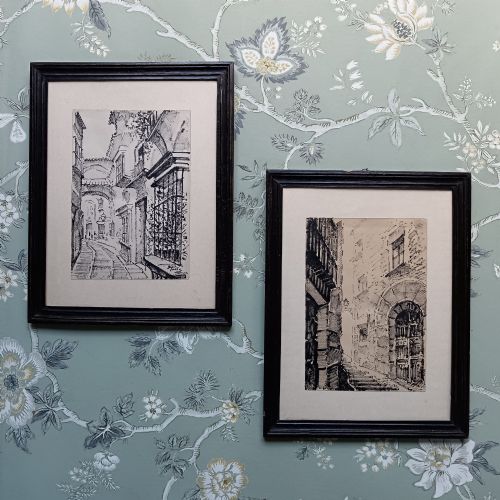
The selections available here range from Spanish school architectural drawings and anatomical studies to works by notable artists like John Merrifield and Lucien Freud. Buyers encounter both intimate preparatory sketches and framed exhibition prints within this grouping.
While primarily executed on paper with ink, the category also intersects with broader modernist paintings and graphic works from the mid-twentieth century. Each piece reflects the period's preference for clean lines and direct visual communication.
Materials and Techniques
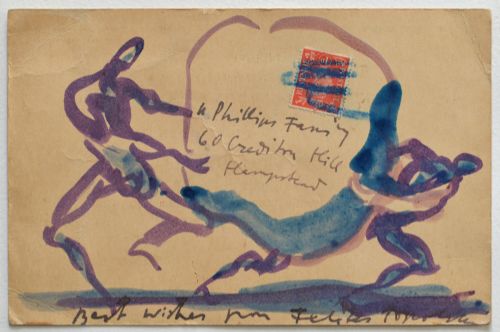
These works rely fundamentally on paper supports paired with dark ink, pen, or watercolour washes to build form through contour rather than heavy shading. The economy of line dictates the success of each piece, requiring steady execution and confident handling.
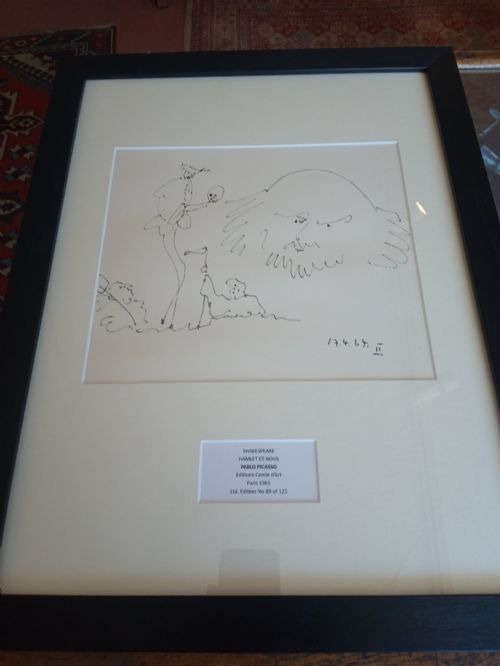
Framed presentation is common, utilising wood frames and glass protection to preserve delicate paper surfaces from environmental degradation. Artists of this era often worked on standard drawing papers, sometimes combining ink with subtle watercolour or gouache highlights.
Mid Century Line Art Retail Price Guide 2026
Typical asking prices for mid century line art among the pieces listed under this phrase on Sellingantiques today, from the lower quarter to the upper quarter. They describe what is for sale here now, not the wider market.
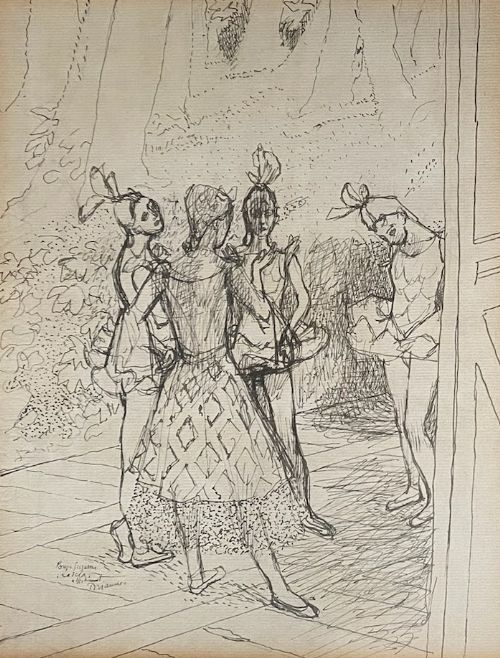
Several drawings capture dancers backstage and smokers in ship lounges, proving that artists found line inspiration wherever people gathered.
Assessing Quality and Execution
Quality in mid century line art rests on the decisiveness of the stroke and the clarity of the composition. A superior drawing captures gesture and volume with minimal hesitation, whereas lesser examples rely on laboured or repetitive lines.
The strength of provenance and the reputation of the hand behind the work elevate individual pieces significantly. Context within a known artist's oeuvre or an established school provides a firmer basis for historical importance.
John Horwood·Maurice Brianchon·Pablo Picasso·James Tower·John Merrifield·Lucien Freud·Fred Lawson·Charles Cameron Baillie
The Mid Century Line Art Glossary
- Ink drawing
- A work executed primarily with fluid pigment on paper using pens, nibs, or brushes. This medium defines the core of linear modernist work.
- Mid-Century Modern
- A stylistic movement spanning roughly the 1930s to the 1960s characterised by clean lines and functional aesthetics. It heavily influences the visual language of these drawings.
- Lithograph
- A printmaking process where an image is drawn onto limestone or a metal plate with a greasy medium and transferred to paper. Many mid-century prints utilise this method.
- Watercolour
- A paint consisting of pigment suspended in a water-based solution, frequently combined with ink outlines in these selections. It adds transparent washes of colour to linear frameworks.
- Provenance
- The documented history of ownership and origin for an artwork. Establishing clear provenance confirms authenticity and historical context.
Mid Century Line Art: Frequently Asked Questions
What defines mid century line art?
These pieces are characterised by minimalist compositions and expressive ink strokes that prioritise contour over heavy colour. They capture subjects ranging from architecture to human figures with direct economy.
Most examples date from the 1920s to the 1960s, reflecting the broader modernist shift toward simplified visual forms and graphic clarity.
How should I frame and display these works?
Paper works require conservation framing with UV-protective glass and acid-free mounts to prevent fading and deterioration over time. Keeping them away from direct sunlight preserves the integrity of the ink.
Display them on neutral walls where the economy of the line can remain the primary focus without visual competition from heavy surroundings.
How can I tell different periods apart?
Earlier pieces from the 1920s and 1930s often retain subtle Art Deco influences or traditional illustrative qualities in their linework. By contrast, works from the 1950s and 1960s lean further into abstraction and mid-century modern minimalism.
Examining the paper type, framing materials, and stylistic signatures provides further clues regarding the exact decade of creation.
Are these works original or printed?
The selection includes both unique hand-drawn ink studies and limited edition prints or lithographs produced during the period. Checking the description clarifies whether a piece is a one-off drawing or an editioned work.
Original drawings show the direct pressure of the pen or brush upon the paper surface under magnification.