


Mid Century Clip Earrings
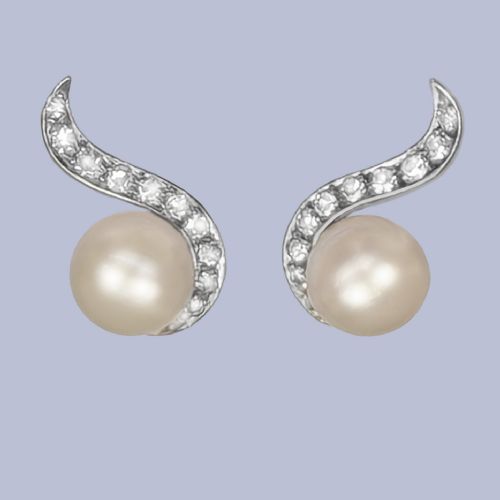
These mid century clip earrings bring together precious metals and fine stones in bold geometric forms that sit securely without piercing.
Mid Century Clip Earrings
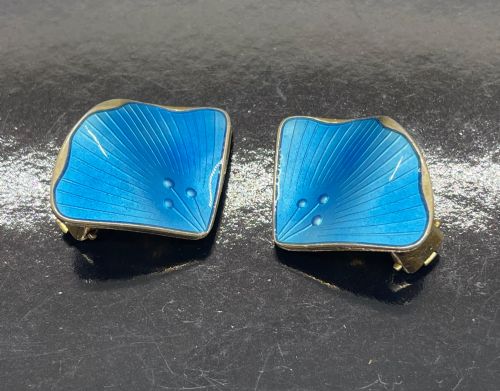
Mid century clip earrings comprise wearable ornaments designed for non-pierced lobes, emerging predominantly from the nineteen fifties and sixties alongside earlier Art Deco and nineteen thirties survivals. The forms range from simple daisy clusters and sunbursts to large fan motifs and geometric configurations.
Most examples encountered here utilise secure clip-on or screwback mechanisms paired with substantial metalwork, accommodating heavier arrangements of gemstones without drooping. Buyers encounter everything from Scandinavian enamel work to diamond and pearl clusters set in white or yellow gold.
The aesthetic embraces both minimalist Scandinavian modernism and heavier retro stylings, incorporating bright precious stones alongside organic materials like lapis lazuli, turquoise, rose quartz and mabe pearls.
How they were made
The construction relies heavily on casting and fabrication in eighteen carat gold, fourteen carat gold, white gold, platinum and sterling silver, often with a gilt finish. Goldsmiths mounted brilliant cut diamonds, sapphires and pearls into robust settings designed to support daily wear.
Enamelling techniques, notably guilloche work over silver gilt, provide vibrant colour fields alongside polished hardstones. Backings incorporate specialised clip and screwback mechanisms soldered firmly to the reverse of each setting.
Listings span platinum, sterling silver and various gold purities, including nine carat, fourteen carat and eighteen carat white and yellow gold.
What varies in quality
The distinction lies in the weight of the metal and the calibre of the stones, moving from standard commercial clusters to heavy, bespoke creations by notable designers. Heavier gauge gold and platinum provide superior structural integrity for larger stone configurations.
Craftsmanship shows in the precision of the enamel work, the matching of natural pearls and turquoise, and the tension of the clip mechanisms. Signed pieces retain a distinct level of finish that elevates them above unsigned contemporary counterparts.
Andrew Grima
The Mid Century Clip Earrings Glossary
- Guilloche
- An intricate mechanical engraving technique covered with translucent enamel, commonly found on mid century silver gilt pieces.
- Screwback
- A fastening mechanism utilising a threaded post and screw to adjust pressure on the earlobe without requiring a piercing.
- Mabe pearl
- A hemispherical cultured pearl grown against the inside shell of an oyster, prized for large proportions in retro clusters.
- Silver gilt
- Sterling silver coated with a thin layer of gold, providing a rich yellow appearance while retaining silver structural properties.
- Daisy design
- A cluster setting featuring a central stone surrounded by petal-like gems, popular across nineteen fifties jewellery.
Mid Century Clip Earrings: Frequently Asked Questions
Are mid century clip earrings comfortable to wear?
The comfort depends on the spring tension of the clip mechanism and the weight of the piece against the lobe.
Many designs incorporate adjustable screwbacks or padded clips to distribute weight evenly for extended wear.
How do I date mid century clip earrings?
Dating relies on stylistic markers such as retro fan motifs, atomic lines, and distinct Scandinavian enamel patterns typical of the nineteen fifties and sixties.
Hallmarks stamped on the metal mountings also provide specific alloy standards and manufacturing years.
Can clip earrings be converted to pierced posts?
Conversion is technically possible by a jeweller, though altering original mechanisms usually diminishes collector value.
Most purists prefer to preserve the original clip or screwback fastenings intact.
What stones were popular in mid century earrings?
Diamonds, sapphires, cultured pearls, and turquoise dominated the mid-century palette alongside vibrant hardstones like lapis lazuli and rose quartz.
Enamel also served as a primary colour medium in Scandinavian modern pieces.