




Mid Century Child Painting
A mid century child painting captures the candid character of youth through mid-century modern, realist, and impressionist brushwork.
Mid Century Child Painting
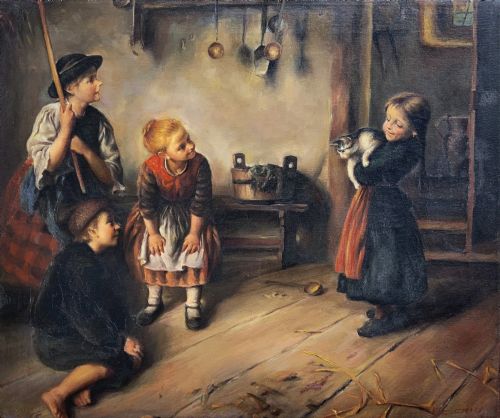
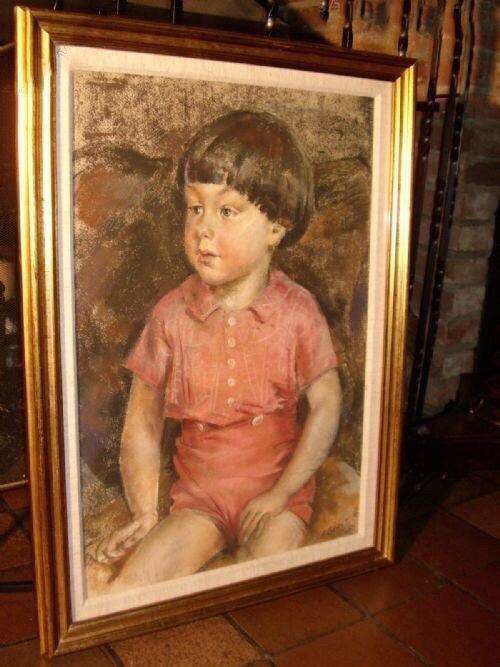
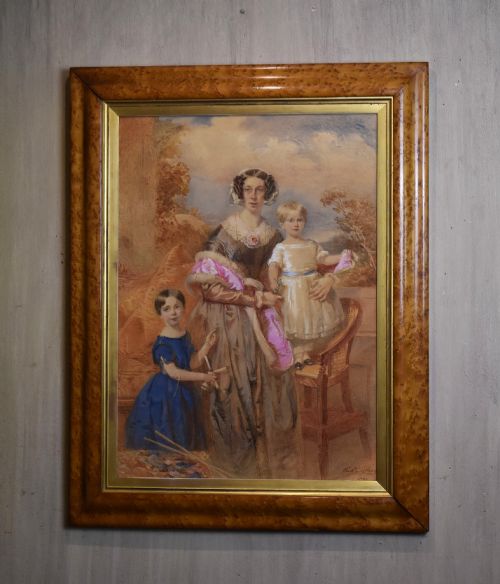
When you search for a mid century child painting, you encounter works spanning 1940 to 1960 alongside earlier Victorian family and portrait watercolours. These pieces portray children at play, in formal attire, or alongside family pets and birds.
The selection ranges from Dutch genre oil paintings to French surrealist canvases and British school portraits. Mid-century modernist interpretations sit alongside traditional Victorian works in this gathering of framed art and wall pieces.
Assessing Quality
Quality differentiates through the expressiveness of the portraiture and the handling of the medium, whether through fluid watercolour washes or heavy impasto oil strokes. Works by documented artists and identified studio painters demonstrate superior draughtsmanship in capturing individual likeness.
The integrity of the original support, the stability of the canvas or paper, and the harmony of the framing contribute to the standing of each piece. Superior examples maintain vibrant pigment saturation without excessive retouching or structural degradation.
The listings span from eighteenth-century portraits through nineteenth-century Victorian watercolours to mid-century oil paintings on canvas.
Sir Allan Ramsay·Frederick Tatham·John E Bosanquet·Sydney Buck
The Mid Century Child Painting Glossary
- Impasto
- Paint applied thickly to a canvas, leaving visible brush or palette knife strokes that stand proud of the surface.
- Gouache
- An opaque water-based medium that provides solid blocks of matte colour in works on paper.
- Dutch Genre Painting
- Scenes depicting everyday life and ordinary people, often executed with meticulous attention to domestic interior detail.
- Surrealism
- An artistic movement exploring the subconscious mind, characterised by dreamlike imagery and unexpected juxtapositions.
- Provincial English School
- Regional artists working outside metropolitan artistic centres, typically producing honest, unpretentious local portraits.
Mid Century Child Painting: Frequently Asked Questions
How do I date a mid century child painting?
Dating relies on stylistic markers, costume details, and artist signatures recorded on the canvas or reverse. Mid-century works often bear dates from the nineteen-forties to the nineteen-sixties.
Examine the framing materials and stretcher construction for secondary evidence of age. Written inscriptions on the backing paper also help confirm the exact period of execution.
What is the difference between oil and watercolour portraits?
Oil paintings utilise pigment suspended in drying oils on canvas or wood, offering rich textures and deep colour layering. Watercolours employ water-soluble pigments on paper, resulting in transparent washes and lighter luminous effects.
Oils generally require sturdier frames and protective environments away from direct sunlight. Watercolours demand strict conservation behind glass to prevent fading of the delicate paper support.
How should I display framed art safely?
Position framed paintings away from direct sunlight and fluctuating heat sources to protect vulnerable pigments and paper. Ensure the hanging hardware is securely fastened to wall studs to support the weight of wooden frames.
Maintain stable indoor humidity levels to prevent wood warping and canvas tension issues. Clean glass gently with non-abrasive materials without spraying liquids directly onto the frame edge.
Are Victorian child paintings different from mid-century pieces?
Victorian examples tend toward formal poses, sentimental family groupings, and precise academic draughtsmanship. Mid-century works embrace expressive brushwork, modernist abstraction, and psychological realism.
Victorian pieces frequently commemorate family milestones or mourning, whereas mid-century compositions capture candid moments of childhood play. The framing and canvas preparations also reflect the industrial shifts between the nineteenth and twentieth centuries.