

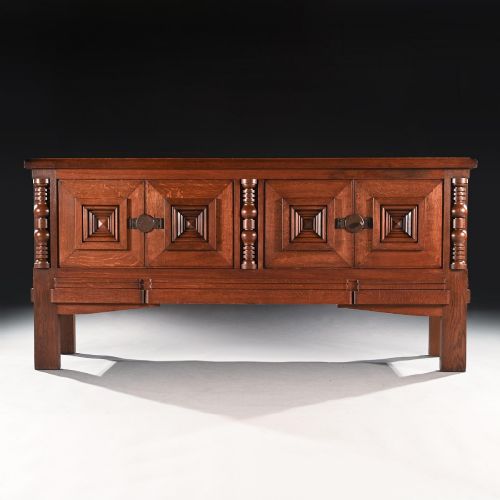
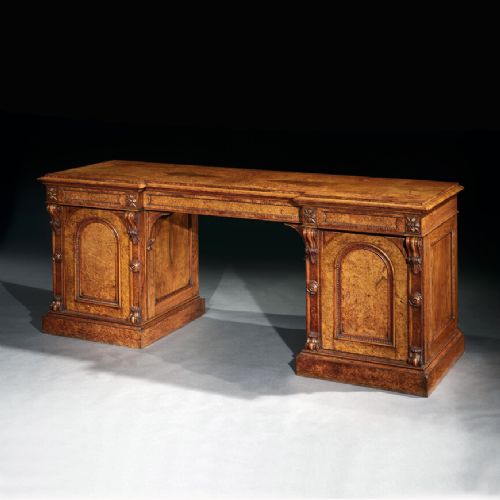
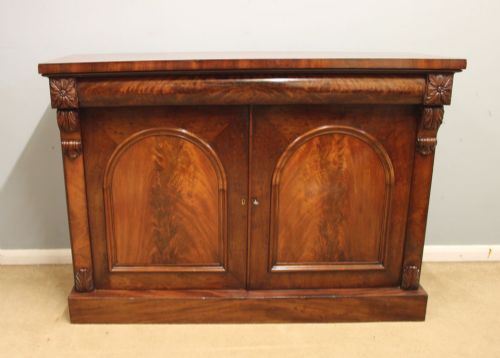
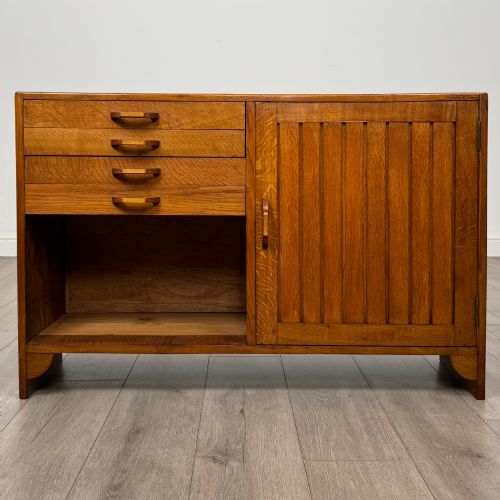



Mid Century Buffet
These mid century buffet pieces bring practical storage and solid timber construction to a dining room, offering a functional surface for serving food.
Mid Century Buffet
A mid century buffet serves as a low storage unit or serving surface, commonly found in dining spaces across various historical periods.
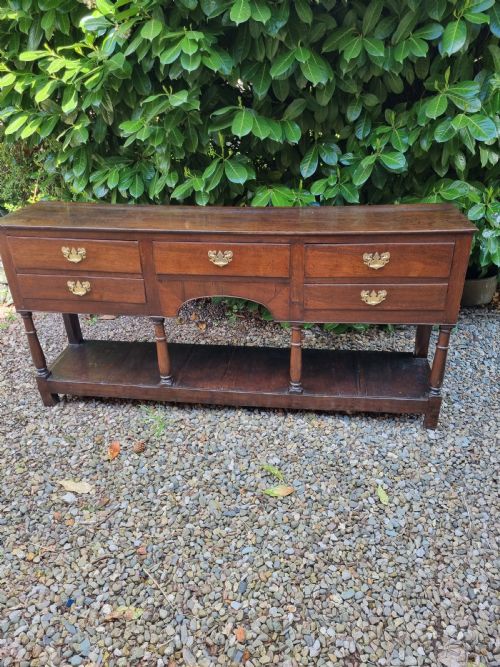
Buyers will encounter regional variations, such as Swedish birch pieces and Welsh oak dresser bases, alongside specific stylistic expressions like French Art Deco and Mid-Century Modern.
Materials and construction
Cabinet makers relied heavily on solid hardwoods like oak, mahogany, walnut, and rosewood, often applying veneers to achieve smooth exterior surfaces.
Hardware elements typically incorporate brass for handles and hinges, while internal shelving utilises pine or secondary timbers.
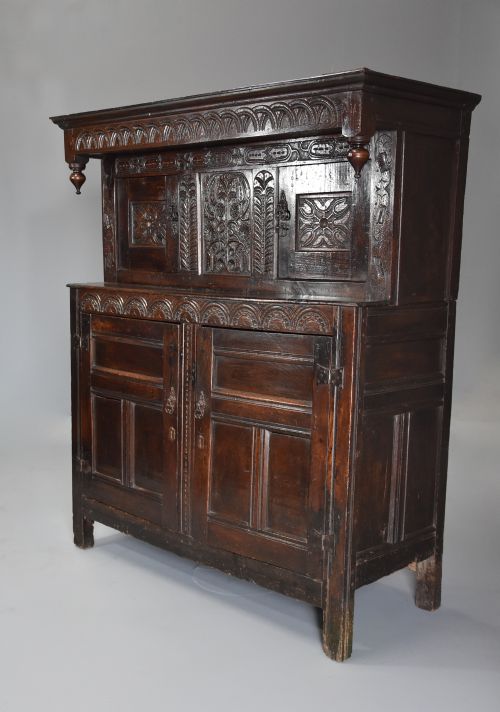
Construction techniques range from heavily carved joinery on early press cupboards to streamlined tambour doors and sleek polished finishes on later examples.
Mid Century Buffet Retail Price Guide 2026
Typical asking prices for mid century buffet among the pieces listed under this phrase on Sellingantiques today, from the lower quarter to the upper quarter. They describe what is for sale here now, not the wider market.
Listings feature timbers such as oak, mahogany, rosewood, and birch, alongside styles ranging from seventeenth-century Jacobean to mid-century modern.
Judging the quality
Quality rests upon the selection of timber figures, the precision of the dovetail joinery in drawers, and the integrity of the original surface patina.
Superior examples retain their original brass fittings, unwarped doors, and maker stamps, whereas lesser pieces display unsympathetic timber replacements or compromised structures.
Charles Dudouyt·Edward Barnsley
The Mid Century Buffet Glossary
- Chiffonier
- A compact sideboard featuring a low cupboard base, frequently surmounted by a mirrored back or tiered shelving for display. It serves well for smaller dining areas.
- Credenza
- A low cabinet originating in Italy, typically standing on short legs or directly on the floor with enclosed cupboards. It provides formal storage for dining porcelain and linen.
- Press cupboard
- A heavy storage piece divided horizontally, featuring upper and lower cabinet doors enclosing shelves or hanging space. Early examples display dense geometric carvings.
- Tambour door
- A flexible door constructed from narrow vertical strips of wood glued to a canvas backing, allowing it to slide smoothly around a curved cabinet corner.
Mid Century Buffet: Frequently Asked Questions
What is a mid century buffet used for?
These pieces function primarily as serving surfaces during meals and provide enclosed storage below for table linen, cutlery, and glassware. They anchor the dining room layout while keeping everyday serving items close at hand.
Over the centuries, the form adapted from heavy sacramental or display cupboards into dedicated dining room servers with drawers and shelved interiors.
How do I date a wooden buffet?
Dating relies on examining the timber species, joinery methods, and hardware style. Earlier pieces from the seventeenth and eighteenth centuries show pegged mortise and tenon joints, while nineteenth and twentieth-century versions utilise machine-cut dovetails and modern hinges.
Secondary timbers inside drawers and the presence of maker stamps or signatures provide further chronological clues.
Where should I place a buffet?
A buffet belongs against a primary dining room wall where it remains easily accessible for serving food without obstructing foot traffic. Ensure adequate clearance around the unit so cabinet doors and drawers open fully.
Keep wooden pieces away from direct heat sources and strong sunlight to prevent the timber and veneers from drying out or fading.
How do I care for polished wood?
Maintain the timber surface by dusting regularly with a soft, dry cloth and applying natural beeswax periodically to nourish the grain. Avoid silicone sprays and excess moisture, which can damage aged polish and veneers over time.
Promptly wipe up any liquid spills on the serving surface to prevent water marks from penetrating the finish.