




Mid Century Armoire
These mid century armoire selections bring practical scale and historical presence to a room, offering generous storage through fitted doors and deep timber frames.
Mid Century Armoire
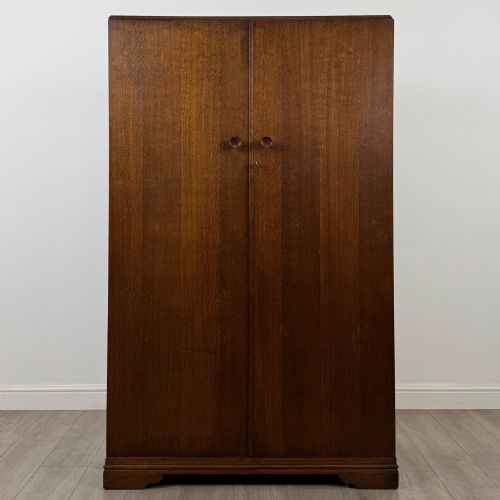
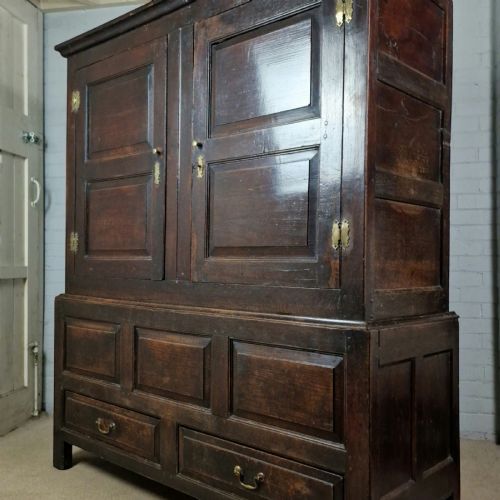
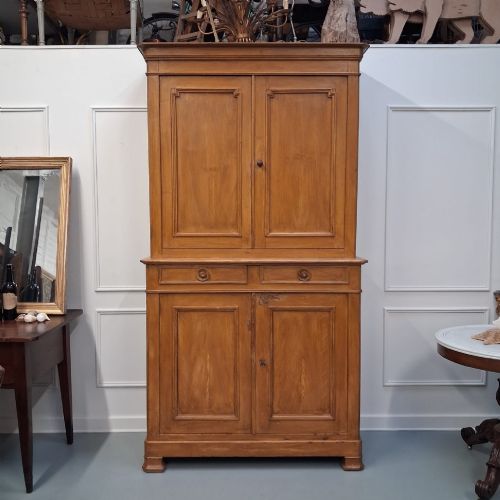
When buyers search for a mid century armoire, they encounter a diverse selection of large storage furniture that spans centuries of cabinet-making. The examples appearing here include French provincial models, Scandinavian painted cupboards, and substantial wardrobes built from robust timbers.
The term frequently encompasses related large storage formats such as linen presses, housekeepers cupboards, and compactum wardrobes. These pieces share a primary function of storing garments and household textiles behind substantial panelled or mirrored doors.
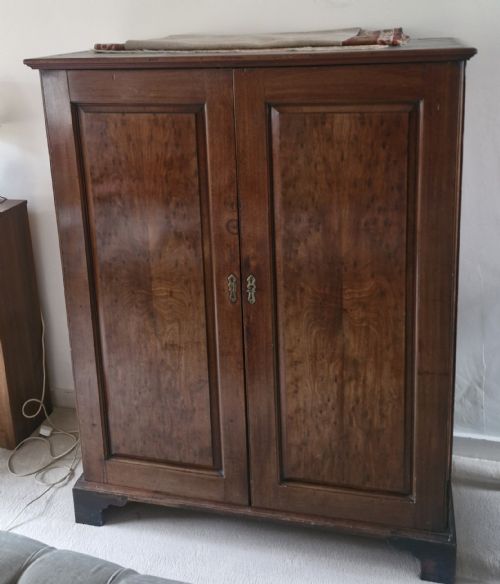
Most items grouped under this search span the eighteenth and nineteenth centuries, alongside mid-century Scandinavian output. Buyers routinely find utilitarian oak tack cupboards sitting alongside polished mahogany presses and walnut cabinets with carved detailing.
Materials and construction methods
Makers relied heavily on solid hardwoods like oak, mahogany, walnut, and cherry to construct stable carcasses capable of supporting heavy doors. Secondary timbers such as pine appear in concealed structural areas and internal shelving.
Decorative surfaces often feature burr veneers, hand-painted finishes, or elaborate carved motifs executed in the Renaissance Revival and Jacobean traditions. Metal hardware, including brass hinges and iron lock plates, secures the heavy access points.
Listings span multiple centuries, incorporating eighteenth-century mahogany presses, nineteenth-century walnut cabinets, and mid-century Scandinavian birch wardrobes.
Quality variations in large storage furniture
Construction standards differ significantly between utilitarian provincial storage and formal parlour furniture. Superior examples utilise sophisticated joinery such as dovetailed framing and pegged tenons to maintain structural integrity over generations.
The choice of timber grain and the precision of carved ornamentation define the upper tiers of craftsmanship. Finer pieces display carefully selected burr walnut or figured mahogany veneers matched symmetrically across double doors.
Oscar Nilsson Nordiska Kompaniet
The Mid Century Armoire Glossary
- Compactum wardrobe
- A multi-compartment wardrobe designed to hold diverse types of clothing, often combining hanging space with drawers and sliding trays. This form maximises interior capacity within a single unit.
- Linen press
- A tall piece of furniture featuring upper sliding shelves for textiles and lower drawers for bulkier items. Eighteenth-century versions frequently utilise solid mahogany or oak.
- Housekeepers cupboard
- A large storage cabinet traditionally utilised in large estates for storing household provisions and linens. These often feature painted wood or utilitarian oak construction.
- Tack cupboard
- A specialised storage piece historically used for horse riding equipment or general gear. These robust oak cabinets provide deep interior space.
- Burr walnut
- A highly figured wood grain obtained from tree growths, highly prized for decorative veneer work on nineteenth-century cabinet doors.
Mid Century Armoire: Frequently Asked Questions
How do I use a mid century armoire today?
These large pieces serve brilliantly as primary bedroom wardrobes or living room linen stores. Their deep shelves and hanging space accommodate modern clothing and household items with ease.
Position them against solid walls where their considerable scale can anchor the room. Ensure you measure ceiling height and clearance for opening doors fully before installation.
What is the difference between an armoire and a wardrobe?
An armoire traditionally describes a tall cupboard with doors enclosing shelving or hanging space, often originating from continental Europe. Wardrobes specifically denote furniture designed primarily for hanging garments.
In historical listings, these terms frequently overlap. Examine the interior configuration of shelves versus hanging rails to determine the best fit for your storage needs.
How can I tell eighteenth-century pieces apart from nineteenth-century ones?
Eighteenth-century examples often display simpler architectural lines executed in solid oak or mahogany, frequently taking the form of linen presses or housekeepers cupboards. Their construction relies heavily on pegged joinery and hand-planed panels.
Nineteenth-century pieces frequently introduce exotic veneers like burr walnut, alongside revival styles featuring heavy carved decoration. Mirror doors and compactum internal layouts also become prevalent during this later era.