

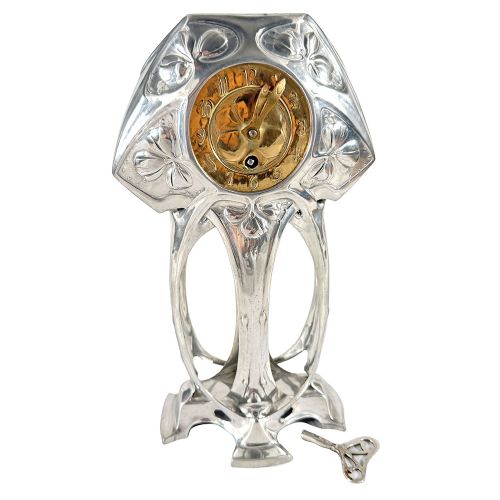

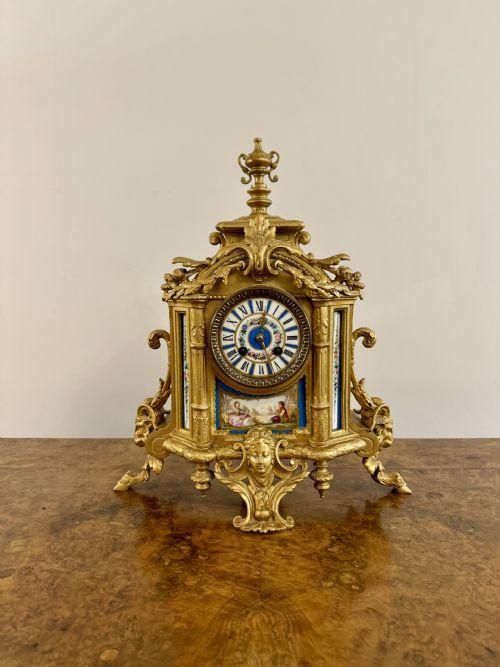


Metal Table Clock
A metal table clock brings mechanical precision and sculptural form to a room, offering both practical timekeeping and decorative weight.
Metal Table Clock
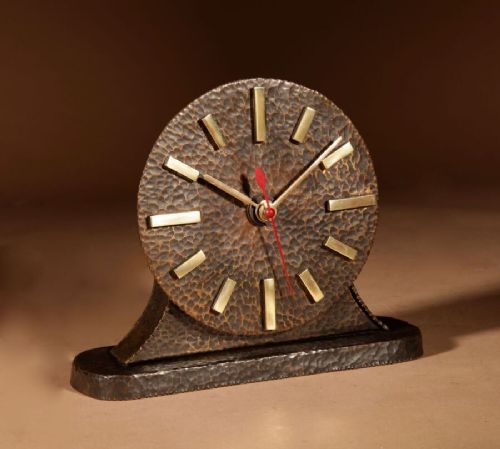
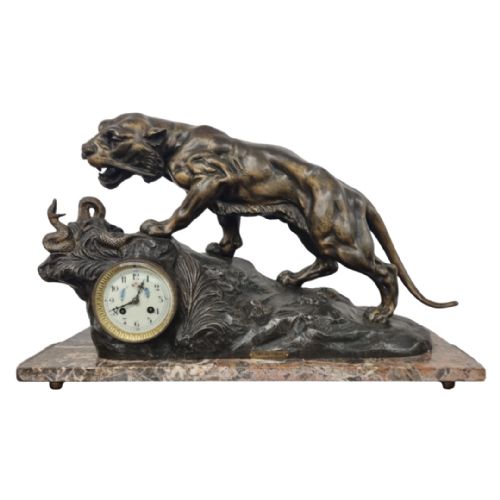
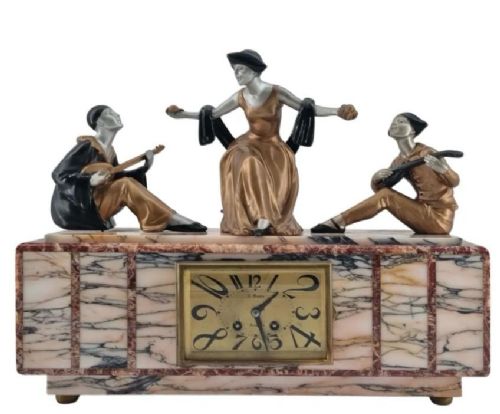
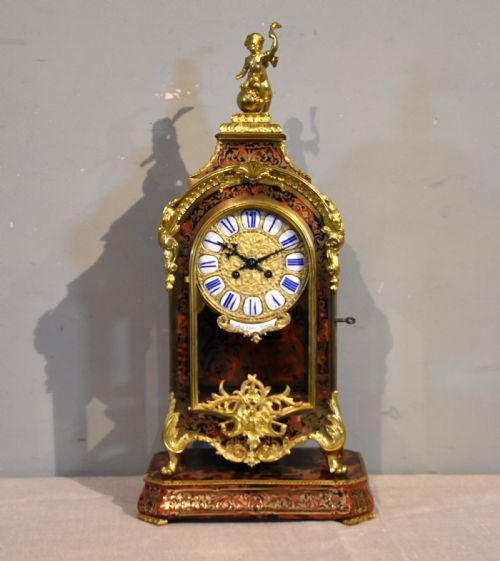
A metal table clock serves as a functional timepiece and a decorative object for desks, mantels, and side tables. When exploring metal table clock designs, buyers frequently encounter 19th-century French works alongside later Art Deco pieces.
The selection ranges from miniature carriage clocks to large mantel clocks and desk compendiums. Common forms include architectural portico clocks, figural pieces involving putti or literary figures, and utilitarian timepieces.
Origins span British workshops, Swiss makers, and prominent French foundries producing gilt bronze and ormolu cases. Stylistic influences stretch from French Rococo Revival and Baroque to Mid-Century Modern and Amsterdam School aesthetics.
Materials and Construction
Cases combine structural metals such as brass, bronze, pewter, and gilt metal, frequently enhanced with applied ormolu or fire gilding. Many pieces incorporate decorative panels of porcelain, marble, onyx, or champlevé enamel.
Clockmakers housed mechanical movements inside these heavy housings, utilising brass gear trains and escapements driven by springs or fuses. Dials often feature painted enamel numerals protected beneath bevelled glass plates.
Materials documented across the listings include brass, gilt bronze, porcelain, marble, and champlevé enamel.
Assessing Quality
Quality reveals itself in the crispness of the metal chasing and the depth of the gilding or patination. Hand-finished bronze and ormolu display sharp relief and defined details, whereas lower tiers rely on softer cast definitions.
The integrity of the internal movement and the integration of components dictate the standard of a piece. Original matching dials, signed movements by established makers, and intact porcelain plaques elevate a clock beyond standard production models.
R Varnier·Friedrich Adler for Osiris·Japy Frères·Leon Message·Jollet et Cie·Smiths Clockmakers·John Barwise of London·PH Mourey·Guilmet·Leroy and Fils·Japy Fils·Peerless Mathias Bauerle·Luxor
The Metal Table Clock Glossary
- Ormolu
- Gilt bronze produced by applying a mixture of gold and mercury to a bronze base and firing it. This technique creates a durable, golden surface finish found on many French items.
- Fusee
- A conical pulley used in clock movements to equalise the declining power of the mainspring as it unwinds. It ensures consistent force is delivered to the gear train.
- Champlevé
- An enamelling technique where troughs are dug into a metal surface and filled with vitreous enamel powder before firing. The surrounding metal lines separate the vibrant colour fields.
- Carriage clock
- A small, portable spring-driven timepiece developed for travel, typically fitted with a carrying handle and glass panels. They often sit inside protective leather outer cases.
- Garniture set
- A clock accompanied by matching decorative side pieces such as urns or candelabras. These sets were designed to create a balanced arrangement on a mantelpiece.
Metal Table Clock: Frequently Asked Questions
How do I wind a vintage mechanical clock?
Most mechanical clocks require a key inserted into the winding squares on the dial face to tension the mainspring barrels. Care must be taken not to overwind the mechanism, stopping as soon as resistance is felt.
Pendulum-regulated clocks may also require manual beating adjustment to ensure the tick remains even after the clock is moved to a new surface.
Where should I place a metal table clock?
These clocks suit stable, flat surfaces away from direct sunlight, excessive moisture, and temperature fluctuations. Mantelpieces, sideboards, and heavy executive desks provide sturdy support for weighty bronze and marble cases.
Because many examples feature delicate glass panels and projecting ornamentation, placement should avoid high-traffic hallways where accidental knocks might occur.
How do I identify the period of a clock?
Dating relies on combining stylistic clues with mechanical signatures found on the dial or movement backplate. Rococo and Baroque revivals point toward the mid-to-late nineteenth century, while geometric cases and stylised figures indicate the 1920s and 1930s.
Maker stamps and serial numbers stamped onto brass plates provide definitive clues when cross-referenced against historical records.
What maintenance do antique clocks require?
Routine care involves dusting cases with a soft, dry brush and keeping glass panels clean. Mechanical movements benefit from professional cleaning and lubrication every few years to prevent wear on brass gears.
Moving a clock requires securing or removing the internal pendulum first to protect the suspension spring from damage.