
Metal Log Bucket
A metal log bucket sits by the hearth to hold fuel for the fire while bringing warmth and shine to the room.
Metal Log Bucket
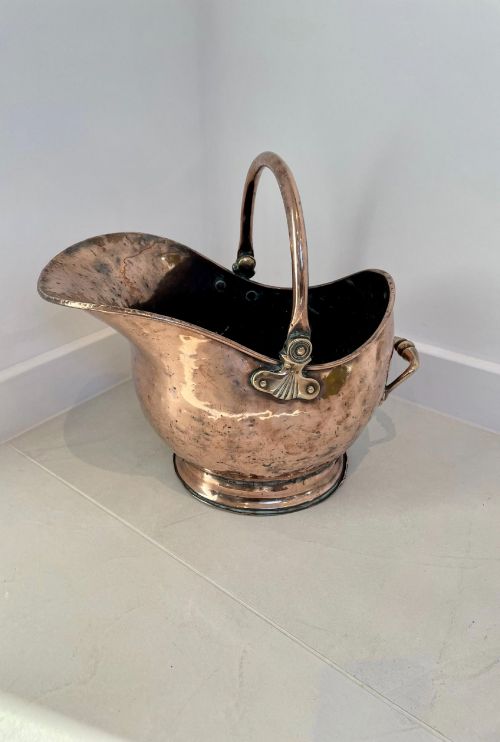
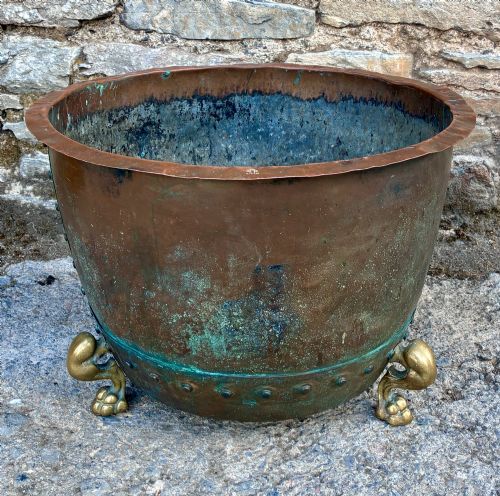
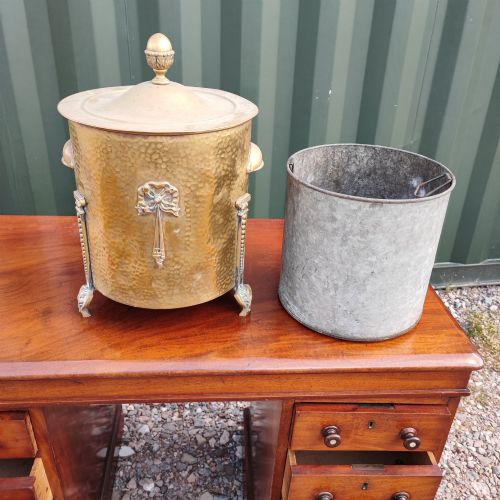
When you search for a metal log bucket, you encounter heavy fireside vessels originating primarily from the Victorian, Edwardian, and Georgian periods. These containers served practical duties holding coal and logs beside the hearth, though many doubled as planters or jardiniere vessels.
How they were made
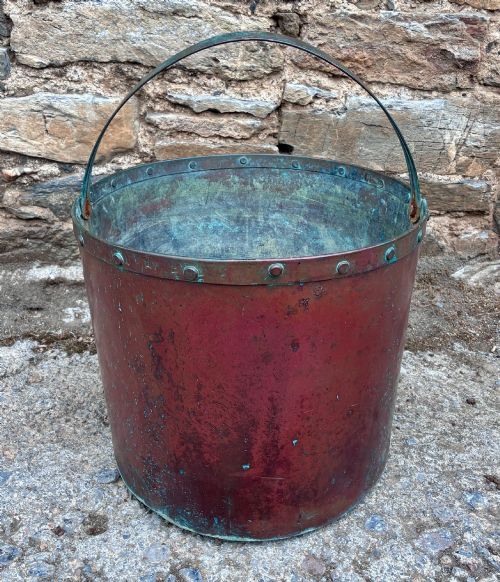
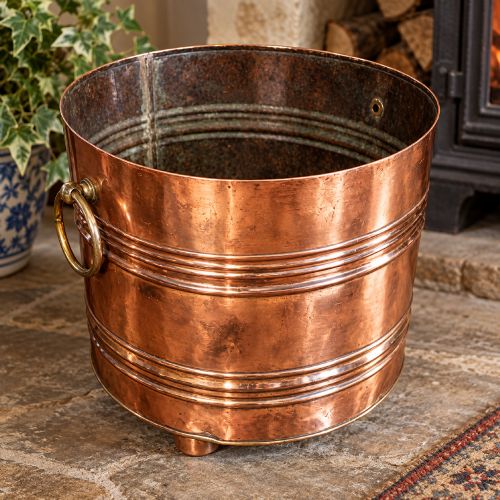
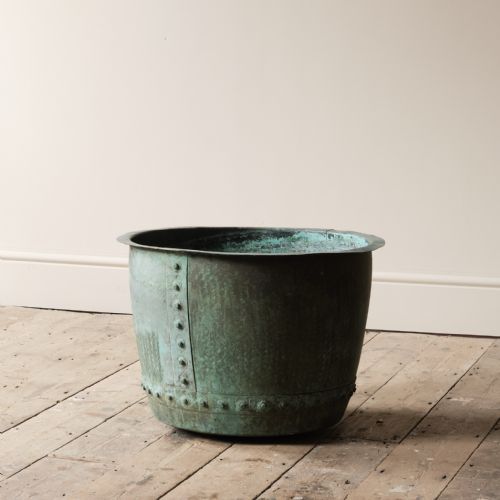
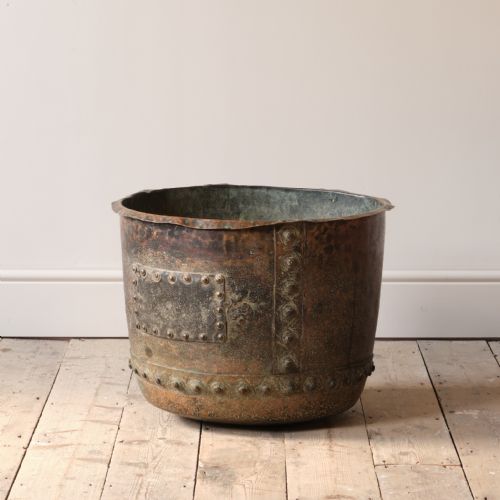
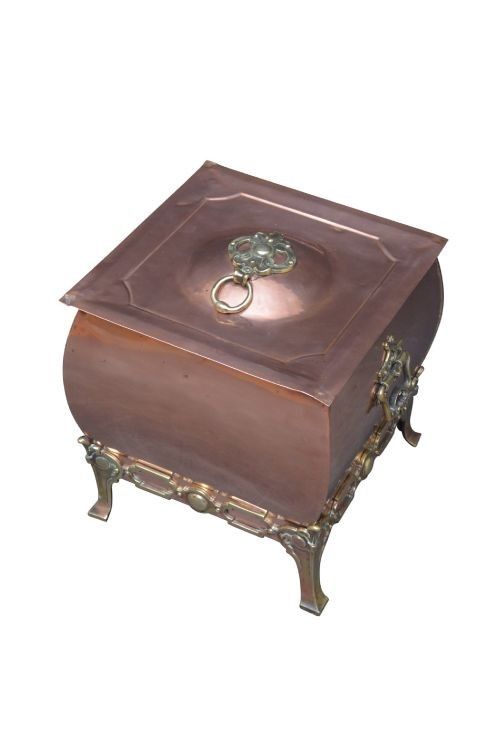
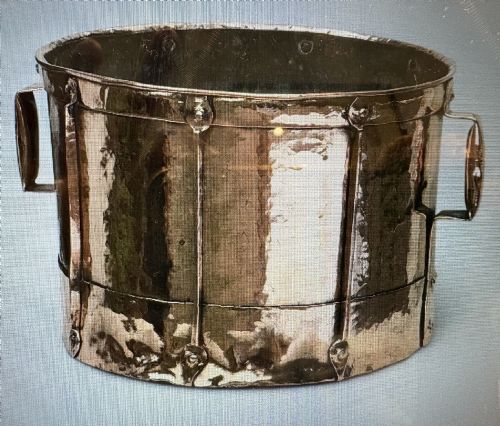
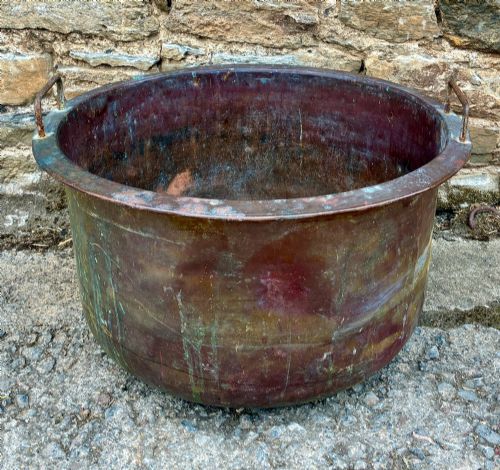
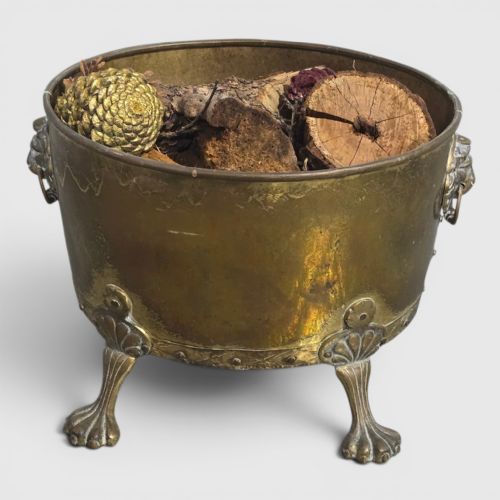
Makers utilised heavy gauge sheet copper and brass, shaping the metal bodies through hammering and joining the seams with visible iron or copper rivets. Iron and wrought iron frequently provided structural support via swing handles, frames, or rims.
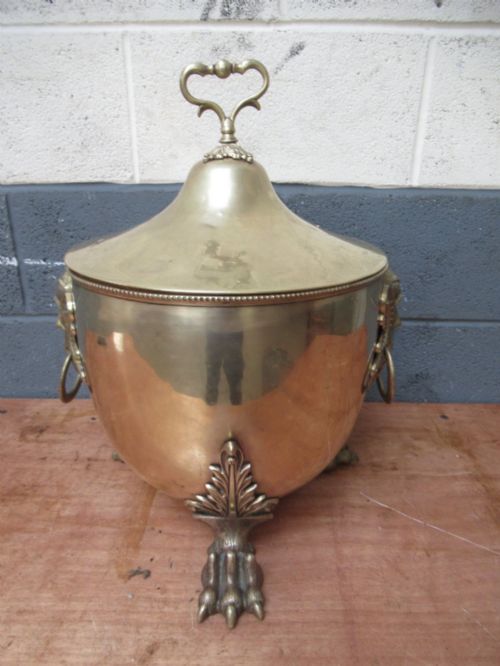
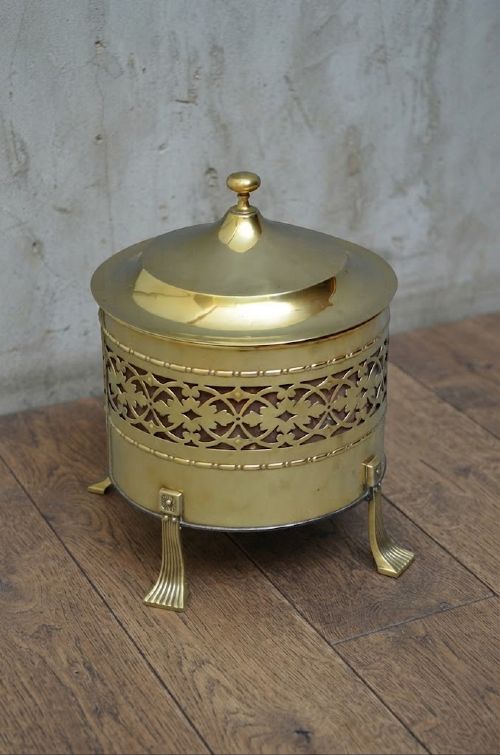
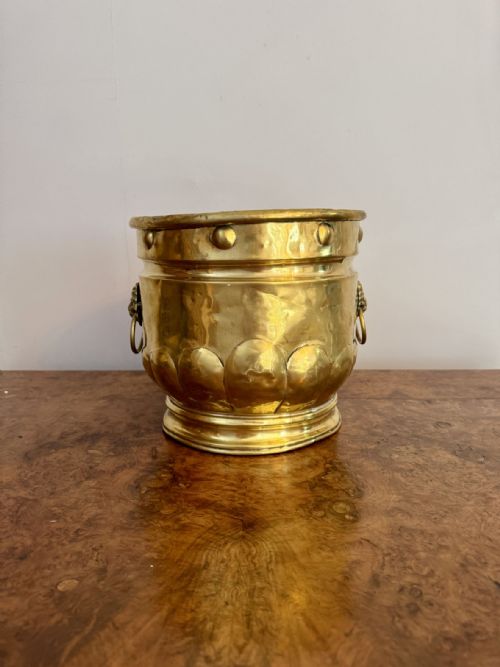
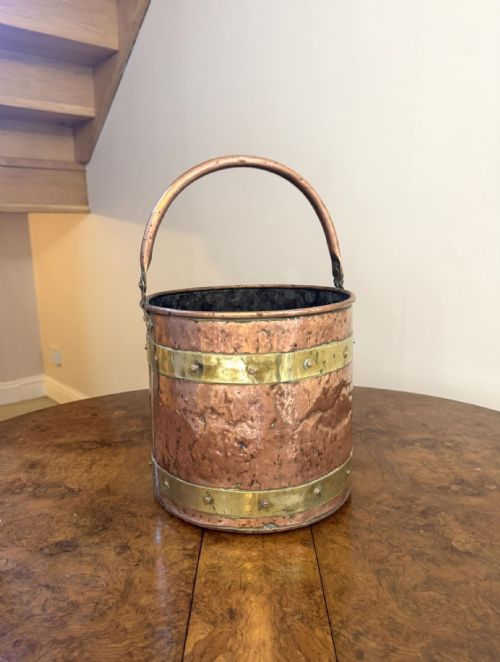
Detailing often involved embossed patterns, fretwork designs, or applied brass bands secured to the main copper body. Some vessels incorporated wooden elements or iron wheels for mobility.
One industrial survivor rolls into view on original wheels from Richard Arkwright Masson Mills.
What varies in quality
The distinction between ordinary and superior examples rests upon the thickness of the metal sheet and the integrity of the construction. Heavier gauge copper and substantial brass retain their structural form better under the weight of fuel.
Artistry in hand-hammered surfaces, crispness of embossed crests or fretwork, and the inclusion of original components such as matching shovels or iron frames elevate certain pieces above standard utilitarian items.
Henry Loveridge·Richard Arkwright Masson Mills
The Metal Log Bucket Glossary
- Jardiniere
- An ornamental pot or receptacle for holding plants or flowers. These vessels often share forms identical to coal and log bins.
- Coal Scuttle
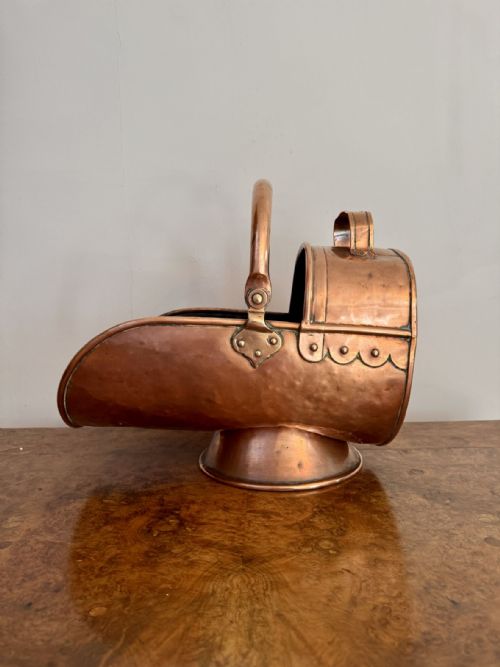
- A bucket or container specifically designed for carrying and storing coal for a fireplace. They frequently feature a tilted opening or a shovel attachment.
- Riveted
- Joined together using metal bolts or pins hammered flat at the ends. This technique provides durable construction on heavy copper vessels.
- Arts and Crafts
- A design movement emphasising handcraftsmanship and simple forms. Pieces from this style often display honest construction with visible rivets and hammered textures.
Metal Log Bucket: Frequently Asked Questions
What is a metal log bucket used for?
These vessels serve primarily as practical containers to hold firewood and coal beside a fireplace. Their robust metal construction handles the heavy weight of logs and dirt without damage.
Beyond fireside use, many examples function as large planters or decorative jardiniere vessels for indoor plants and trees.
How do I identify a Victorian metal log bucket?
Victorian examples often display heavy gauge copper bodies joined with visible rivets, frequently accented by contrasting brass bands or swing handles. Common decorative touches include embossed patterns or crests on the front.
They date from the 19th century and generally reflect either utilitarian strength or the ornate tastes of the period.
Are these buckets made of solid brass or copper?
The listings show vessels constructed from solid sheet copper, brass, iron, and galvanised metal. Makers often combined materials, using copper bodies with brass bands or wrought iron handles.
Solid metal construction ensures the durability needed for holding heavy fuel loads over decades.
How do Arts and Crafts log buckets differ?
Arts and Crafts pieces focus on visible handcraftsmanship, featuring hand-hammered copper surfaces and honest structural details like exposed rivets. They avoid excessive ornamentation in favour of form and material integrity.
These designs typically date from around 1900 and embrace simpler, more functional lines.