

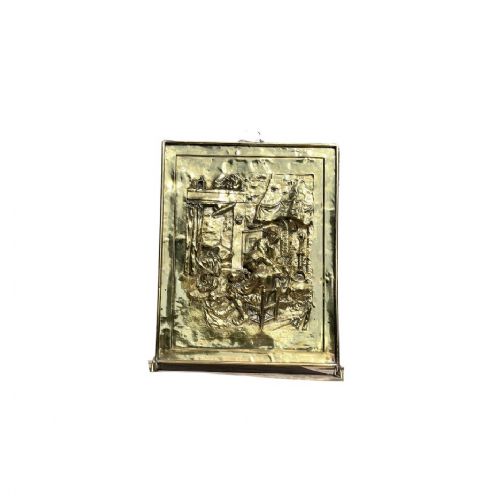


Metal Fireplace Panel
These metal fireplace panel designs shield the room from stray sparks while anchoring the hearth with period weight and character.
Metal Fireplace Panel
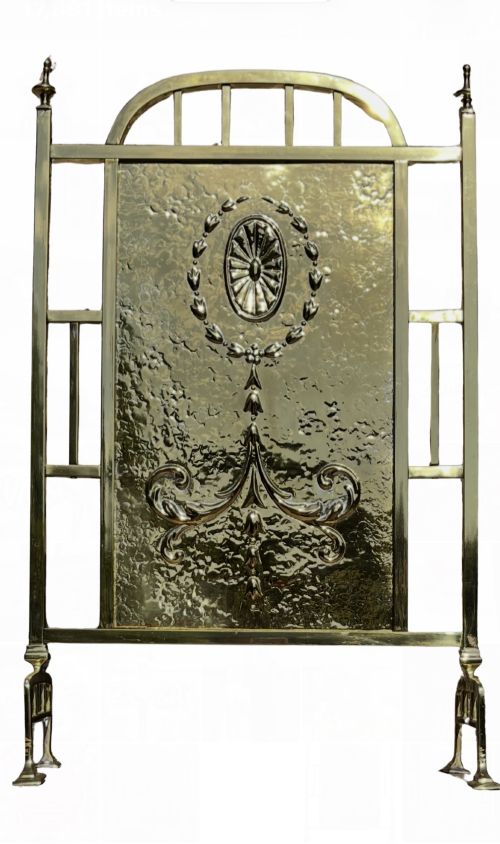
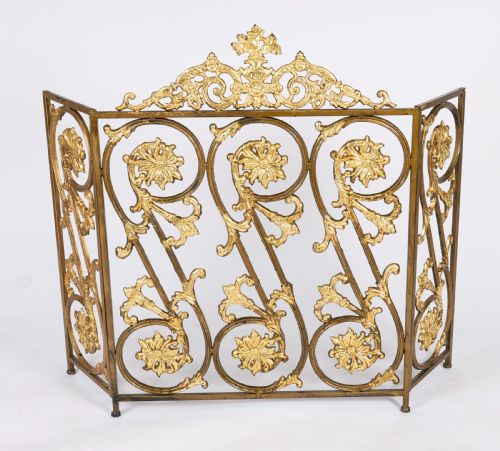
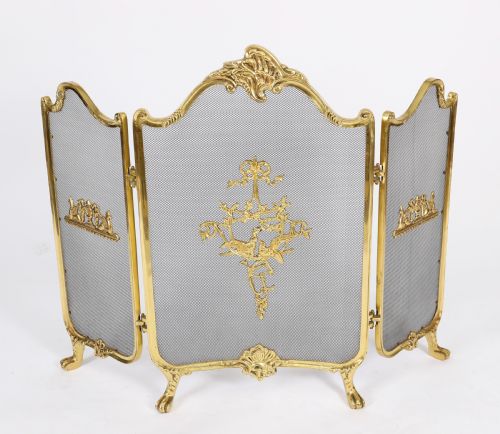
A metal fireplace panel functions primarily as a fire screen or spark guard, designed to sit before an active hearth and protect the surrounding room. Buyers searching this phrase encounter screens and guards configured as folding units, curved ironwork pieces, and embossed inserts.
The pieces listed on this page span the nineteenth century, nineteen hundred, and nineteen twenty, drawing on Arts and Crafts, Victorian, French Rococo, Louis XIV Revival, Gothic Revival, Art Nouveau, and Edwardian styles. Materials range from wrought iron and cast iron to copper, brass, gilt bronze, wire mesh, and gilt brass.
How they were made
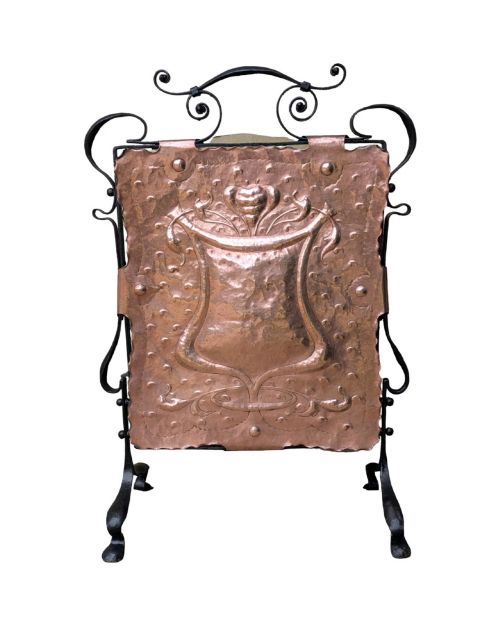
Wrought iron and cast iron provide the rigid structural frames and folding supports for these panels, often shaped into curved ironwork or tall guards. Artisans utilised hammering, joining, and casting techniques to achieve both robust utility and decorative form.
Copper and brass form the decorative panels and fire inserts, frequently finished with hand embossing to display intricate surface patterns. Fine wire mesh is integrated into folding spark guards to maintain visibility of the fire while trapping embers.
Metal Fireplace Panel Retail Price Guide 2026
Typical asking prices for metal fireplace panel among the pieces listed under this phrase on Sellingantiques today, from the lower quarter to the upper quarter. They describe what is for sale here now, not the wider market.
Listings feature periods spanning the nineteenth century up to nineteen twenty, utilising copper, iron, brass, and gilt bronze across diverse revival styles.
What varies in quality
The distinction between standard utility items and finer decorative examples lies in the depth and hand-working of the metalwork. Embossed copper and chased gilt bronze display a level of sculptural detail that elevates a functional guard into a significant decorative object.
Structural integrity and the quality of the hinge mechanisms in folding pieces determine durability and ease of use. Heavier gauges of iron and brass provide stability, ensuring the panel stands securely before the hearth.
The Metal Fireplace Panel Glossary
- Spark guard
- A protective mesh or metal screen designed to catch flying embers from an open fire. These are often built with folding panels for adjustable placement.
- Embossed
- A technique where metal is raised or stamped from the reverse side to create a relief design on the surface. This finish is commonly seen on copper fire inserts and screens.
- Gilt bronze
- Bronze that has been coated with a thin layer of gold, providing a rich metallic lustre. It appears on revival pieces influenced by French decorative styles.
- Wrought iron
- Iron that has been heated and hammered into shape by a smith, resulting in a fibrous and durable material. It forms the sturdy framework of many period hearth accessories.
Metal Fireplace Panel: Frequently Asked Questions
What is a metal fireplace panel used for?
These panels act as a physical barrier between an open fire and the room, catching flying sparks and embers to protect flooring and furnishings.
Beyond safety, they serve as decorative focal points for the hearth during warmer months when the fireplace is not in use.
How do I identify an Arts and Crafts fire screen?
Arts and Crafts screens typically feature hand-worked copper or wrought iron with an emphasis on honest construction and natural motifs.
They avoid excessive ornamentation in favour of visible hammering marks and functional simplicity.
What materials were commonly used for fire screens?
Iron and wrought iron provide sturdy structural frames, while copper and brass are chosen for their warm tones and malleability in decorative panels.
Fine wire mesh is frequently incorporated to ensure spark protection without entirely blocking the view of the fire.
How do I date a nineteenth-century fire screen?
Dating relies on recognising stylistic markers such as the elaborate curves of French Rococo revival or the linear floral motifs of Art Nouveau.
Material combinations and construction methods, such as hand-embossed copper paired with heavy iron frames, also point to specific nineteenth-century and early twentieth-century decades.