


Metal Fireplace Companion Set
A metal fireplace companion set brings functional heritage and period character directly to the hearth.
Metal Fireplace Companion Set
A metal fireplace companion set gathers the essential tools required to manage a traditional coal or wood fire into a cohesive group. Buyers searching this phrase encounter groupings that range from utilitarian sets of fire irons to figurative companion sets and complete fireside arrangements.
The versions most commonly met on this page span the Victorian and Edwardian eras, alongside earlier Georgian examples and pieces from the early twentieth century. These sets typically include pokers, tongs, and shovels, sometimes accompanied by fire dogs, fenders, or a dedicated screen.
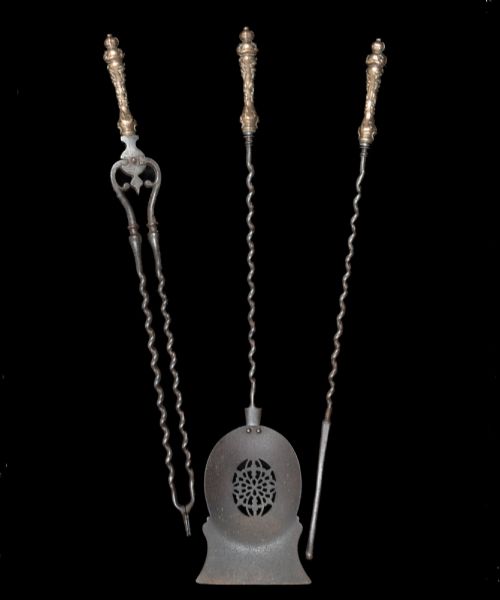
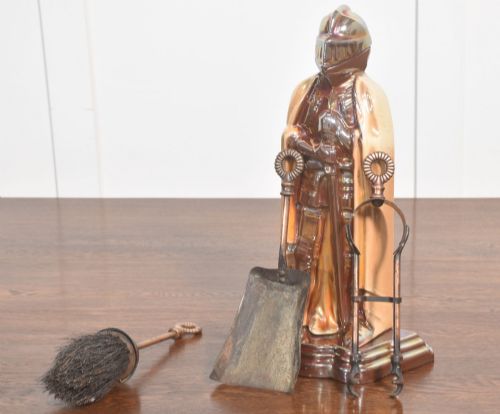
Forms vary from austere, practical wrought iron implements to decorative brass and polished steel assemblies suited to formal domestic interiors. Stylistic influences stretch from Gothic Revival and English Country House aesthetics to rustic country designs and figural novelties.
Materials and construction
Makers utilised durable metals suited to the intense heat and heavy use of the hearth, predominantly employing steel, brass, wrought iron, and cast iron. Polished steel and burnished steel provided a bright, reflective finish for formal rooms, while robust wrought iron and cast iron served utilitarian purposes.
Techniques combined blacksmithing and foundry work, shaping iron and steel through forging and hammering while casting brass and iron components. Surface treatments included copper finishes and painted details, as seen on figural sets like the painted metal knight.
Current listings feature metal fireplace companion sets spanning the Georgian, Victorian, and Edwardian periods, utilising brass, wrought iron, and polished steel.
Assessing quality and character
Quality in a metal fireplace companion set rests upon the substance of the materials and the refinement of the forging or casting. Heavier gauges of steel and solid brass components separate substantial utilitarian pieces from lighter decorative iterations.
The integrity of the design and the unity of the set dictate its standing, with matching tools that share a distinct period style commanding greater interest. Details such as burnished steel surfaces and sculptural handles reveal the care invested by the original maker.
The Metal Fireplace Companion Set Glossary
- Fire irons
- The collection of pokers, tongs, and shovels used to tend a hearth. These tools were often displayed together in a stand or resting against fire dogs.
- Fire dogs
- Andirons placed horizontally on the hearth to support logs for burning. They frequently appear paired with matching fire tools.
- Wrought iron
- Iron that has been heated and shaped with tools by a blacksmith. This material provides structural strength and a fibrous texture visible in older pieces.
- Burnished steel
- Steel that has been polished to a smooth, lustrous finish. This treatment enhances the metal and protects it from tarnishing in domestic use.
Metal Fireplace Companion Set: Frequently Asked Questions
What tools come in a set?
A standard set generally includes a poker for adjusting fuel, tongs for handling logs or coal, and a shovel for clearing ash.
Depending on the arrangement, these implements are joined by items such as fire dogs, fenders, or companion stands.
How do I date a set?
Dating relies on material finishes, manufacturing marks, and stylistic clues corresponding to periods like the Georgian or Victorian eras. Polished steel and specific decorative motifs often point to distinct decades of manufacture.
Examining construction techniques, such as hand-forged wrought iron versus later cast methods, further clarifies the age.
Are these sets for use?
Many antique metal sets remain robust enough for regular service on an active hearth. Solid steel and iron tools handle daily fires easily.
Buyers often select them to combine practical hearth management with period decorative appeal.
How do I maintain steel tools?
Polished and burnished steel requires dry storage and occasional light cleaning to prevent surface oxidation from damp air. Keeping the metal free of ash residue preserves the original finish.
Applying a suitable protective wax or oil helps maintain the lustre of the metal over time.