


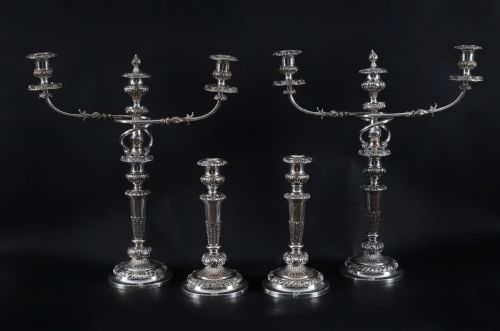

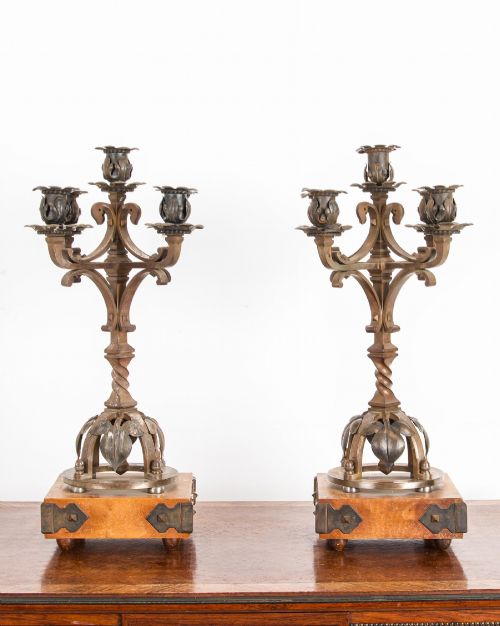


Metal Branching Candelabra
These metal branching candelabra are multi-light candleholders that bring height and atmosphere to a room, ranging from Georgian silver plate to Art Deco spelter.
Metal Branching Candelabra
When you search for metal branching candelabra, you are looking at multi-light candleholders designed to elevate a dining table or mantelpiece. The pieces seen here span from the 18th century through to the 1930s, encompassing formal Regency dining suites and decorative Victorian designs.
You are most likely to meet pairs of candelabra with four or five branches, often formed from silver plate, brass, or gilt bronze. Some examples incorporate marble bases or crystal drops, while others take the form of wall sconces or table lamps adapted from earlier lighting.
The styles shift from ornate George III and French Rococo Revival to the cleaner lines of Art Deco and Art Nouveau. Each period brings a distinct weight and metalworking technique to the branching arms.
Materials and construction
The construction relies heavily on cast and chased bronze, brass, and spelter, often combined with bases of white or coloured marble. Silver plate and Old Sheffield Plate provide reflective surfaces over base metals, requiring skilled smiths to fuse and shape the metal.
Branching arms are typically cast in sections and secured to central stems using threaded screws or pins, allowing for complex multi-light arrangements. Gilt bronze and ormolu finishes involve the application of gold leaf or mercury gilding to bronze substrates for lasting brilliance.
Metal Branching Candelabra Retail Price Guide 2026
Typical asking prices for metal branching candelabra among the pieces listed under this phrase on Sellingantiques today, from the lower quarter to the upper quarter. They describe what is for sale here now, not the wider market.
Listings feature metal branching candelabra in silver plate, brass, and bronze, spanning styles from George III to Art Deco.
Judging quality and execution
Quality reveals itself in the crispness of the chasing and the weight of the metal castings in the arms and drip pans. Superior pieces maintain balance across multiple branches without leaning or loosening at the joints.
The integrity of the original surface finish, whether patinated bronze, silver plate, or mercury gilding, separates standard production from finer workshop output. Details like hand-chased foliage and well-fitted marble socles indicate a higher grade of manufacture.
Blagden Hodgson And Co
The Metal Branching Candelabra Glossary
- Ormolu
- Gilded bronze, produced by applying a finely ground gold-mercury amalgam to a bronze object and heating it to drive off the mercury. This technique creates a rich, matte gold surface characteristic of French decorative arts.
- Old Sheffield Plate
- An early form of composite metal made by fusing a sheet of silver to a thicker copper ingot before rolling them into sheets. It allows items to have the appearance of solid silver while maintaining the strength of copper.
- Spelter
- An alloy of zinc and lead used as a cheaper alternative to bronze, particularly in decorative figures during the late 19th and early 20th centuries. It takes finishes well but is softer and lighter than bronze.
- Sconce
- A wall-mounted lighting fixture designed to hold candles or electric bulbs, often featuring branching arms that project outward from a backplate. They direct light across vertical surfaces in a room.
- Socle
- A short plinth or pedestal supporting a candelabrum, statue, or vase, frequently fashioned from marble in nineteenth-century metalwork. It adds structural stability and visual weight to the base.
Metal Branching Candelabra: Frequently Asked Questions
How do I clean tarnished silver plated candelabra?
Silver plated pieces require gentle cleaning with a specialist silver cloth to remove tarnish without wearing through the thin silver layer to the base metal beneath. Avoid abrasive pastes or harsh chemical dips that strip the historic finish.
For intricate branching arms and crevices, use a soft-bristled brush and mild soapy water, drying thoroughly afterwards to prevent moisture damage.
What is the difference between silver plate and Old Sheffield Plate?
Old Sheffield Plate involves a mechanical fusion of silver and copper sheet rolled together under heat, resulting in a durable composite where the copper sometimes shows through at high wear points. Standard silver plate, developed later through electroplating, deposits a thin chemical layer of silver evenly across a base metal.
Examining the edges often reveals the copper core characteristic of the earlier fusion technique.
How were multi-arm candelabra used historically?
Candelabra stood on dining tables, sideboards, and mantelpieces to provide ambient illumination during evening meals and gatherings before the advent of gas and electric lighting. The branching arms allowed multiple candles to burn simultaneously, maximising light output in large rooms.
Servants would use specialised snuffers to trim the wicks and manage the melting wax throughout the evening.