
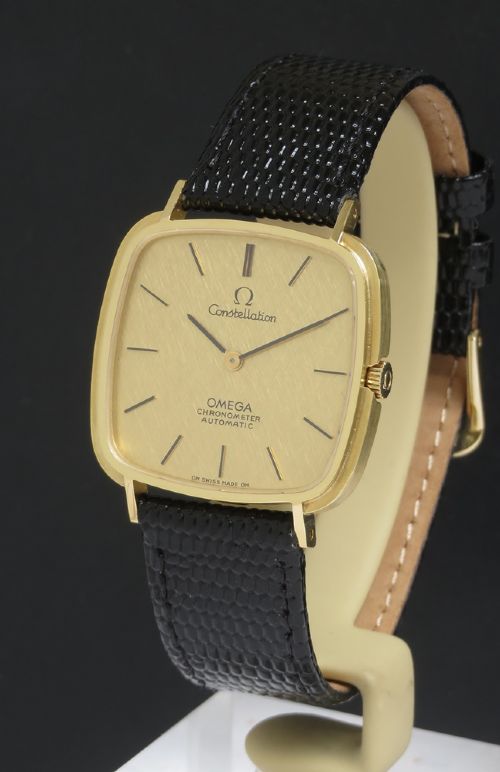
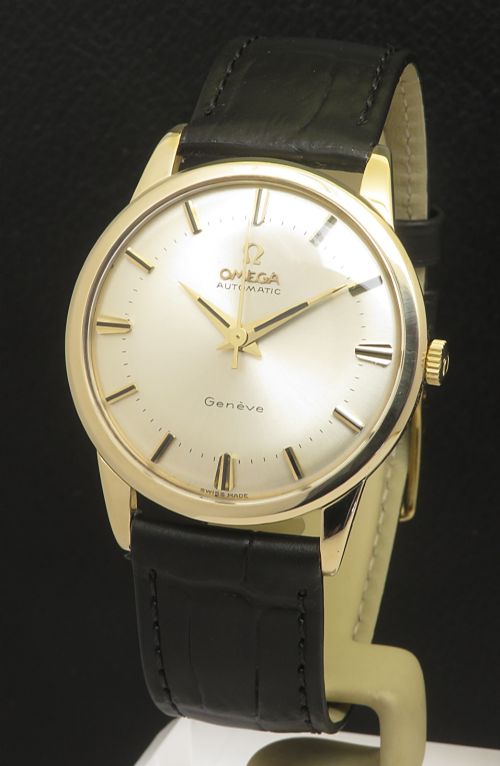
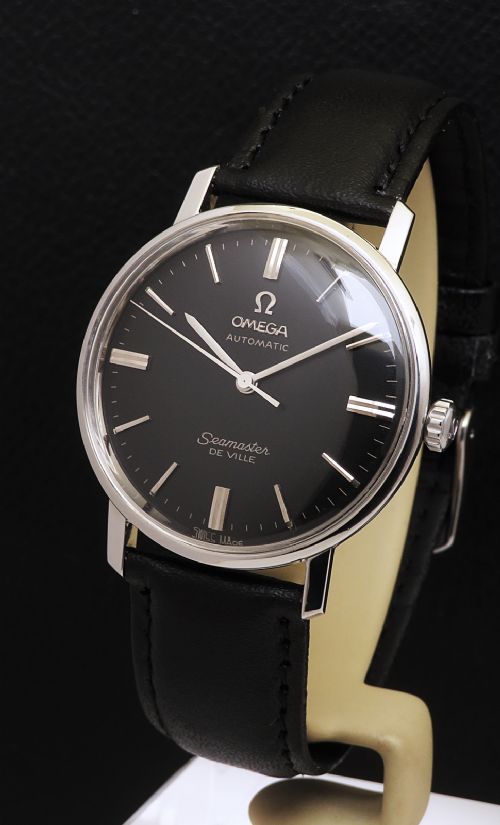
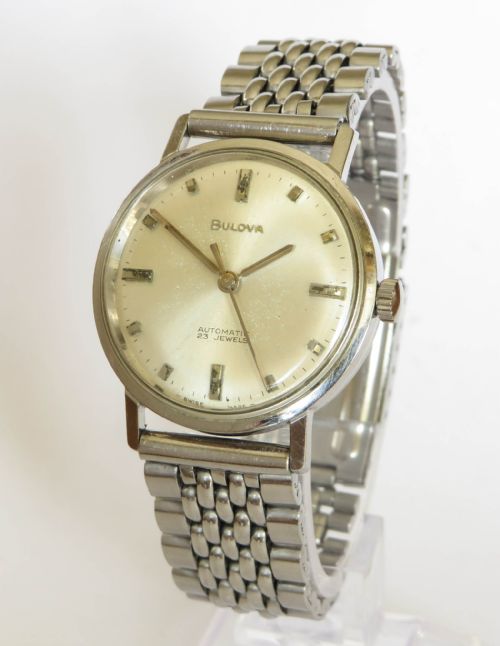
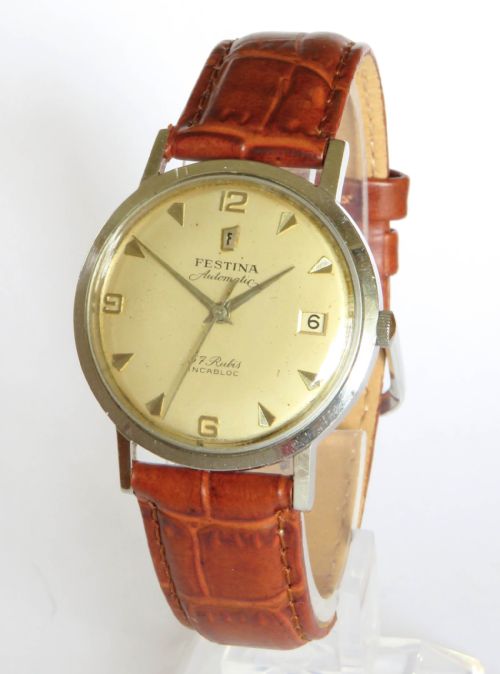
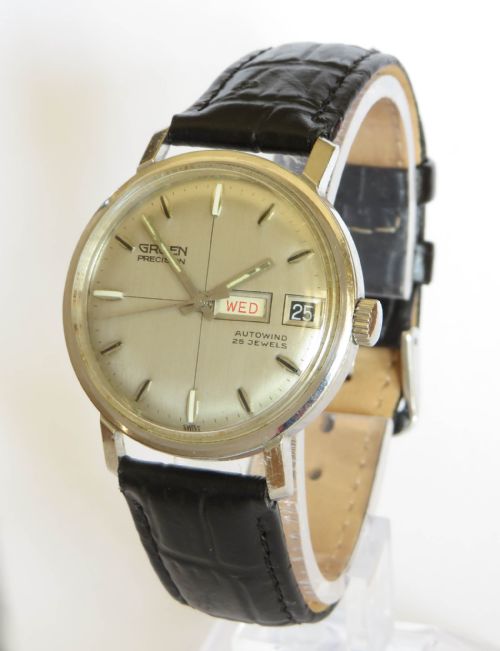
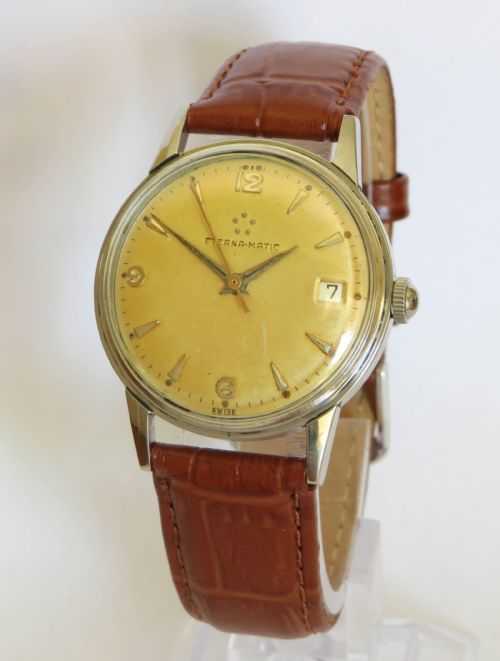
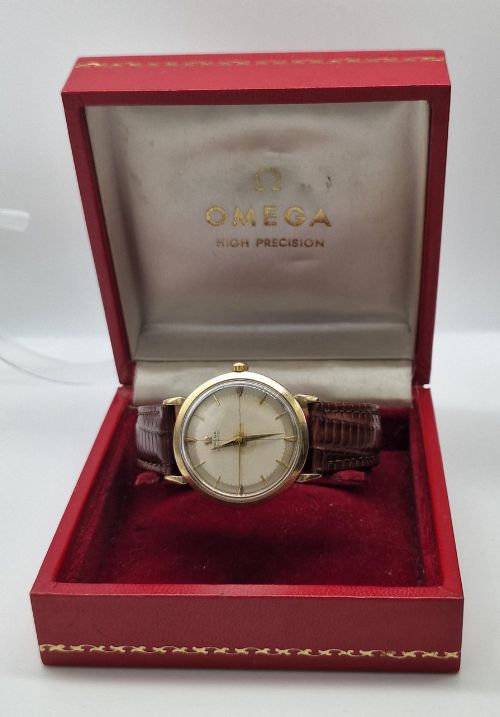
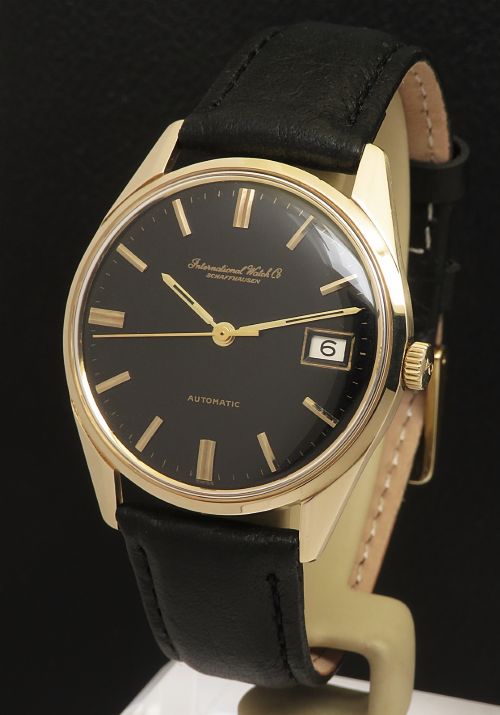
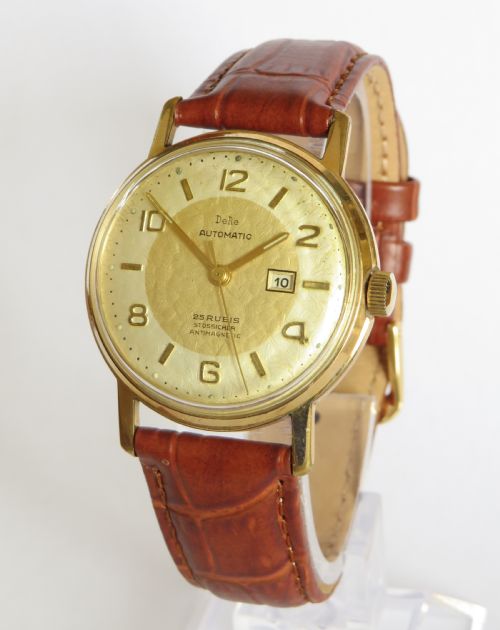
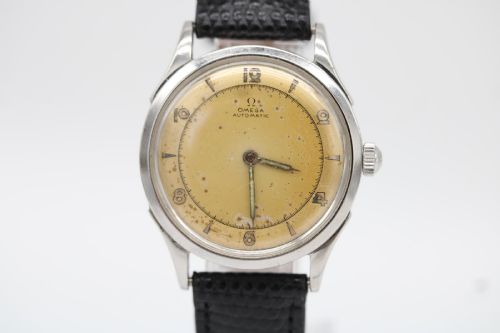
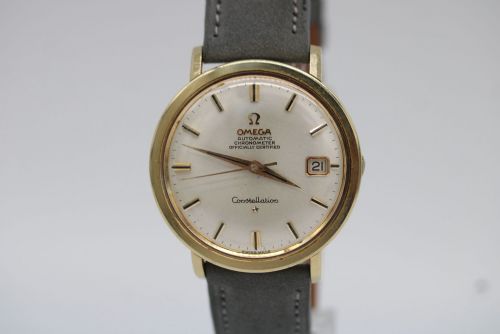
Mens Automatic Dress Watch
A mens automatic dress watch brings mechanical self-winding movement together with mid-century style, offering precise horology packaged in refined precious metal or steel cases.
Mens Automatic Dress Watch
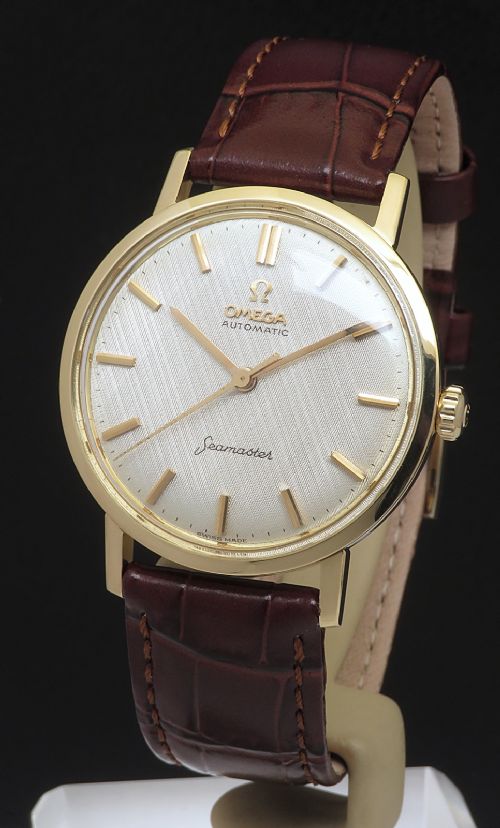
A mens automatic dress watch represents wristwatches produced during the 1940s, 1950s, and 1960s, heavily influenced by Mid-Century Modern and Mid-Century Horology design movements. These pieces focus on slim profiles and legible dials suitable for formal wear.
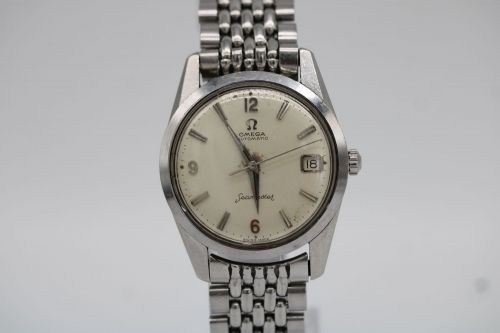
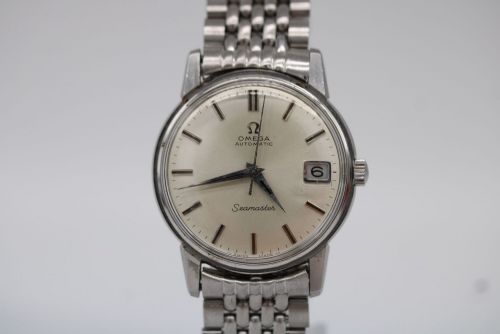
The versions most commonly met on this page span the 1950s and 1960s, featuring automatic movements housed in round or shaped cases. Makers such as Omega, IWC, and Longines dominate the offerings from this period.
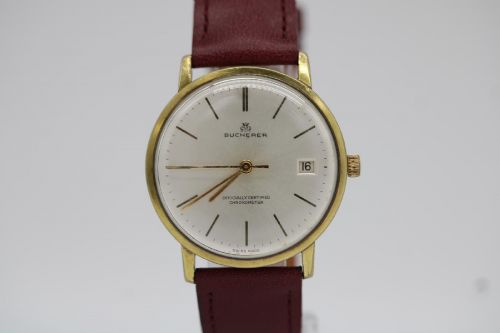
Object forms include wristwatches and wrist watches styled for daily or formal gentlemen's attire. Many incorporate date functions or simple subsidiary seconds alongside central hour and minute hands.
Casings and Movements
Cases utilise materials such as stainless steel, gold plate, 9ct gold, and solid 18ct gold, paired with leather straps and glass or acrylic glass crystals. Early examples employ bumper automatic mechanisms, while later decades utilise full rotor automatic movements.
Horological construction combines brass gear trains, jewelled bearings, and metallic springs inside sealed cases. Dials feature applied metal markers and printed tracks beneath protective glass.
Early automatic movements tick with a distinct bump against internal springs, letting you feel the watch come alive on your wrist.
Material Weight and Mechanical Integrity
The distinction between upper and lower tiers rests on precious metal weight and the complexity of the movement. Solid 18ct or 9ct gold cases and chronometer-grade movements command greater regard than gold-plated brass housings with standard calibres.
Preservation of original dial condition and case geometry dictates overall desirability. Unpolished surfaces, original crowns, and accompanying factory boxes or documentation elevate specific examples above standard production items.
Omega·Bulova·Festina·Gruen Precision·Eterna Matic·DeRe·Bucherer·Avia DayTyme·Tissot·Wittnauer·Baume Bimatic·Consul Dermaphile·Longines·Tudor
The Mens Automatic Dress Watch Glossary
- Automatic
- A self-winding mechanical movement that uses a weighted rotor to wind the mainspring through the natural motion of the wearer's wrist.
- Bumper automatic
- An early self-winding mechanism where the oscillating weight swings through a limited arc and bounces against retaining springs rather than rotating fully.
- Chronometer
- A high-precision watch movement that has passed official accuracy tests conducted by a certifying body.
- Calibre
- The specific manufacturer's designation for a particular watch movement design and size.
- Acrylic glass
- A lightweight, shatter-resistant transparent plastic material utilised for watch crystals during the mid-century period.
Mens Automatic Dress Watch: Frequently Asked Questions
How do automatic watches wind themselves?
An internal weighted rotor turns freely as the wearer moves their arm, tightening the mainspring gradually throughout the day.
This continuous motion removes the need for manual daily winding.
What is a dress watch?
A dress watch is a slim, understated timepiece designed to fit easily beneath the cuff of a formal shirt.
These pieces typically prioritise clean dial layouts over heavy complications like chronographs.
How do I date a vintage watch?
Dating relies on serial numbers stamped onto the movement or inside the case back, which correspond to manufacturer production ledgers.
Style cues like dial typography and case geometry also narrow the manufacturing decade.
Can I wear my vintage watch daily?
Most mid-century automatic watches handle regular wear well provided the mechanical components receive periodic servicing and lubrication.
Older crystals and non-sealed cases mean owners should avoid submersion in water.