


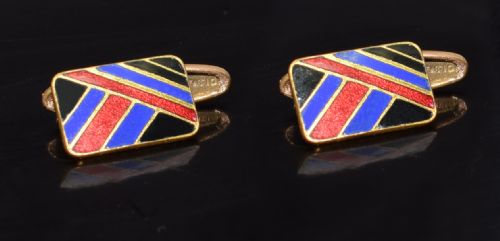
Mens Art Deco Cufflinks
These mens art deco cufflinks are sharp, geometric accessories built from gold, silver, and vibrant enamel to fasten a double cuff.
Mens Art Deco Cufflinks
When you search for mens art deco cufflinks, you are looking at small geometric fasteners made predominantly during the interwar decades. The pieces you meet most often on this page date from the nineteen thirties, displaying strict symmetry and clean lines.
Makers shaped these fasteners into ovals and rectangles, frequently applying coloured enamel over a solid base. They served a practical purpose on formal shirts while expressing the modern industrial aesthetic of the period.
Examples span from simple silver-tone metal and brass to heavier precious metals like nine carat and eighteen carat gold. Certain pairs feature sapphire details or draw inspiration from the high-end jewellery houses of the era.
Materials and construction methods
Goldsmiths and manufacturing jewellers utilised both precious and base metals as a foundation for these accessories. Solid nine carat and eighteen carat gold provide substantial weight, whilst silver, silver plate, and brass offer alternative bases.
Vitreous enamel and standard enamel add striking blocks of green, blue, and black to the metal framework. Craftsmen fused these glass pastes to the surface under high heat to create durable, glossy colour fields.
Green and black enamel pairings dominate the palette, offering a sharp splash of interwar colour to a stiff shirt.
Distinguishing quality in the range
Quality rests significantly on the choice of foundational metal and the precision of the enamel work. Pieces forged in solid eighteen carat or nine carat gold sit at the upper end of the spectrum compared to brass and silver-tone variants.
The crispness of the geometric design and the integrity of the enamel distinguish finer examples from standard production. Smooth, flush surfaces where metal and enamel meet indicate superior craftsmanship by workshops such as Payton Pepper and Co.
Payton Pepper and Co
The Mens Art Deco Cufflinks Glossary
- Enamel
- A glassy substance fused to metal under high heat to supply colour. It provides the characteristic vibrant tones seen across nineteen thirties accessories.
- Vitreous enamel
- Glass powder melted onto a metal substrate at high temperatures. This technique creates a durable, glossy finish that resists fading over decades of wear.
- Chain link
- A flexible connector joining the two faces of a pair. This traditional mechanism allows the fastening to sit comfortably through double shirt cuffs.
- Modernist
- A design ethos focused on geometric abstraction and utility. It strips away ornate Victorian flourishes in favour of clean, industrial lines.
- Geometric
- A decorative scheme relying on straight lines, circles, and repeated angles. It defines the visual language of interwar menswear.
Mens Art Deco Cufflinks: Frequently Asked Questions
How do I wear antique cufflinks?
These fasteners require a shirt with double french cuffs rather than standard button holes. You push the toggle or chain through both layers of fabric to secure the cuff together.
Position the decorative face outward so the geometric enamel pattern remains visible while your hands rest on a table.
Are these pieces solid gold?
The selection includes items fashioned from solid nine carat and eighteen carat gold. Other examples utilise silver, silver plate, brass, or silver-tone metal.
Check the individual listing details and hallmarks to confirm the exact metal composition of each pair.
How do I date these accessories?
Most items originate from the nineteen twenties, nineteen thirties, or nineteen forties. The strict geometric motifs and specific use of enamel point directly to the interwar design movement.
Maker marks and metal stamps stamped onto the reverse can provide further clues to the exact year of manufacture.
How do I clean enamel cufflinks?
Wipe the metal and enamel surfaces gently with a soft, damp cloth to remove everyday dust and oils. Avoid harsh chemical dips or ultrasonic cleaners that might damage the glass paste.
Store them separately in a lined box to prevent the metal faces from scratching against each other.