

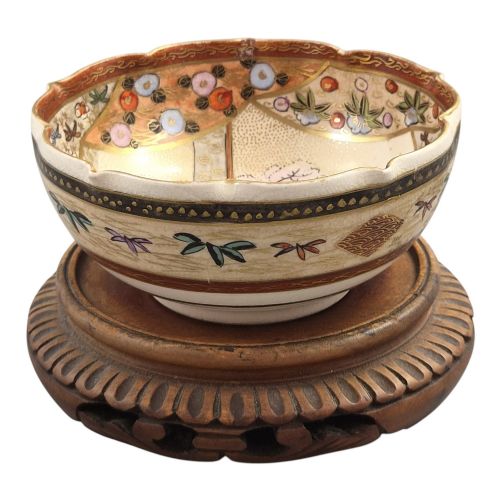


Meiji Period Kyoto Ware
Meiji period kyoto ware represents the pinnacle of Japanese ceramic artistry, bringing intricate enamel and gold gilt decoration into domestic spaces.
Meiji Period Kyoto Ware
When you search for meiji period kyoto ware, you encounter a specialised category of Japanese ceramics encompassing vases, decorative bowls, incense burners and sugar bowls. The pieces visible here predominantly date from the late nineteenth century and the Edwardian era.
The most common forms are Satsuma earthenware vessels, often painted with detailed figurative scenes, landscapes, and floral motifs enhanced by gold leaf. These items range from miniature vases and small Hanami bowls to monumental display pieces.
Originating from Kyoto studios, these ceramics reflect traditional Japanese craftsmanship adapted for international tastes during the Meiji period. Collectors frequently find works bearing signatures from notable makers and specific Kyoto workshops.
How they were made
Makers fashioned these objects primarily from earthenware and porcelain, shaping clay bodies into vessels such as vases, jars and decorative bowls. Artisans then applied detailed enamel designs alongside gold gilt and gold leaf to enrich the surface.
Many examples incorporate intricate hand-painted narratives depicting family scenes, samurai battles and botanical studies like wisteria and camellia trees. Kiln techniques allowed for fine craquelure glazes on the earthenware, providing a textured base for the colourful enamel pigments.
Meiji Period Kyoto Ware Retail Price Guide 2026
Typical asking prices for meiji period kyoto ware among the pieces listed under this phrase on Sellingantiques today, from the lower quarter to the upper quarter. They describe what is for sale here now, not the wider market.
The listings show a prevalence of nineteenth-century Satsuma earthenware, with cobalt blue and gilt decoration appearing across multiple vases and bowls.
What varies in quality
Quality in these ceramics rests upon the precision of the brushwork and the complexity of the enamel and gilt application. Finer pieces display exceptionally detailed figural expressions and crisp gilding that remains sharp across intricate landscapes.
The presence of clear artist signatures and workshop marks, such as those from Kinkozan or specific Kyoto studios, distinguishes standard production from superior examples. The scale and ambition of the form, from miniature incense burners to monumental vases, also influence the standing of an individual piece.
Chosei·Kinkozan·Seiko en Chokei·Yamashu·Hakusan·Tagawa·Kotobuki do·Shozan
The Meiji Period Kyoto Ware Glossary
- Satsuma
- A type of Japanese earthenware featuring a pale, ivory-coloured crackle glaze that accepts colourful enamels and gold leaf. It served as the primary canvas for Kyoto workshops during the Meiji period.
- Kinkozan
- A prominent Kyoto pottery family and workshop producing high-quality Satsuma ware. Their output is known for rich cobalt blue grounds and lavish gilt decoration.
- Mon
- A Japanese heraldic badge or crest used to identify families or clans. These symbols frequently appear on Kyoto ceramics, notably the Shimazu clan mon.
- Koro
- A traditional Japanese incense burner fitted with a lid. Examples in Kyoto ware often feature pierced covers and miniature proportions.
- Hanami
- A term relating to flower viewing, often referenced in the titles of bowls depicting seasonal blossoms like cherry trees.
Meiji Period Kyoto Ware: Frequently Asked Questions
What is Satsuma ware from Kyoto?
Satsuma ware from Kyoto consists of earthenware ceramics decorated with intricate enamel paintings and gold gilt. These pieces were produced in urban workshops during the Meiji period for both domestic use and export.
Craftsmen utilised pale crackle glazes to highlight detailed scenes of landscapes, figures and floral arrangements.
How do I identify a signed Kyoto Satsuma piece?
Signatures typically appear on the base of the ceramic, hand-painted in iron red or gold, naming the artist or the producing studio. Names such as Kinkozan or individual makers like Chosei and Shozan indicate specific Kyoto workshops.
These marks help establish the origin and maturity of the decorative style.
What were incense burners used for?
Incense burners, or koro, functioned as ritual and decorative objects designed to hold aromatic incense during gatherings or quiet reflection. Their pierced lids allowed scented smoke to drift into the room.
In Kyoto ware, these portable items often feature delicate handles and elaborate miniature painting.
How should I display Kyoto ceramic bowls?
Decorative bowls and Hanami bowls benefit from placement on stable surfaces where adequate lighting reveals the enamel and gold leaf details. Placing them away from direct sunlight preserves the vibrancy of the pigments.
Handling should remain minimal, supporting the base of the bowl rather than the rim.