



Meiji Lacquer Box
A meiji lacquer box brings intricate Japanese craftsmanship and deep layers of historical artistry into daily interior spaces.
Meiji Lacquer Box
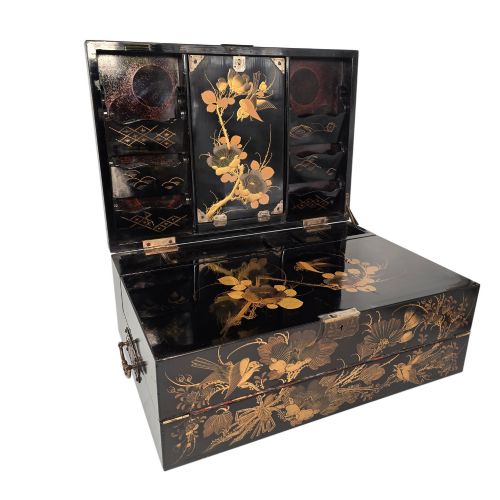
When searching for a meiji lacquer box, collectors encounter various forms ranging from small keepsake cases and writing boxes to larger table cabinets and chests. These objects originate primarily from the Meiji period, with distinct examples spanning the late nineteenth century and early twentieth century.
The version most commonly met on this page is the traditional black lacquer box decorated with gold motifs, alongside specialised containers like letter boxes, document boxes, and tiered storage vessels. Such pieces were originally designed to hold precious documents, writing implements, or personal treasures.
Makers utilised wood as a structural core before applying successive coats of sap from the lacquer tree, building a smooth and durable surface. This traditional construction method ensures that surviving examples maintain their structural integrity across generations.
Materials and Technique
Artisans built these containers using a wooden foundation treated with multiple layers of natural lacquer, sometimes incorporating carved lacquer or cinnabar techniques. Metal elements such as brass, gilt, and iron frequently appear as hinges, handles, or decorative mounts.
Surface ornamentation often involves maki-e, a technique where gold or silver powder is sprinkled onto wet lacquer using fine tubes. Further depth is achieved through takamaki-e for raised designs, alongside mother-of-pearl inlay known as raden.
Meiji Lacquer Box Retail Price Guide 2026
Typical asking prices for meiji lacquer box among the pieces listed under this phrase on Sellingantiques today, from the lower quarter to the upper quarter. They describe what is for sale here now, not the wider market.
Materials recorded across the inventory include carved lacquer, gold leaf, brass, and wood.
Assessing Quality
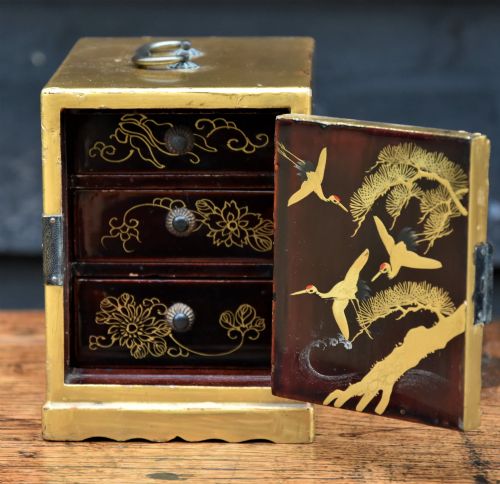
The highest tier of these works displays meticulous detail in the pictorial decoration, showing precise rendering of figures, landscapes, or animals such as cranes and hawks. Simpler versions feature repetitive floral patterns with less depth in the metallic dusting.
The complexity of the lacquer application itself dictates the standing of a piece, with deep carved layers and intricate gold or mother-of-pearl work demanding significantly greater artisan skill than flat surface finishes.
Heian Zohiko
The Meiji Lacquer Box Glossary
- Maki-e
- A Japanese technique where metallic powder is sprinkled onto wet lacquer to create decorative designs. This method forms the basis for much of the surface imagery found on these containers.
- Suzuribako
- A traditional Japanese writing box designed to house ink stones and brushes. These fitted containers often include internal trays and compartmentalised sections.
- Fubako
- A long rectangular box traditionally used for carrying or storing letters and documents. They frequently feature rounded edges and secure covers.
- Kodansu
- A small table cabinet featuring multiple internal drawers for storing valuables. These miniature pieces mirror the construction of larger tansu chests.
- Raden
- An inlay technique utilising shimmering mother-of-pearl or seashell fragments embedded into the lacquer surface. It catches the light to add contrast against black or red grounds.
Meiji Lacquer Box: Frequently Asked Questions
What is a meiji lacquer box used for?
These containers served various practical purposes in Japanese households, from holding writing implements and documents to storing personal letters, tea ceremony items, and small valuables. Their compartmentalised interiors were specifically arranged to keep delicate objects organised and protected.
Today, modern collectors utilise them as decorative accent pieces on tabletops or as secure repositories for jewellery and keepsakes. Their durable lacquered surfaces allow them to function safely in contemporary interiors.
How do you date a meiji lacquer box?
Dating relies heavily on stylistic markers associated with the Meiji period, which spans the late nineteenth and early twentieth centuries. Artisans during this era combined traditional pictorial themes, such as cranes and pine trees, with refined maki-e techniques.
Documentation or signatures embedded within the lacquer work can sometimes point towards specific workshops or active eras. Comparing the motifs to dated archival examples helps narrow the production window.
Are these boxes waterproof?
Natural tree sap lacquer forms a remarkably tough, moisture-resistant barrier once fully cured and hardened. This property originally protected the underlying wood from humidity and liquid damage.
However, antique pieces require careful handling because age can make the wood or internal joints susceptible to extreme environmental changes. Modern owners should keep them away from direct sunlight and excessive moisture.
What is maki-e decoration?
Maki-e translates to sprinkled picture, describing a method where artists apply gold or silver powder onto wet lacquer surfaces. This creates pictorial designs depicting landscapes, birds, or floral arrangements.
More advanced forms build up the surface into low reliefs using lacquer mixed with charcoal or clay before applying the metallic powder. This adds tactile depth to the imagery.