

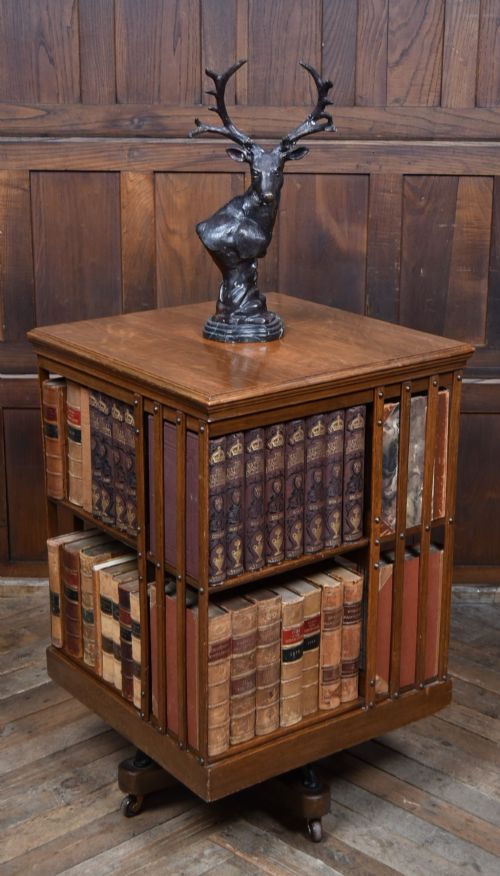
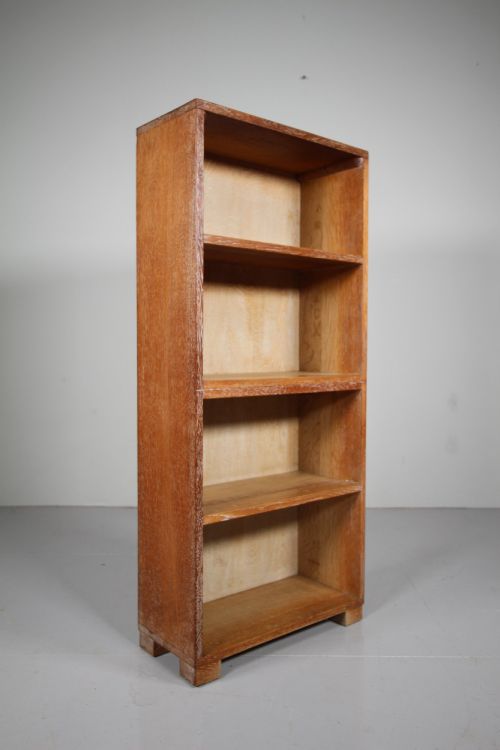
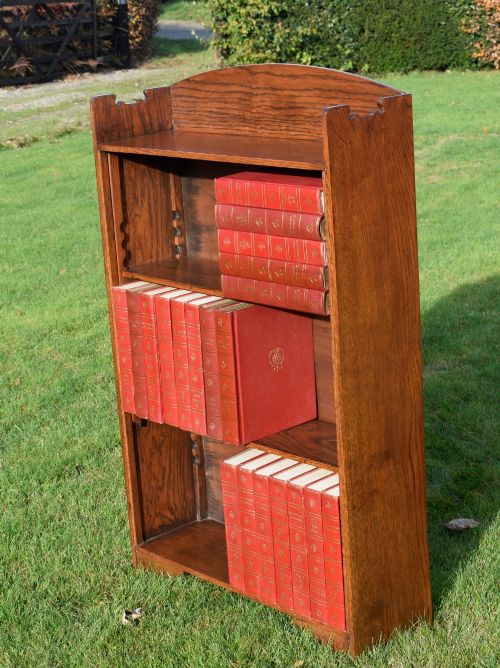
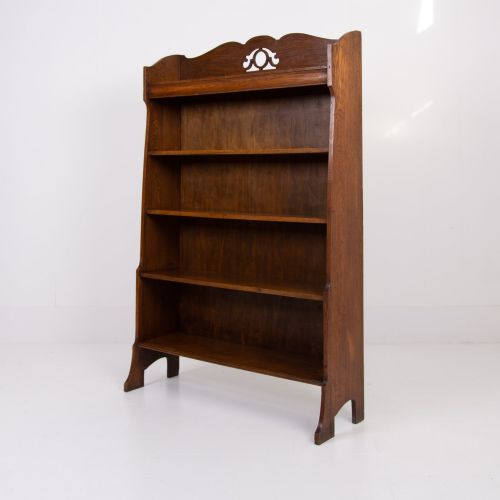



Medium Oak Book Stand
A medium oak book stand brings sturdy utility and honest grain to a room, offering a reliable home for working volumes.
Medium Oak Book Stand
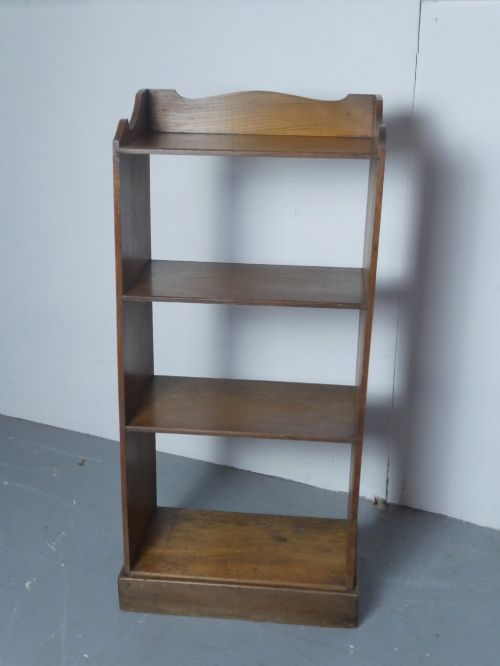
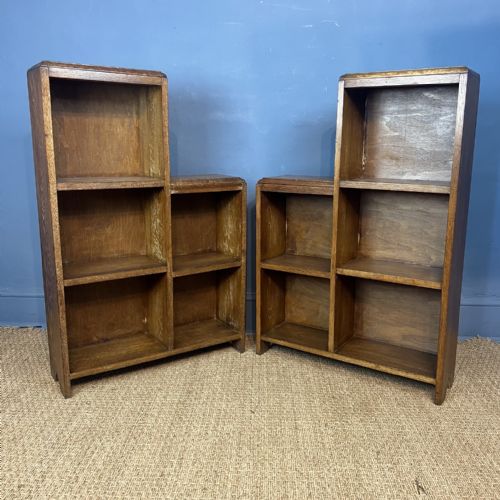
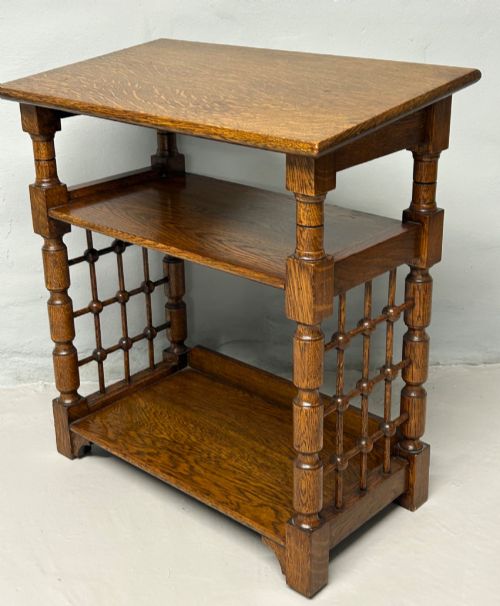
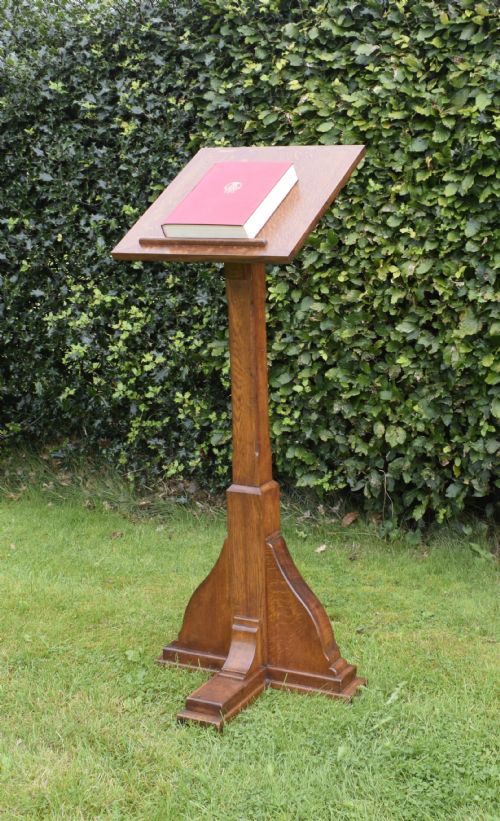
When you search for a medium oak book stand, you are looking at practical wooden furniture designed to hold working libraries. The pieces gathered here take the form of open bookcases, book troughs, and reading lecterns rather than purely decorative items.
The versions you are most likely to meet on this page span the early twentieth century, drawing on Edwardian practicality and the simpler lines of the Arts and Crafts movement. These items range from compact tabletop troughs to taller open shelving units suited to everyday domestic use.
Makers of this period favoured straightforward construction, letting the figure of the timber do the work. Whether configured with adjustable shelves or built as a low desk stand, each piece serves the straightforward purpose of keeping volumes within reach.
How they were made
The pieces listed here rely almost entirely on solid oak, chosen for its durability and strong grain pattern. Workshops utilised straightforward joinery to build these stands, favouring stability over elaborate ornamentation.
Some examples incorporate marquetry or subtle decorative flourishes associated with Arts and Crafts ideals, while others keep the timber plain and exposed. Surfaces were finished simply to protect the wood while revealing its natural texture and tone.
Medium Oak Book Stand Retail Price Guide 2026
Typical asking prices for medium oak book stand among the pieces listed under this phrase on Sellingantiques today, from the lower quarter to the upper quarter. They describe what is for sale here now, not the wider market.
Several pieces include adjustable shelves, suggesting earlier owners were prone to changing their minds about reading matter.
What varies in quality
Quality in these pieces rests on the weight of the timber and the honesty of the construction. Heavier oak boards and thoughtful proportions elevate an ordinary shelf into a balanced piece of furniture.
The presence of maker labels or careful detailing, such as adjustable shelving mechanisms and clean corner joints, separates standard utility items from finer workshop productions of the period.
Heals·Arthur Simpson
The Medium Oak Book Stand Glossary
- Book trough
- A V-shaped or open-sided holder designed to sit on a desk or table for easy browsing. These containers keep frequently used volumes upright and accessible.
- Lectern
- A slanted reading stand designed to hold a book at an angle for a standing reader. Early twentieth-century examples often feature sturdy oak framing and simple adjustments.
- Arts and Crafts
- A design movement prioritising traditional craftsmanship and simple forms over mass-produced ornamentation. Pieces from this tradition often display visible joints and plain oak surfaces.
- Open bookcase
- A piece of shelving without doors, allowing direct access to the books stored within. These units range from low tabletop stands to taller floor-standing variations.
Medium Oak Book Stand: Frequently Asked Questions
How do I date an oak book stand?
Dating these items involves looking at the style, construction methods, and materials used in their manufacture. Pieces from the Edwardian era and the Arts and Crafts movement often feature characteristic simplicity and honest joinery.
Labels from specific makers or retailers, where present, offer the most precise indication of a piece's origin and era.
Where should I place a book trough?
A book trough is well-suited to tabletops, sideboards, or desks where you keep volumes you need close at hand. Their compact footprint allows them to sit comfortably in smaller spaces while keeping books tidy.
Positioning them away from direct heat sources helps protect the oak timber from drying out over time.
How do I care for antique oak?
Caring for oak furniture involves keeping the timber clean with a soft, dry cloth and avoiding excessive moisture. Occasional application of appropriate wax helps nourish the wood and preserve its finish.
Keeping the piece out of direct sunlight prevents the oak grain from fading unevenly.