


Mediterranean Impressionist Art
Mediterranean impressionist art captures sunlit southern shores, coastal harbours and olive groves through vibrant brushwork and luminous colour.
Mediterranean Impressionist Art
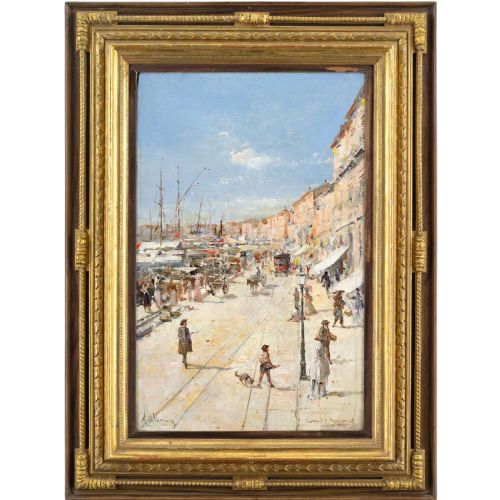
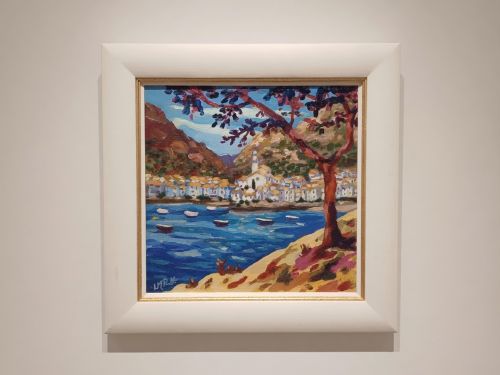
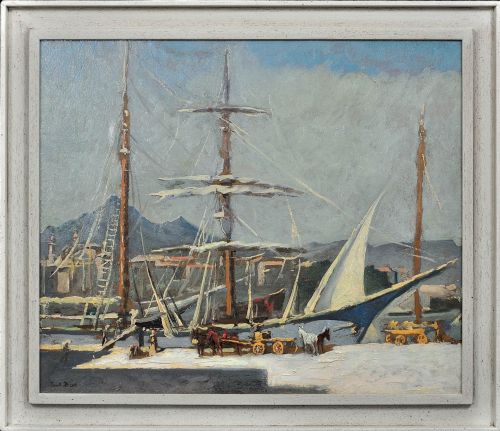
Mediterranean impressionist art encompasses paintings that record coastal scenes, harbours and southern landscapes across the opening decades of the twentieth century. These works depict locations from the Côte d'Azur and Provence to Sicily and Corsica under bright sunlight.
The selection here draws primarily upon oil paintings on canvas or board, alongside gouache on paper. Canvases frequently sit within wood or giltwood frames that reflect the period of creation.
Examples range from early twentieth-century post-impressionist marine views to mid-century colourist townscapes and fauve landscapes. Each piece reflects regional light through expressive handling of paint.
How they were made
Artists built these compositions using oil paint on stretched canvas, wooden panels or paper supports. Pigments were applied with energetic brushstrokes to convey the intense illumination of southern coastal environments.
Canvases were commonly housed within traditional wood frames, sometimes finished in giltwood to complement the luminous palettes of the painted scenes.
Several canvases carry the faint smell of old linseed oil and distant southern sunshine.
What varies in quality
Quality rests upon the confidence of the brushwork and the artist's ability to render the distinctive glare and shadow of southern light. Stronger works balance structural composition with vivid colour harmonies that evoke the warmth of the region.
The preservation of the pigment layer and the integrity of the original support influence the overall standing of an individual painting. Works retaining their period frames also present a more complete historical object.
Augusto Alberici·Paul Bret·Erich Mercker·Gustave Vidal·Jean-Baptiste Olive·Norman Lloyd·Charles Malfroy·Cecil R. Doyly-John·Augustus William Enness·John William Gilroy
The Mediterranean Impressionist Art Glossary
- Post-Impressionism
- An artistic movement extending impressionist techniques while rejecting its limitations for expressive form. Painters utilised bold colours and distinct brush marks to convey emotion.
- Fauvism
- A style characterised by strong painterly qualities and vibrant colours applied straight from the tube. Practitioners emphasised painterly qualities and subjective colour over realistic representation.
- Giltwood
- Wood carved and covered with a thin layer of gold leaf or gilt powder. This finish was widely applied to picture frames during the nineteenth and twentieth centuries.
- Colourist
- An artist whose work is distinguished by an exceptional use of colour to create mood and light. These painters prioritized chromatic relationships over strict tonal accuracy.
- Gouache
- A water-based paint consisting of pigment and other inert materials designed to be opaque. It dries to a smooth, matte finish well suited to rapid sketching.
Mediterranean Impressionist Art: Frequently Asked Questions
What subjects appear in mediterranean impressionist art?
These paintings portray southern coastal ports, bustling harbours with loading ships, and quiet olive groves across Provence and the Riviera. Scenes frequently capture sun-drenched streets and rocky shores.
Depictions extend to island landscapes in Sicily and Corsica, emphasising bright light and regional flora.
How do I date these paintings?
Dating relies upon stylistic markers such as post-impressionist brushwork, fauvist palettes, or mid-century modernist abstraction. Signatures and biographical dates of the artists provide concrete chronological anchors.
Frame construction and canvas preparation methods also offer helpful clues regarding the decade of production.
Are these works framed?
Many pieces retain their original wood or giltwood frames selected to complement the painted coastal scenes. These enclosures often show age-appropriate wear that matches the period of the artwork.
Examining the frame alongside the canvas helps confirm the historical context of the piece.
How should I care for oil paintings on canvas?
Protect these paintings from direct sunlight and stable environmental humidity to prevent canvas degradation and pigment cracking. Dust surfaces gently with a soft, dry brush without applying moisture or cleaning solutions.
Consult a professional conservator if structural repairs or deep cleaning become necessary.