
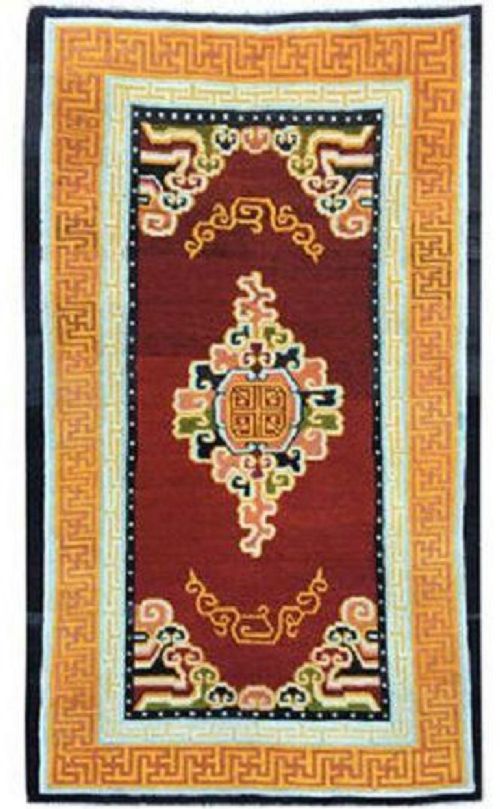
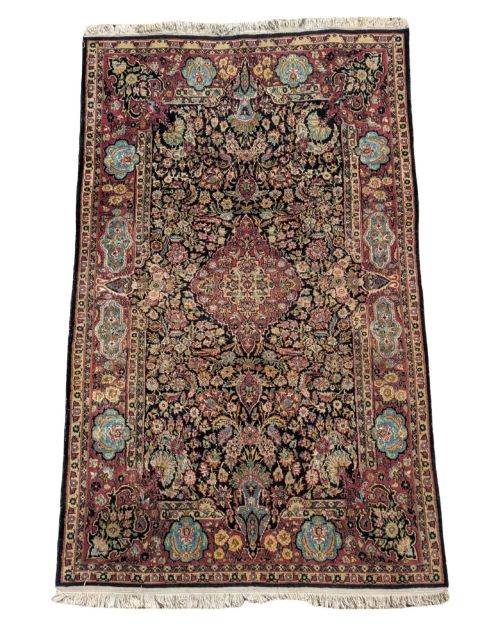
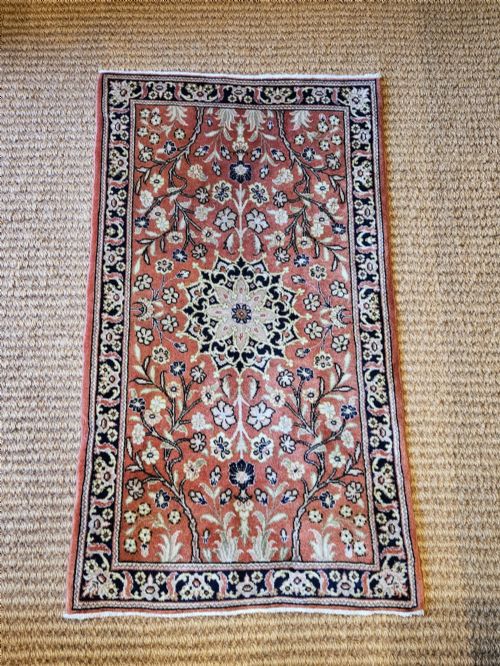
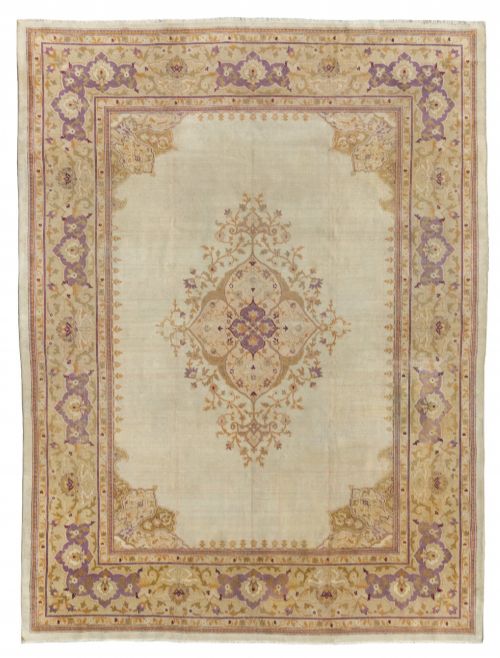
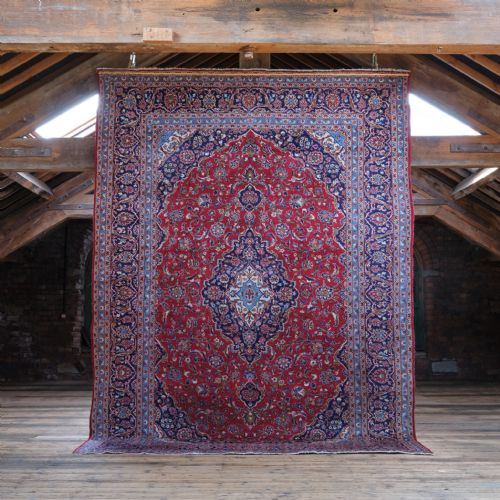
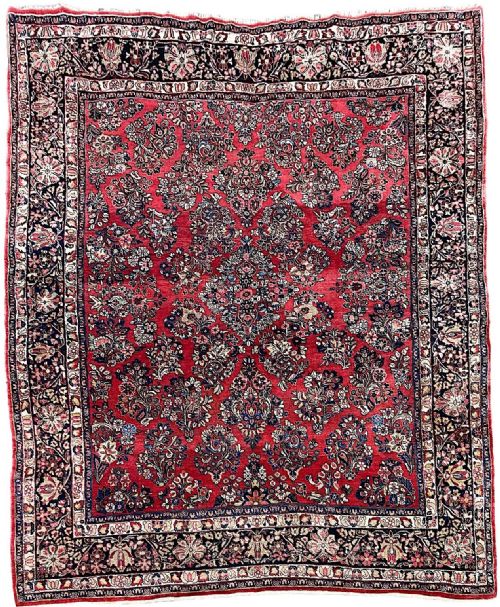


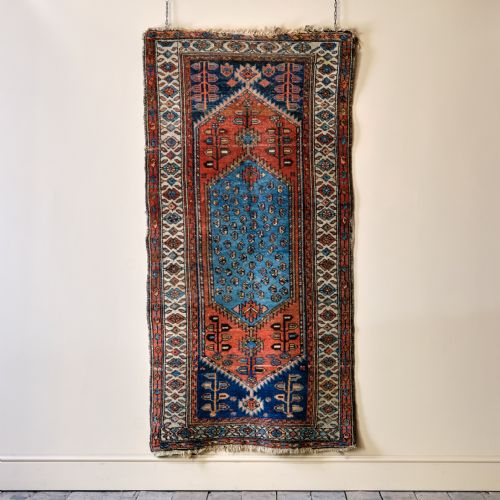


Medallion Pattern Area Rug
A medallion pattern area rug anchors a room with centuries of weaving tradition, offering intricate central motifs shaped by skilled hands.
Medallion Pattern Area Rug
A medallion pattern area rug brings traditional floor coverings into modern spaces, focusing the eye through a distinct central design. These floor coverings draw from Persian, Caucasian, and Ottoman or Anatolian traditions, reflecting regional weaving practices from the nineteenth and early twentieth centuries.
Buyers encounter formats ranging from hearth-sized pieces to palace-sized carpets, alongside kilim rugs and regional formats like Heriz, Kashan, and Kazak. The selection spans the nineteenth century through the 1940s, capturing diverse village and workshop output.
Materials and construction
Weavers constructed these pieces predominantly using wool and cotton foundations, incorporating silk or art silk highlights in specific workshop examples. Hand-knotted techniques ensure dense piles that hold rich dyes and withstand decades of use.
Mercerised cotton appears alongside pure wool to impart subtle lustre, while traditional dyeing methods create the varied colour palettes seen across Persian and Turkish origins.
Listings feature pieces dated across the nineteenth century and the early decades of the twentieth century, up to the 1940s.
Evaluating craftsmanship
Knot density and structural tightness dictate the longevity and definition of the central medallion. Finer knots permit crisper geometric or floral delineation, separating village pieces from workshop carpets.
The choice of wool quality and the depth of the dye saturation influence how the textile ages under foot traffic, distinguishing utilitarian floor coverings from fine examples.
The Medallion Pattern Area Rug Glossary
- Medallion
- A central ornamental motif, often circular, oval, or polygonal, placed in the middle of the carpet field.
- Hand-knotted
- A construction method where individual yarn loops are tied manually around the warp threads to form the pile.
- Warp
- The vertical threads stretched lengthwise on the loom that form the structural foundation of the rug.
- Weft
- The horizontal threads passed through the warps to bind the knots in place and add structural stability.
- Pile
- The vertical cut or loop threads that form the wearable surface of the textile.
Medallion Pattern Area Rug: Frequently Asked Questions
How do I style a medallion rug?
Position the central motif where furniture placement allows the design to remain visible rather than hidden beneath large tables. Placing the rug in a central seating area lets the geometry anchor the room.
Keep surrounding decor complementary so the central pattern retains visual prominence without competing against busy upholstery or heavy patterns.
Where were these rugs made?
Production centres span traditional weaving regions including Persia, the Caucasus, and Anatolia, encompassing specific towns like Heriz, Kashan, and Senneh. Village workshops and nomadic groups also produced distinct regional variants.
Each area developed specific palette preferences and structural techniques that help identify the geographic origin of the weaving.
How do I care for wool pile?
Regular gentle vacuuming without a rotating beater bar prevents dust accumulation within the foundation threads. Professional cleaning maintains the integrity of natural fibres and dyes.
Avoid excessive moisture and direct prolonged sunlight to protect the wool and prevent colour fading over time.
What materials are used?
Most examples utilise wool piles set upon cotton foundations, combining resilience with structural stability. Silk and mercerised cotton appear as highlighting materials in selected pieces.
Art silk is also found in specific twentieth-century Turkish production to introduce decorative sheen.