


Mechanical Mantle Clock
A mechanical mantle clock brings audible life to a room through brass gear trains and oscillating balance wheels.
Mechanical Mantle Clock
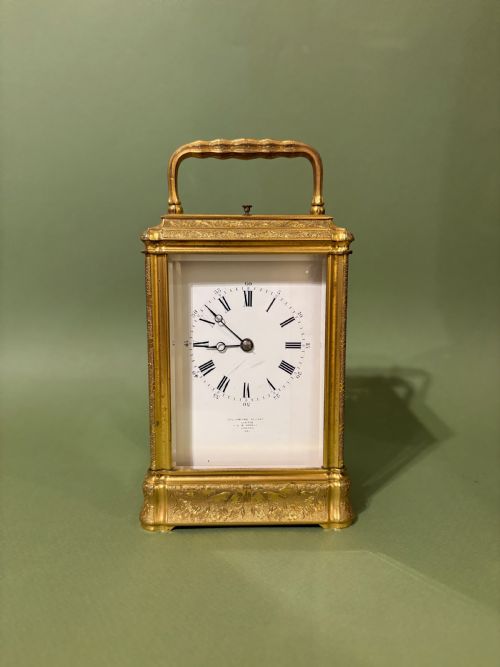
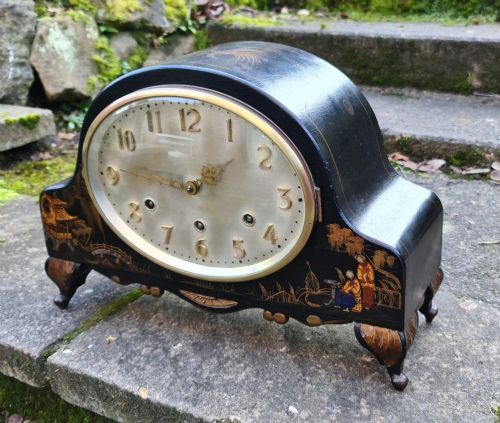
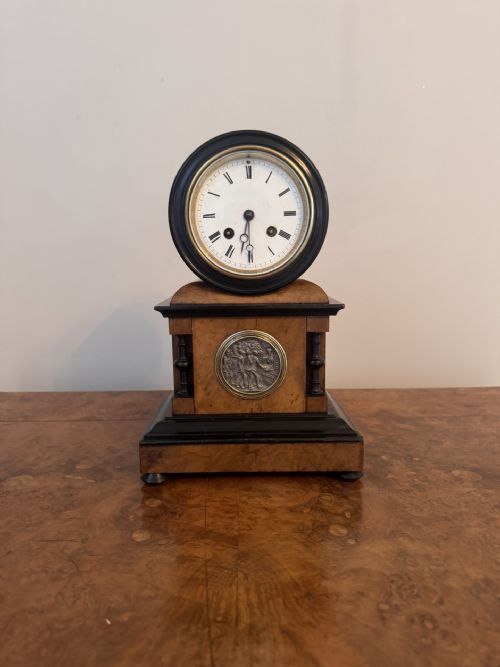
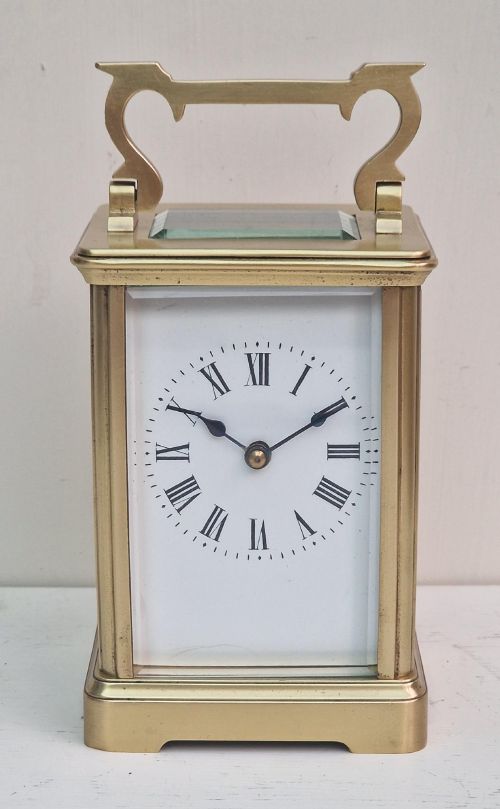
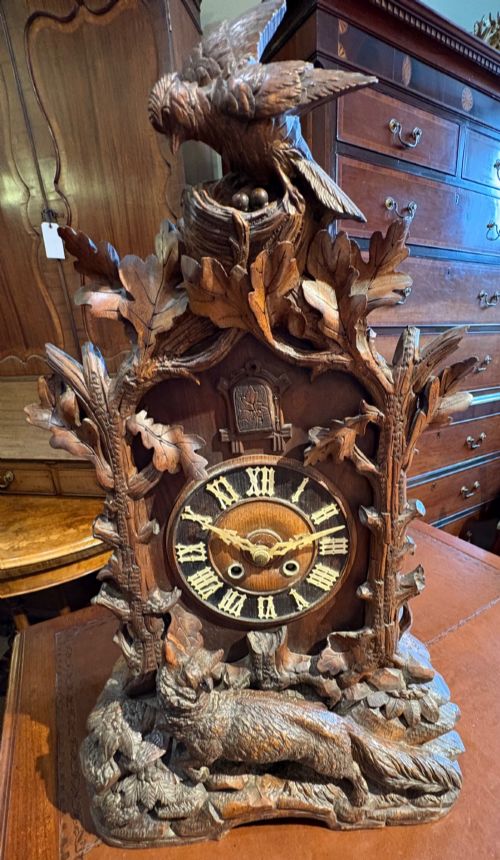
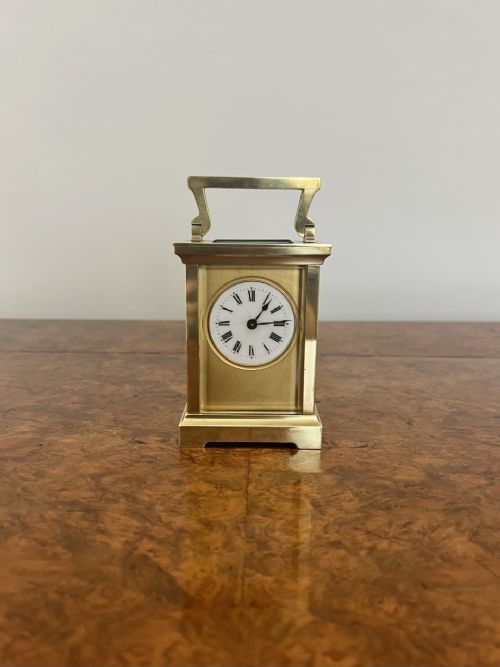
Every mechanical mantle clock listed here originates from the nineteenth and twentieth centuries, spanning periods from the Regency era through to Art Deco modernity. Buyers encounter carriage clocks in brass and glass cases alongside heavier wooden bracket clocks and marble house timepieces.
Forms vary from miniature travel pieces with alarms to large chiming library pieces and streamlined desk clocks. French carriage mechanisms sit alongside English fusee movements and German workshop productions.
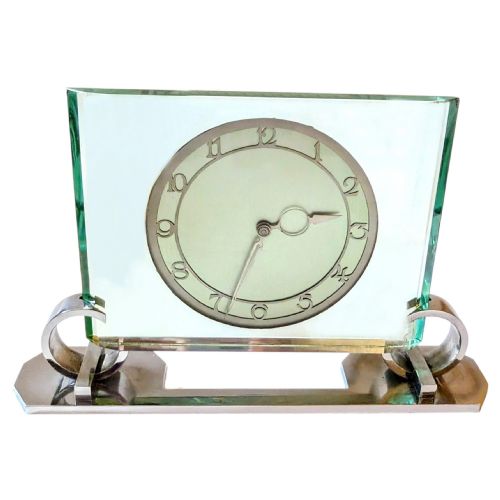
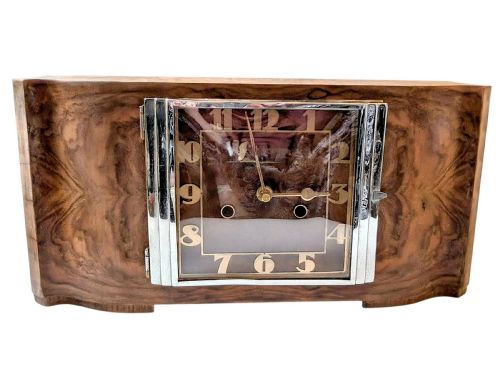
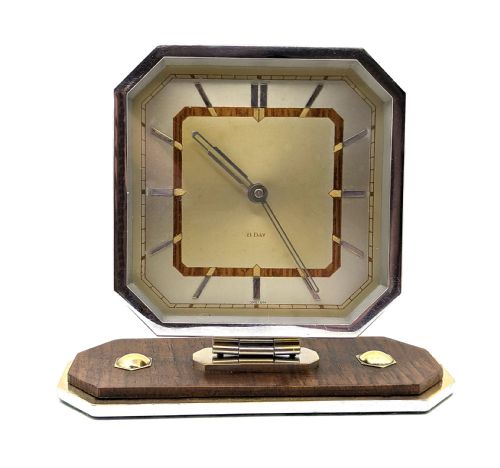
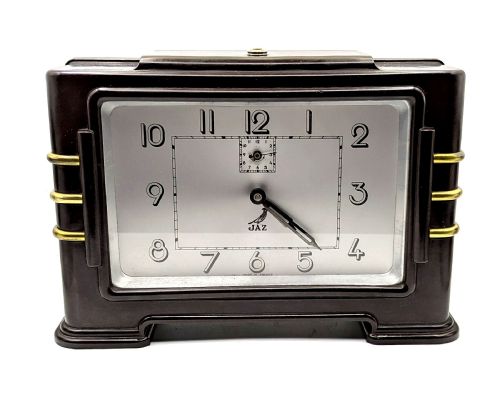
The selection includes Edwardian walnut and mahogany house clocks alongside geometric chrome and bakelite modernist designs from the nineteen-thirties.
Materials and construction
Cases utilise polished brass, cast bronze, and heavy marble alongside cabinet timbers such as mahogany, walnut, and rosewood. Enamel dials carry painted numerals, while bevelled glass panels allow visibility into the moving gear trains.
Movements depend on spring barrels or weight-driven fusee systems operating through brass plates, steel pivots, and escapements controlled by balance wheels or pendulums.
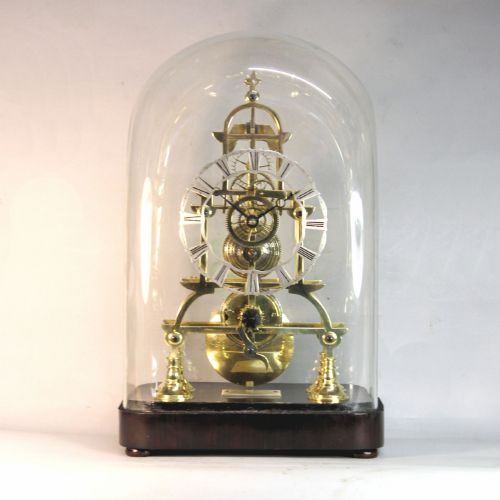
The collection includes portable carriage clocks, skeleton movements, bracket clocks, and desk timepieces.
Judging the standard of a clock
Quality rests upon the crispness of the case casting, the selection of figured timber veneers, and the fineness of the hand-cut gear teeth within the movement. Original escapements and signed backplates separate workshop pieces from standard commercial production.
The integrity of the enamel dial, the presence of matching escape components, and the crisp execution of cast brass enrichments determine the standing of each piece.
HENRI JACOT·Richard Winter of Chieveley·C. Detouche Paris·L. Vick of Stroud·Duverdrey & Bloquel·Smiths Clockmakers·Mauthe·Jaz·Brunelot·Piggin Norwich·Harrods of London·Perivale
The Mechanical Mantle Clock Glossary
- Carriage clock
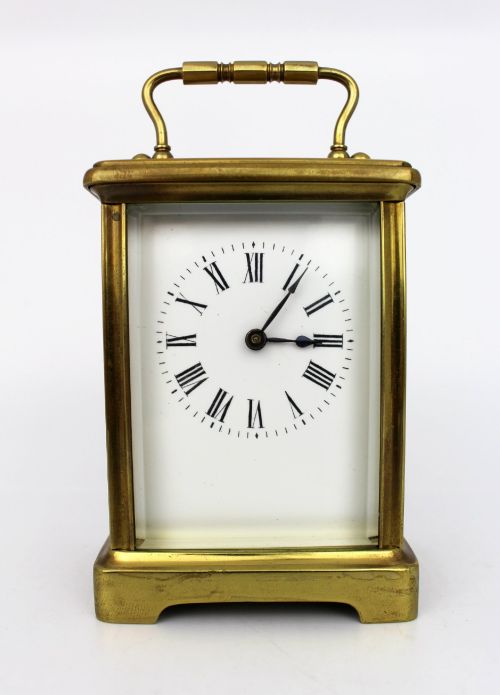
- A portable timekeeper originally designed for travel, housed in a brass frame with glass panels and a swinging handle on top.
- Fusee
- A conical pulley connected to the mainspring by a chain or cord, designed to equalise the declining power of the spring as it unwinds.
- Escapement
- The mechanism that controls the release of power from the gear train, maintaining the motion of the balance wheel or pendulum.
- Repeater
- A mechanism that chimes the hours and quarters on demand when a lever or cord is activated by the user.
- Bracket clock
- A portable house clock traditionally placed upon a matching wall bracket or table surface, usually housed in wood.
Mechanical Mantle Clock: Frequently Asked Questions
How do I wind a mechanical mantle clock?
Insert the matching winding key into the dial arbor and turn it gently clockwise until firm resistance indicates the mainspring is fully tensioned. Avoid over-winding to protect the internal brass teeth.
Ensure you support the clock case with one hand while operating the key to prevent accidental slips against the wood, marble, or glass panels.
How do I tell an antique carriage clock from a desk clock?
Carriage clocks traditionally feature heavy brass and glass frames with integrated carrying handles on top, designed originally for officers travelling in the nineteenth century. Desk clocks often utilise streamlined materials like chrome, bakelite, or marble without the characteristic folding handle.
Examine the movement through the side glass panels to identify platform escapements typical of portable carriage designs compared to standard domestic house movements.
Why does my clock lose time?
Variations in temperature, minor shifts in surface level, or a buildup of dried oil within the brass gear train can alter the oscillation rate. Regulating the movement via the adjustment index on the balance wheel or pendulum often corrects the timing.
Older mechanical movements require periodic cleaning and fresh lubrication by a horological specialist to maintain consistent operation across their eight-day cycles.