



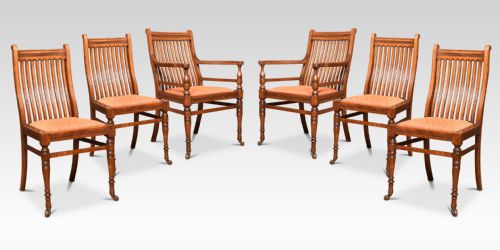


Matching Wooden Chairs
Matching wooden chairs are seated groups built together to anchor a room, and collectors choose them for consistent timber and period character.
Matching Wooden Chairs
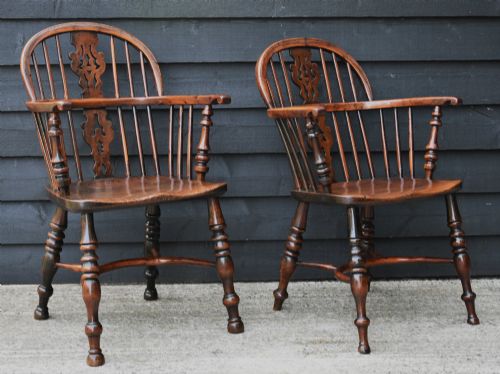
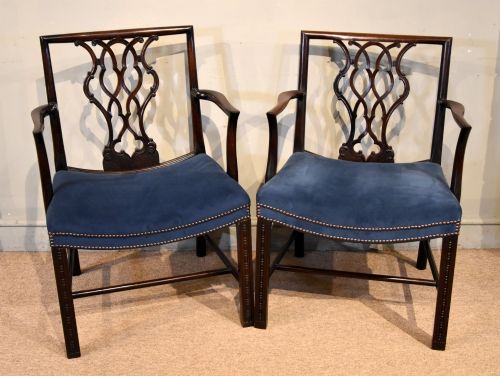
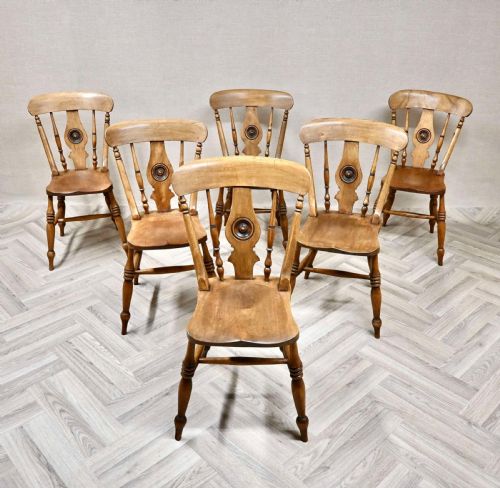
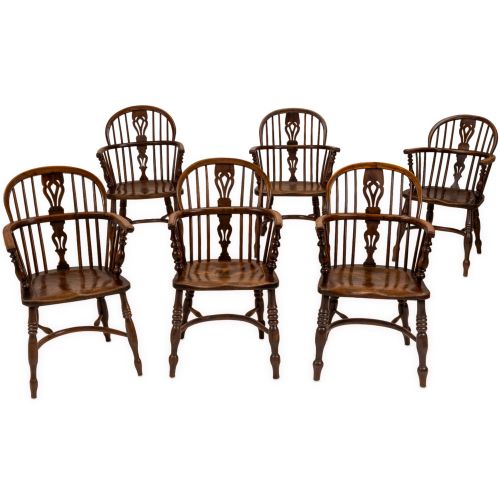
Matching wooden chairs span multiple centuries and regional traditions, appearing in configurations ranging from pairs up to sets of eight. Buyers searching for matching wooden chairs encounter sturdy country models like Windsor kitchen seating alongside formal mahogany dining chairs and occasional pieces.
The selections recorded here encompass diverse origins, including English country vernacular forms, Scottish armchairs, Alpine folk art, and Chinese concubine chairs. Elm, yew, mahogany, and beech feature prominently across these grouped sets, often constructed as dining chairs, armchairs, or side chairs.
Most entries belong to the nineteenth century, with Georgian examples and Edwardian pieces also represented. Sets vary from small pairs of armchairs to larger dining configurations designed for practical daily use around a table.
Materials and construction
Makers utilised dense native timbers such as yew, elm, and mahogany to build durable frames capable of withstanding heavy daily use. Windsor designs combined bentwood elements with turned spindles and solid wood seats, sometimes incorporating crinoline stretchers for structural rigidity.
Other variants rely on steam-bentwood techniques for bistro seating, or feature inlaid decorative panels in Edwardian occasional pieces. Brass accents and velvet upholstery appear selectively on specific formal or vernacular forms to provide functional contrast against the primary wood construction.
Matching Wooden Chairs Retail Price Guide 2026
Typical asking prices for matching wooden chairs among the pieces listed under this phrase on Sellingantiques today, from the lower quarter to the upper quarter. They describe what is for sale here now, not the wider market.
Materials span native hardwoods such as yew, elm, beech, and mahogany, supplemented by brass and velvet details.
Factors of quality
Quality in matching wooden chairs rests upon the integrity of the timber selection and the uniformity achieved across the entire group. Sets where every chair displays consistent grain matching, identical turning details, and original timber patination command higher regard than those assembled from mismatched components.
Structural stability determines utility, visible in the tightness of joints, the absence of excessive timber shrinkage, and the preservation of original stretchers and spindles. Finer examples retain crisp carved or turned details without heavy sanding or replacement parts masking previous repairs.
James Shoolbread
The Matching Wooden Chairs Glossary
- Windsor
- A chair built with a solid wooden seat into which the legs and back spindles are separately tenoned. This design provides robust support through a combination of bentwood bows and turned components.
- Crinoline stretcher
- A curved reinforcement rod linking the legs of a chair near the base to increase stability. It is typical of traditional Windsor armchairs.
- Bentoak
- A piece formed by steaming timber until pliable and bending it into curved structural shapes. This method creates lightweight frames for bistro chairs.
- Vernacular
- An architectural or furniture style rooted in regional traditions and local materials rather than academic design canons. These pieces reflect practical local craftsmanship.
- Occasional chair
- A light, decorative seat designed to be moved around a room as needed rather than assigned to a permanent dining position. They often feature inlaid details.
Matching Wooden Chairs: Frequently Asked Questions
What defines a matched set of chairs?
A matched set consists of individual seats produced in the same period using comparable materials, timber turning, and overall dimensions. They share a unified aesthetic even if constructed separately.
Buyers often select these groups to create a cohesive seating arrangement around a dining table without requiring a strict single-workshop commission.
How do Windsor chairs differ from standard dining chairs?
Windsor chairs feature distinct construction where legs and back spindles insert directly into a thick wooden seat base rather than connecting through a framed box chassis. They often incorporate bentwood arm bows and continuous back rails.
This method yields an exceptionally sturdy chair suited to heavy domestic service in kitchens and country houses.
Can I use antique wooden chairs every day?
Most nineteenth-century and Georgian wooden chairs remain structurally sound for daily domestic use provided joints stay tight and timber is kept away from extreme heat sources. Solid construction in hardwoods like elm, yew, and mahogany ensures lasting durability.
Routine inspection of stretchers and leg joints helps maintain their stability over decades of household occupation.
How do I care for antique wooden seats?
Regular dusting with a dry cloth and occasional application of appropriate wax polish preserves the natural timber patination and prevents the wood from drying out. Avoid placing chairs in direct sunlight or beside active radiators.
Gentle maintenance protects the historical surface finishes without altering the character accumulated over centuries of use.