




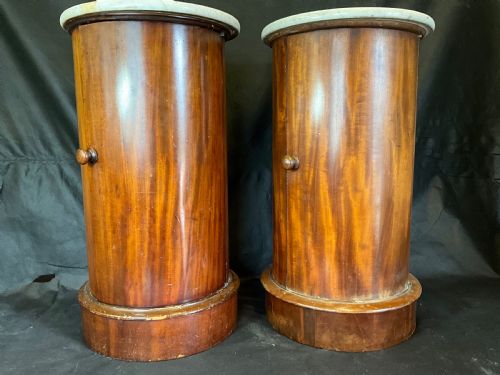
Matching Pair Bedside Cupboards
These matching pair bedside cupboards are twin pieces of bedroom furniture designed to hold night-time essentials, offering symmetrical bedside storage.
Matching Pair Bedside Cupboards
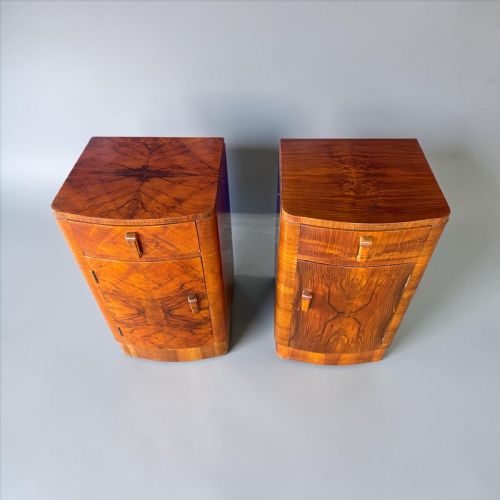
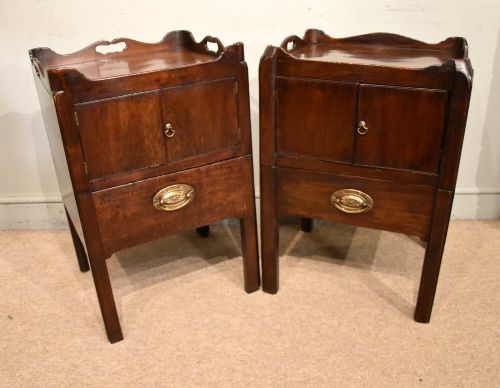
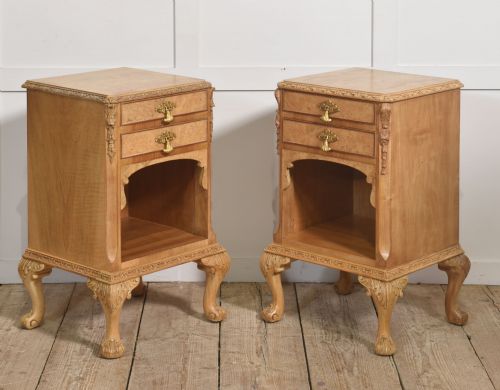
When you search for matching pair bedside cupboards, you look for twin bedside cabinets and tables designed to flank a bed symmetrically. These pieces emerge in various forms, from 18th century mahogany to Art Deco walnut and burr walnut.
Makers and materials shift across these periods, showing woods such as oak, pine, satinwood, and maple alongside mahogany and walnut. They serve the practical purpose of keeping nighttime necessities close at hand while unifying the bedroom scheme.
Materials and construction methods
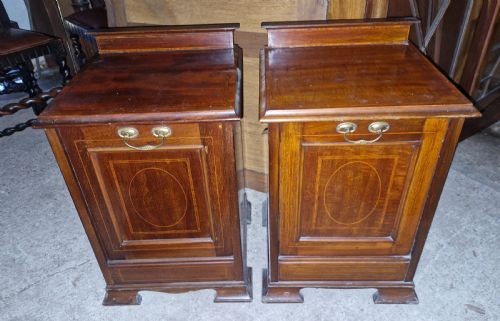
Cabinet makers utilised solid timbers and veneers, applying walnut, burr walnut, mahogany, and oak across different eras. Marquetry and inlay feature on refined pieces, while simpler examples rely on the natural grain of the wood.
Construction techniques range from traditional joinery on Georgian and Victorian pieces to curved and veneered surfaces on Art Deco designs. Brass handles and mounts often accent the timber doors and drawers.
Some Edwardian shoe cabinets covertly moonlighted as bedside storage, proving that Victorians loved a multi-tasking piece of furniture.
Distinctions in quality
Quality rests upon the selection of timber and veneer, where figured burr walnut or rich mahogany distinguishes finer work from standard utility pieces. The precision of the matching between the two cupboards determines the visual harmony of the pair.
Subtleties in craftsmanship, such as integrated brass fittings, crisp inlay work, and well-fitted doors, separate standard production from superior cabinet making. The integrity of the structure and the preservation of the original surface finish dictate the standing of each piece.
Gillows
The Matching Pair Bedside Cupboards Glossary
- Veneer
- A thin slice of figured wood applied over a secondary timber base to create decorative surfaces. This technique appears prominently on Art Deco and Georgian furniture.
- Inlay
- Contrasting woods or materials set into the surface of the primary timber to form ornamental patterns. Sheraton Revival and Edwardian pieces often employ this method.
- Burr walnut
- A growth deformity in walnut trees that produces highly swirled, decorative grain patterns. Cabinet makers prized this wood for high-end cabinet doors.
- Cylindrical
- Having the shape of a cylinder with rounded sides, seen in specific Victorian bedside cabinet forms. This shape allows for curved doors enclosing interior storage.
- Match
- A pair of items specifically designed or selected to correspond in wood, scale, and style. Close matches share similar proportions though they may originate from slightly different workshops.
Matching Pair Bedside Cupboards: Frequently Asked Questions
How do I match bedside cupboards to my bed?
Consider the height of your mattress and the wood tone of existing furniture in the room. Selecting a matching pair helps anchor the bed visually and provides balanced surfaces on both sides.
Pairs from the Art Deco period suit modern or vintage interiors, while mahogany or walnut Georgian and Victorian pairs add traditional warmth.
What is the difference between bedside tables and cabinets?
Bedside cabinets feature enclosed storage with doors or drawers to keep items hidden away. Bedside tables often provide open shelf space or a simple tabletop surface.
Both serve the same primary function next to a bed, but cabinets offer a cleaner look by concealing personal items.
How were antique bedside cupboards used originally?
Historically, these small cupboards housed chamber pots before indoor plumbing became standard in bedrooms. Later, they adapted to hold books, water jugs, and personal belongings.
Today, they transition easily to hold lamps, charging cables, and nighttime reads while maintaining their historical utility.
Can I use mismatched bedside cupboards?
While this page focuses on matching pairs, eclectic interiors often mix pieces of similar height and period. However, a true matching pair creates immediate symmetry and visual order.
Matched pairs ensure that wood tones and proportions align perfectly on either side of the bed.