



Matching Armchair Pair
These matching armchair pair pieces offer twin seating with shared timber, fabric, or leather, bringing balanced design and unified period character to a room.
Matching Armchair Pair
A matching armchair pair brings balanced seating to a room, offering two complementary chairs that share a distinct period form, material, or silhouette. When searching for a matching armchair pair, buyers encounter diverse iterations spanning Georgian country workshops, Victorian salons, and Edwardian parlours.
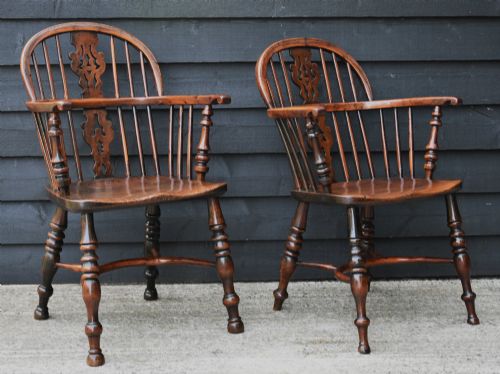
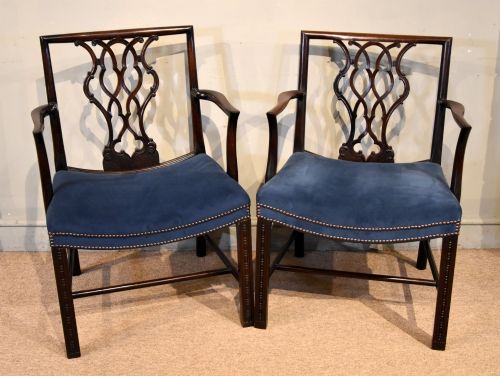
The selections available here range from robust yew and elm Windsor chairs to refined mahogany library seats, folding campaign chairs, and inlaid occasional chairs. Most examples date from the nineteenth century or the Georgian era, presenting traditional craftsmanship suited to both historic interiors and modern spaces.
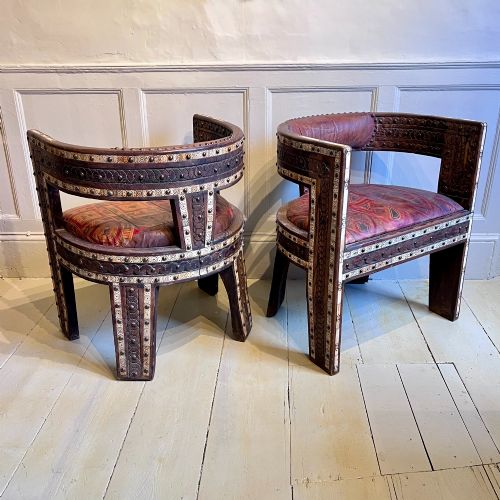
Buyers often find these pairs grouped with related items such as a matching settee or a footstool, extending the unified furnishing scheme. Whether formed of North African hardwood with leather or silk-upholstered salon frames, each pair delivers coordinated seating with distinct historical presence.
Materials and construction
Construction relies heavily on traditional timber framing, utilising durable hardwoods such as mahogany, yew, and elm alongside North African hardwood. Cabinetmakers shaped these woods into sturdy Windsor forms, tub shapes, and library armchairs using established joinery methods.
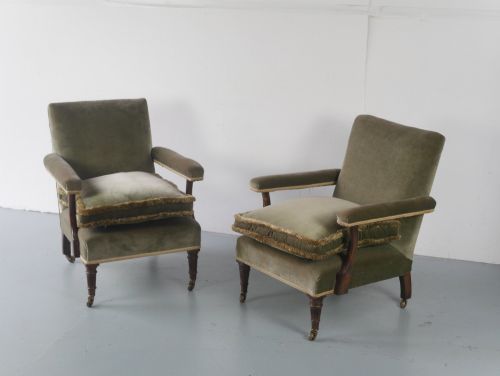
Upholstery and surface detailing incorporate leather, velvet, fabric, and silk parrot design textiles, often enhanced with buttoned backs or delicate inlaid decoration. Brass accents and folding mechanisms appear in specific campaign pieces, combining structural utility with decorative appeal.
Matching Armchair Pair Retail Price Guide 2026
Typical asking prices for matching armchair pair among the pieces listed under this phrase on Sellingantiques today, from the lower quarter to the upper quarter. They describe what is for sale here now, not the wider market.
Materials recorded across these seating pairs include brass, mahogany, leather, fabric, yew, elm, velvet, and hardwood.
Assessing quality and character
Quality in these seating pairs rests on the integrity of the timber framing and the fidelity of the period style, from early Georgian Chippendale influences to Edwardian inlay work. Superior examples exhibit well-matched grain, crisp carving, and harmonious proportions between the two chairs.
The preservation of original upholstery materials, such as early leather or specific fabric designs, distinguishes finer survivals from later replacements. Balance within the pair remains paramount, ensuring that both chairs share an equal depth of patina, wear, and structural soundness.
The Matching Armchair Pair Glossary
- Windsor
- A traditional wooden chair featuring a bowed back and spindles fitted into a solid sculpted seat. These sturdy vernacular seats often utilise combinations of yew and elm.
- Campaign chair
- A portable folding chair designed for military officers and travel during the colonial era. These pieces typically incorporate timber frames with leather or canvas seats.
- Tub chair
- An armchair characterised by a continuous curved back and arms forming a rounded enclosure. This comfortable upholstered form appears in Edwardian salon suites.
- Occasional chair
- A light, decorative chair designed for periodic use rather than primary seating in a room. Edwardian examples frequently feature subtle wood inlay.
- Mahogany
- A durable tropical hardwood prized for its rich reddish-brown colour and fine grain. Cabinetmakers utilised this material extensively for Georgian and Victorian library armchairs.
Matching Armchair Pair: Frequently Asked Questions
What defines a matched armchair pair?
A matched pair consists of two chairs made in the same period using comparable materials, styles, and forms, designed to sit together harmoniously. They share proportional balance and visual characteristics without necessarily being part of a strict original suite.
Such pairs offer symmetry in interior decoration, providing the visual weight of a unified seating arrangement while retaining individual historical character.
How were Windsor armchairs constructed?
Windsor chairs are built around a solid wooden seat into which the legs, back spindles, and bow are separately dowelled and wedged. This clever construction method creates a remarkably strong and resilient frame without relying on heavy internal joinery.
Craftsmen frequently paired flexible woods like elm for the seats with tougher timbers like yew for the bentwood bows and spindles.
Where were folding campaign chairs used?
Campaign chairs were engineered for British military officers, diplomats, and travellers on colonial campaigns who required portable, dismantling furniture. Their clever folding frames allowed easy transport across difficult terrain without sacrificing seating comfort.
These pieces combined robust hardwoods like mahogany with durable leather or canvas sling seats to withstand rigorous field conditions.
How do I style a matching armchair pair?
Positioning these chairs opposite a fireplace, flanking a cabinet, or placing them together in a large bay window creates immediate visual balance. Their coordinated frames help anchor a room's layout while offering comfortable conversational seating.
Allowing the timber tones and upholstery textures to complement existing furniture ensures the pair integrates naturally into the living space.