


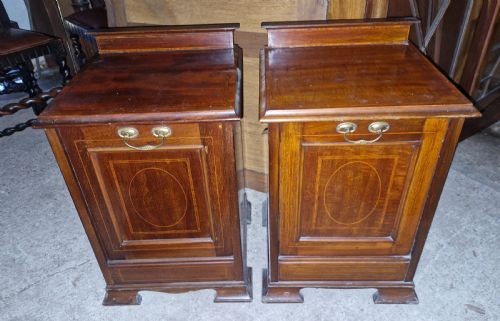


Matching Nightstands
Matching antique nightstands bring balance to a bedroom through synchronized timbers, period proportions and practical bedside storage.
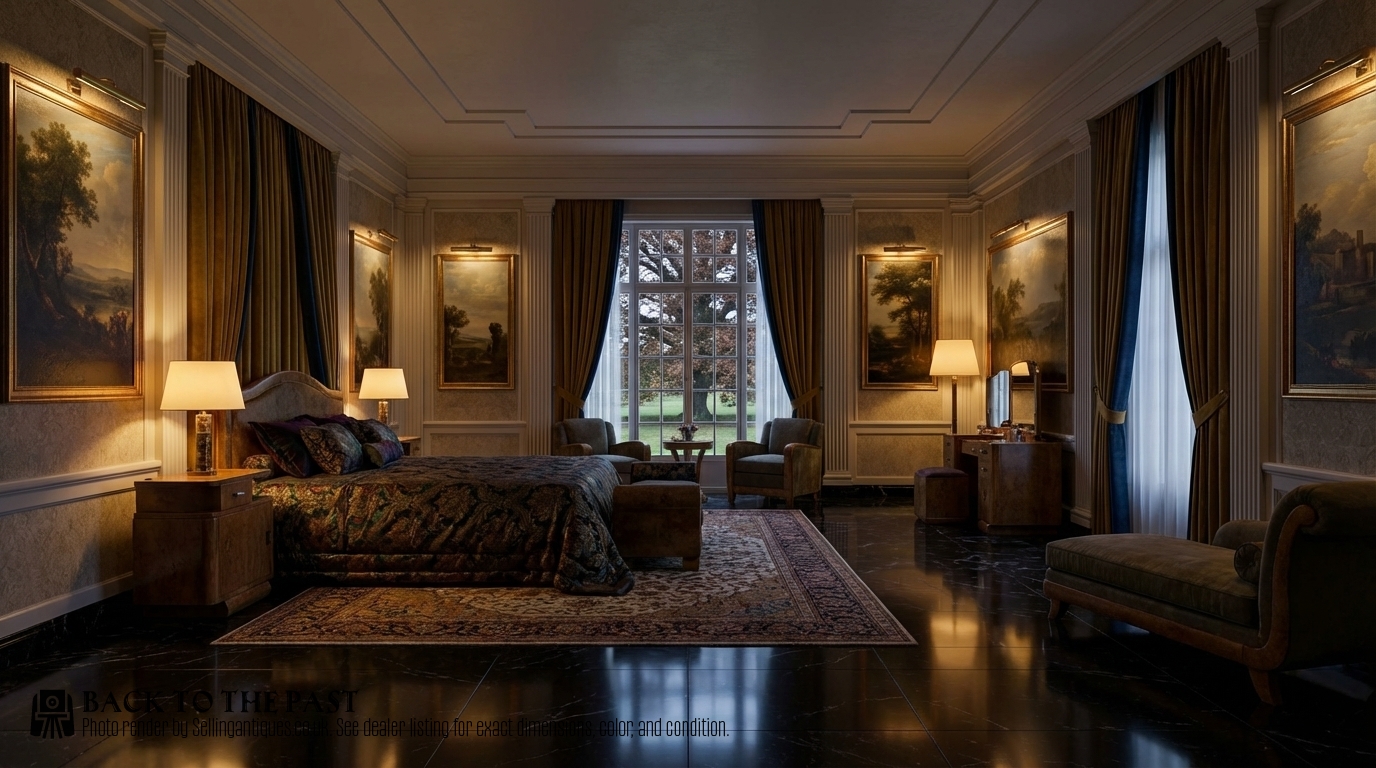
Matching Nightstands
Matching antique nightstands are paired bedside pieces designed to sit symmetrically on either side of a bed. When you search for matching antique nightstands, you encounter forms ranging from compact Victorian cylindrical cabinets to geometric Art Deco tables.
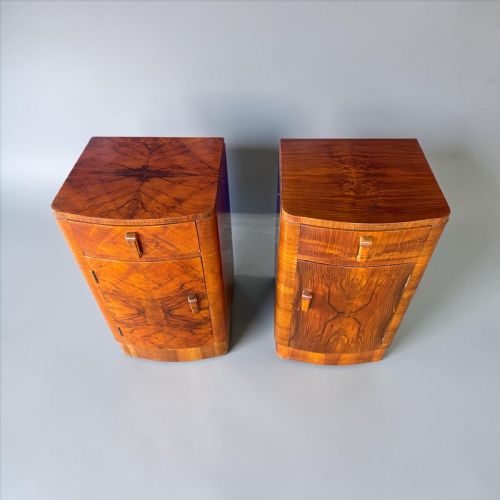
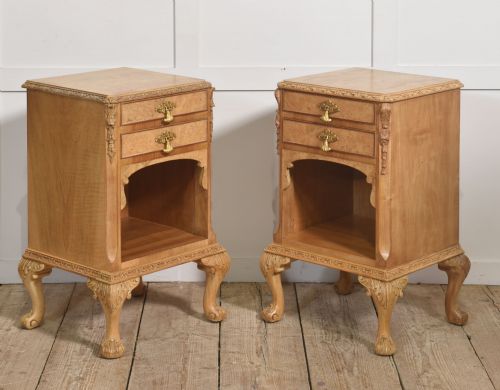
The version you are most likely to meet on this page dates from the nineteen thirties, constructed in burr walnut, mahogany or blonde birdseye maple. These pieces often arrive as part of larger bedroom suites that include matching bedsteads and wardrobes.
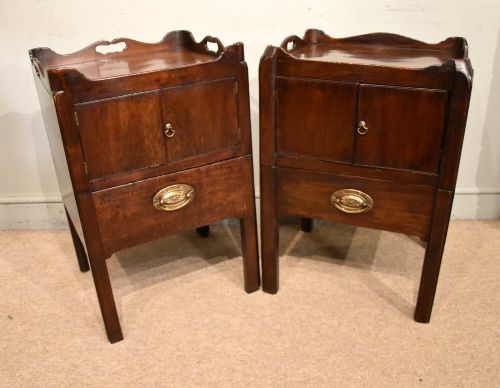
Earlier examples span the eighteenth and nineteenth centuries, featuring Georgian mahogany, Victorian inlaid rosewood and Regency styling. Makers frequently utilised cupboard doors or drawer arrangements to conceal chamber pots or personal items.
Construction and Materials
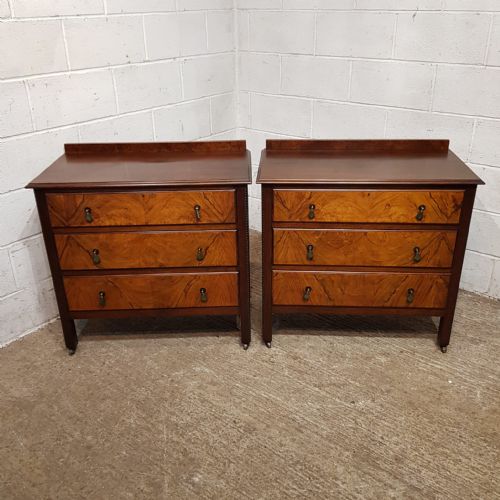
Cabinetmakers constructed these pieces using solid hardwoods such as mahogany and oak alongside decorative veneers like burr walnut and burr elm. Skilled artisans applied these figured veneers to drawer fronts and cabinet doors to create striking grain patterns.
Structural integrity relied on traditional joinery methods, including dovetail drawers and mortise and tenon frames. Brass handles, hinges and marble tops frequently completed the specification on mid-nineteenth and early twentieth-century examples.
Evaluating Quality
Quality rests in the precision of the timber matching across both pieces in a pair, particularly where figured burr veneers are utilised. Superior examples maintain exact symmetry in grain direction and colour density between the left and right cabinets.
Construction refinement separates standard production from finer cabinet work, evident in smooth drawer movement and tightly fitted doors. The integration of high-grade materials such as inset marble tops or intricate marquetry inlay elevates the standing of an individual pair.
Gillows
The Matching Nightstands Glossary
- Burr walnut
- A figured wood harvested from the wart-like growths on walnut trees, prized for its swirling, organic patterns. Cabinetmakers sliced this wood into thin sheets to veneer prominent surfaces.
- Bedside cabinet
- An enclosed piece of bedroom furniture featuring a door or drawers designed to hold night-time essentials. These items keep personal belongings concealed away from view.
- Art Deco
- A design style spanning the nineteen twenties and thirties defined by streamlined geometric forms and modern materials. Pieces from this era often utilise blonde birdseye maple or contrasting dark veneers.
- Inlay
- A decorative technique where contrasting woods or metals are inserted into recessed cavities on the furniture surface. This method creates geometric or floral patterns across the timber.
Matching Nightstands: Frequently Asked Questions
How do I match nightstands with a bed?
Selecting nightstands that share a period, timber or design vocabulary with your bedstead creates visual harmony in the bedroom. Art Deco walnut beds pair naturally with matching walnut cabinets from the same decade.
Alternatively, pairing mahogany or oak pieces across similar revival styles bridges different eras without disrupting the room layout.
Were these always sold in pairs originally?
Many nightstands originated as part of larger bedroom suites that included matching wardrobes, dressing tables and bedsteads. Other pairs were assembled later by dealers matching two single cabinets of identical height, timber and period.
Examining the interior construction and timber ageing helps determine whether a pair was manufactured together.
What is the difference between a cabinet and a table?
Bedside cabinets feature enclosed storage behind a hinged door, originally intended to keep chamber pots or personal items out of sight. Bedside tables offer open surfaces or lower shelves rather than a fully enclosed cupboard compartment.
Both forms served the same bedside function across the eighteenth, nineteenth and twentieth centuries.
How do I care for antique veneer?
Protect antique burr walnut and mahogany surfaces by keeping them away from direct sunlight and excessive moisture fluctuation. Regular dusting with a dry, soft cloth preserves the polish without stripping the timber.
Applying microcrystalline wax periodically nourishes the wood and protects the historical finish.