



Matched Pair of Armchairs
A matched pair of armchairs offers balance and symmetry to a room, bringing together twin seats with similar proportions and timber.
Matched Pair of Armchairs
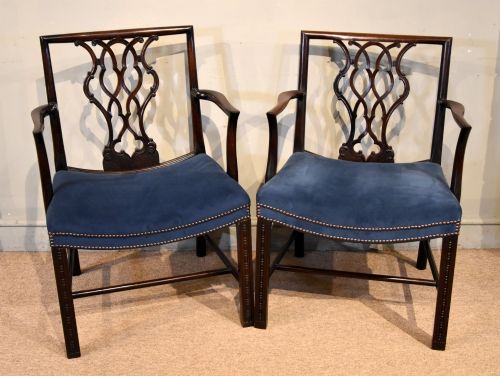
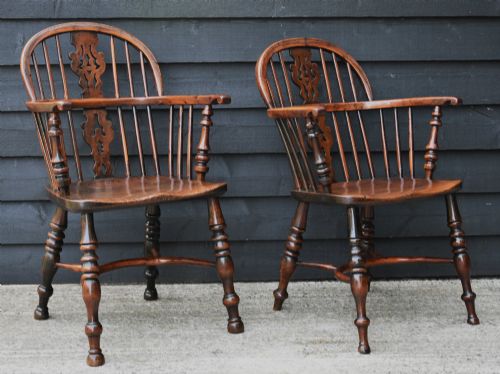
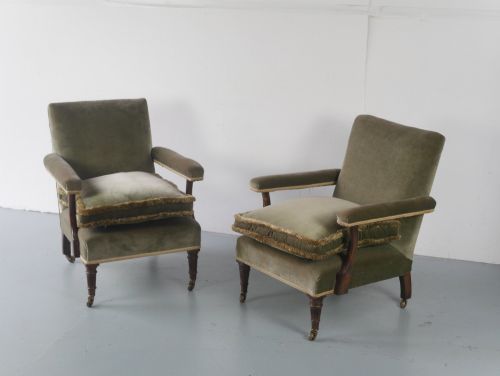
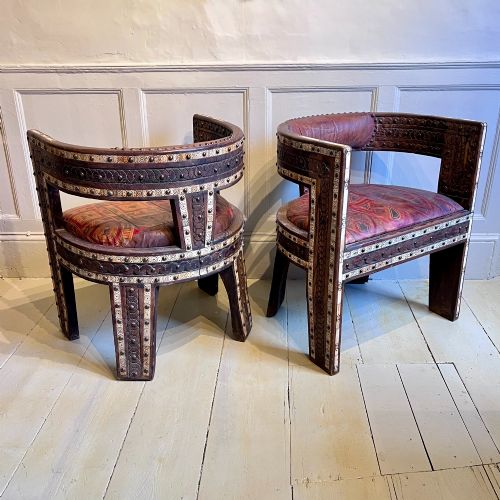
A matched pair of armchairs provides dual seating with corresponding design traits, appearing across periods from the Georgian era through to the early twentieth century. When searching for a matched pair of armchairs, buyers encounter diverse forms ranging from traditional Windsor chairs to buttoned library seats and occasional chairs.
The selections recorded on this page include robust provincial timbers like yew and elm alongside refined mahogany and inlaid Edwardian frames. Salon chairs and folding campaign chairs also appear, offering distinct regional and functional varieties.
How they were made
Construction relies heavily on traditional cabinet-making methods utilising timbers such as mahogany, yew, elm, and hardwood. Joinery techniques vary from the turned spindles and bow backs of country Windsors to the mortise and tenon joints of formal library chairs.
Upholstery materials range from leather and velvet to silk fabric, often secured with traditional buttoning techniques. Inlaid details and brass fittings appear on specific styles, adding decorative contrast to the structural woodwork.
Matched Pair of Armchairs Retail Price Guide 2026
Typical asking prices for matched pair of armchairs among the pieces listed under this phrase on Sellingantiques today, from the lower quarter to the upper quarter. They describe what is for sale here now, not the wider market.
Materials recorded on this page include traditional hardwoods such as mahogany and yew alongside brass and silk.
What varies in quality
The standard of timber selection and joinery integrity defines the distinction between pieces, with dense grain and tight structural joints marking superior examples. Carved details, inlay work, and the fidelity of revival styles reflect the skill invested in the manufacture.
The condition and authenticity of original upholstery materials, whether leather, velvet, or silk, influence the overall character of the pair. Uniformity in the matching process determines how closely the two seats complement one another in scale and finish.
The Matched Pair of Armchairs Glossary
- Tub chair
- An armchair featuring a rounded back that curves continuously into the arms to form a low, enclosing shape. These are frequently upholstered entirely in fabric or leather.
- Campaign chair
- A portable folding chair designed for military officers on the move during the nineteenth century. These utilise hinged frames for compact transport.
- Inlay
- A decorative technique where pieces of contrasting wood or other materials are inserted into depressions in the base surface. This is common in Edwardian and later formal pieces.
- Buttoned back
- An upholstery method where deep indentations are secured with buttons pulled tight through the padding. This creates a distinctive geometric pattern of tufts.
Matched Pair of Armchairs: Frequently Asked Questions
What is a matched pair?
A matched pair consists of two separate chairs that share identical or very similar design characteristics, proportions, and materials. They are brought together because their visual weight and style complement each other harmoniously.
Unlike chairs made simultaneously as exact twins, matched pairs often share a period or maker's workshop style while displaying subtle individual traits.
Where should I place them?
These chairs work well flanking a fireplace, positioned opposite a sofa, or placed symmetrically in a large bedroom or hallway. Their balanced appearance brings formal structure to domestic layouts.
Ensure there is enough physical space around the frames for the arms and legs to be viewed without obstruction from surrounding furniture.
How do I care for the wood?
Maintain timber surfaces by dusting regularly with a soft, dry cloth and avoiding placement near direct heat sources or strong sunlight. These precautions prevent the wood from drying out or splitting.
Occasional applications of appropriate wax help nourish older hardwoods like mahogany and yew without building up heavy chemical residue.
How do I identify the period?
Dating relies on observing structural characteristics, timber choices, and decorative motifs such as inlay work or turned spindles. Georgian examples often show simpler structural lines, whereas Edwardian pieces frequently feature decorative marquetry.
Comparing the construction joints and upholstery methods to known historical examples provides further clarity on the age of the piece.