

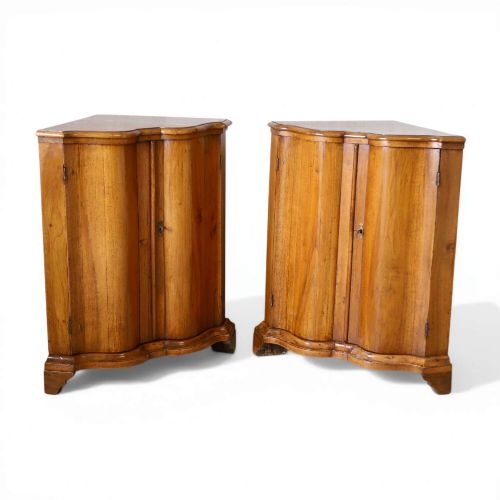


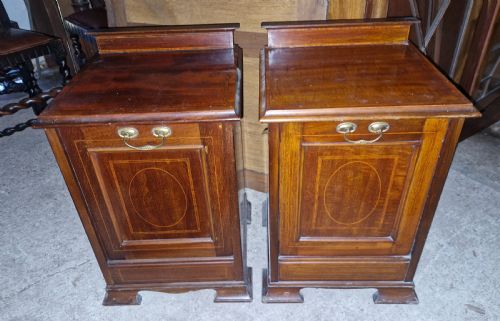


Matched Pair Cabinets
Matched pair cabinets unite symmetry and utility, offering twin storage forms designed to balance a room.
Matched Pair Cabinets
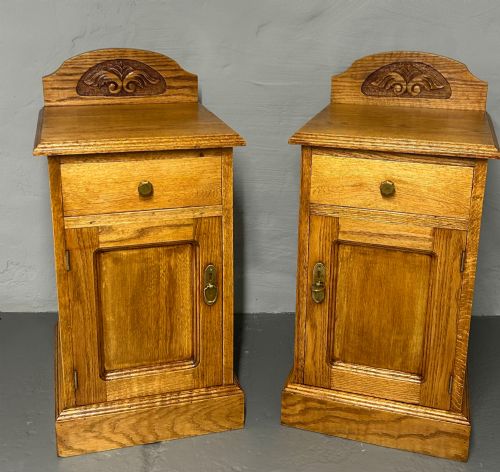
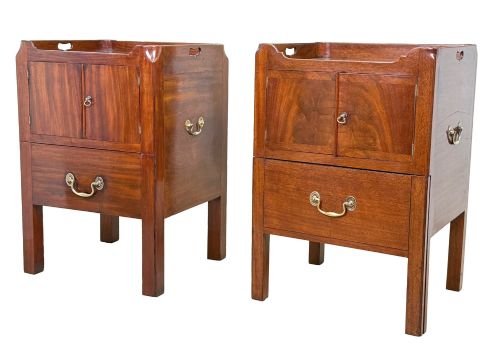
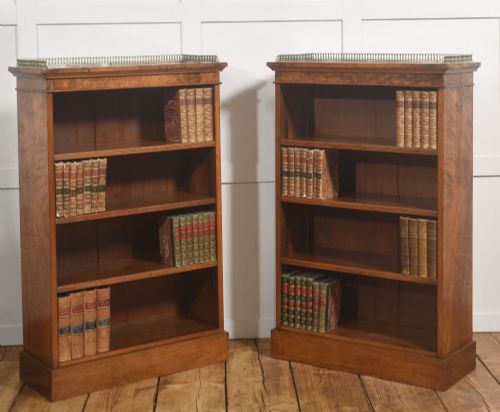
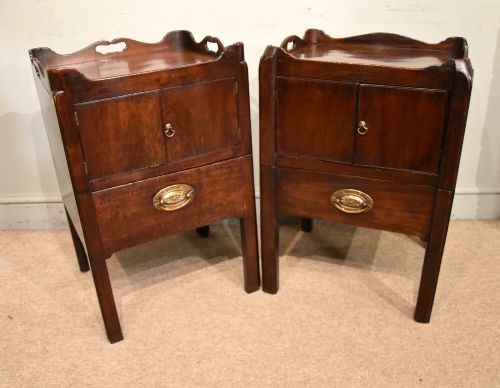
Matched pair cabinets encompass twin storage pieces designed to flank a bed, hearth or architectural feature in a balanced arrangement. These coordinated items appear frequently as bedside tables, open bookcases, corner cupboards and display cabinets across various historical periods.
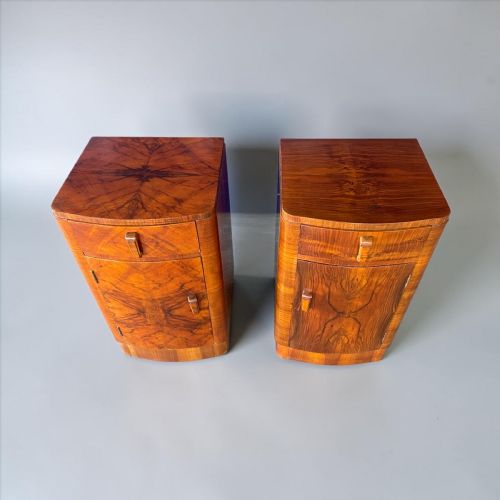
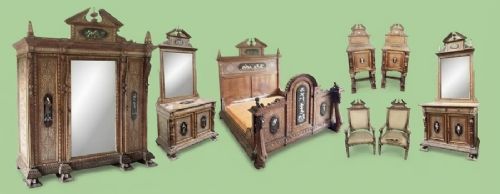
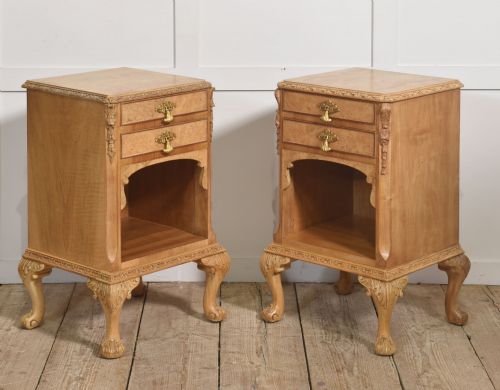
The selection ranges from eighteenth-century mahogany and walnut examples to Victorian ebonised pier cabinets and twentieth-century Art Deco designs in burr walnut and blonde maple. Buyers encounter both true pairs made together and close matches united later by shared dimensions and timber.
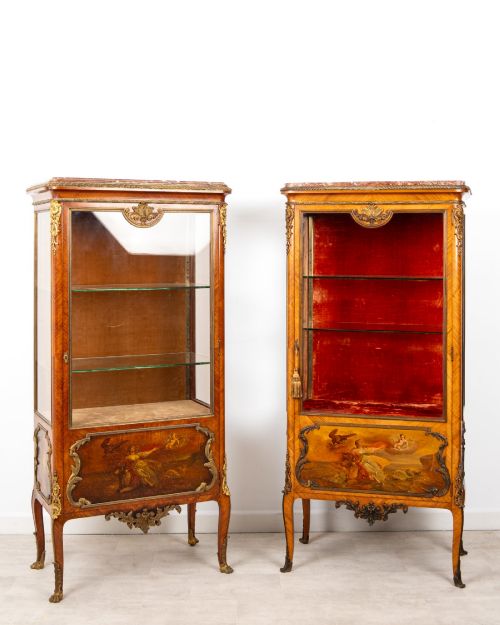
Origin and form vary widely, spanning French vitrines with marble tops, Chinese hardwood pot stands, Edwardian inlaid mahogany pieces and English oak bookcases. This diversity allows collectors to source twin storage matching specific architectural proportions and interior schemes.
Materials and Construction
Cabinet makers utilised dense hardwoods including mahogany, walnut, burr walnut, kingwood and oak as structural foundations and decorative surfaces. Timber veneers such as blonde birdseye maple, satinwood and burr elm provided striking grain patterns across door fronts and top surfaces.
Construction techniques combined traditional joinery with applied decorative elements like brass galleries, marble tops, ormolu mounts and intricate wood inlay. Finishes ranged from French polish on period pieces to modern varnishes on Art Deco designs, protecting the timber while highlighting natural figures.
Matched Pair Cabinets Retail Price Guide 2026
Typical asking prices for matched pair cabinets among the pieces listed under this phrase on Sellingantiques today, from the lower quarter to the upper quarter. They describe what is for sale here now, not the wider market.
Some nineteenth-century bedside cabinets secretly housed chamber pots behind panelled doors before plumbing moved indoors.
Evaluating Quality and Harmony
The degree of coordination between the two pieces dictates the integrity of a matched pair, distinguishing true simultaneous manufacture from later assembled partners. Grain continuity across drawer fronts, matching timber tones and identical hardware indicate superior original craftsmanship.
Refinement in secondary details such as interior shelving, dovetail joinery and the precision of brass or ormolu mounts separates standard utility items from high workshop production. The balance between decorative excess, such as Vernis Martin panels, and functional restraint defines the standing of each piece.
Waring & Gillows·Hille
The Matched Pair Cabinets Glossary
- Ormolu
- Gilded bronze mounts applied to furniture. This decorative technique appears frequently on nineteenth-century French pieces.
- Veneer
- A thin layer of superior wood glued to a base timber. Burr walnut and maple veneers provide distinctive patterned surfaces.
- Pier cabinet
- A low cabinet designed to stand against a wall space between windows. Victorian examples often feature ebonised finishes.
- Brass gallery
- A low pierced metal rail surrounding the top of a cabinet. These galleries prevent items from sliding off marble or wood surfaces.
- Vernis Martin
- A type of European lacquer imitating Japanese and Chinese screens. It adorns high-status French display cabinets.
Matched Pair Cabinets: Frequently Asked Questions
What is a matched pair of cabinets?
A matched pair consists of two separate storage units created to mirror each other in design, timber and scale. They offer visual balance when placed symmetrically within an interior layout.
These sets most commonly appear as bedside tables, corner cupboards or bookcases. They allow collectors to furnish a room with proportional harmony.
How do I tell a true pair from a close match?
True pairs were constructed alongside each other in the workshop, sharing identical dimensions, timber grain patterns and construction marks. Close matches are separate pieces united later because their height, width and style closely correspond.
Close inspection of the interior joinery and timber species reveals whether two items originated from the same set. Subtle variations in colour or handle placement often point towards a later pairing.
Which periods produced the best bedside cabinets?
The nineteenth century and the Art Deco era yielded exceptional bedside cabinets, each offering distinct aesthetic qualities. Victorian pieces showcase rich mahogany and walnut grains, while 1930s examples highlight blonde maple and streamlined geometric forms.
Choosing a period depends entirely on the surrounding furniture and the desired level of ornamentation. Georgian and eighteenth-century examples provide classic architectural lines, whereas Art Deco cabinets deliver modernist curved silhouettes.
How should I care for antique wood veneer?
Antique veneer requires protection from direct sunlight and sudden humidity changes to prevent the wood from drying and lifting. Regular dusting with a soft, dry cloth maintains the surface without stripping historical polishes.
Applying occasional specialist wax preserves the moisture of timbers like burr walnut and mahogany. Avoid placing damp items or unsealed plant pots directly on antique wooden tops.