

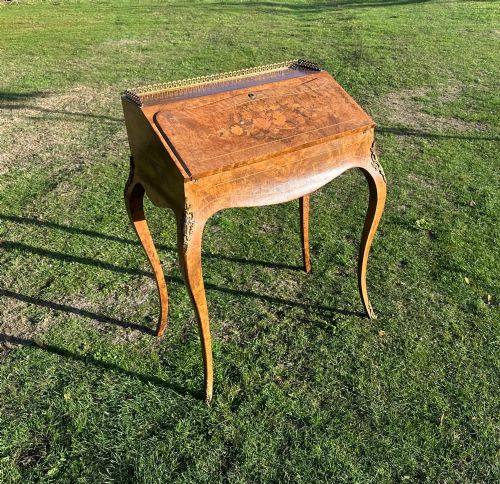
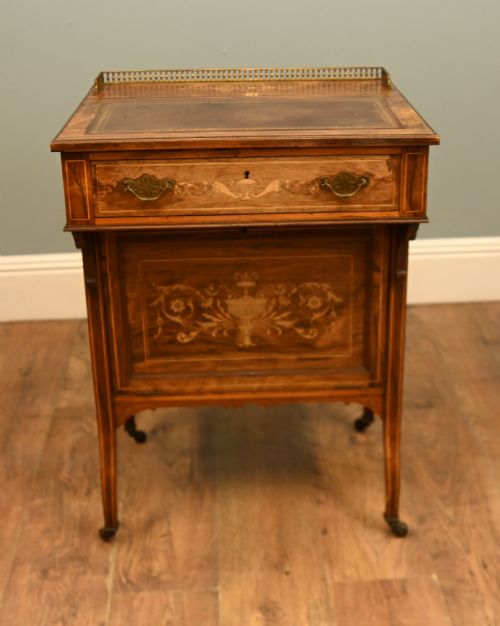
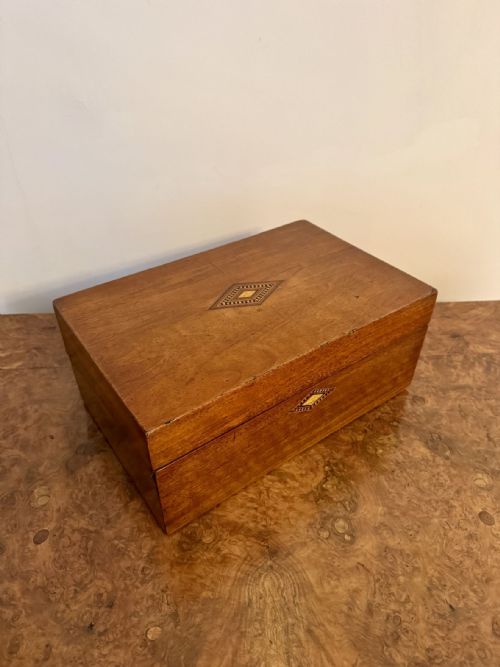
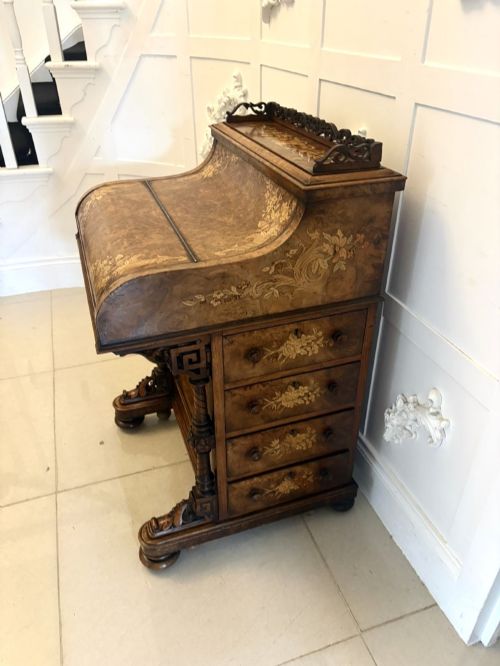

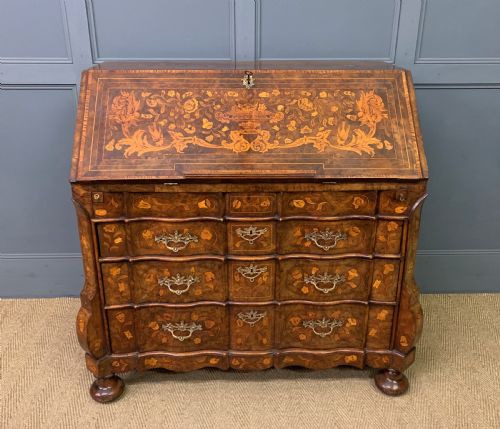
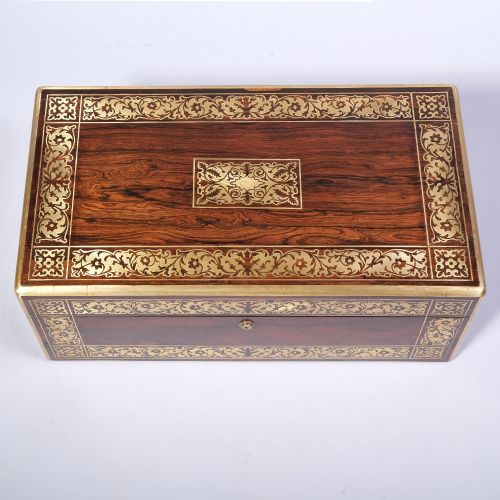
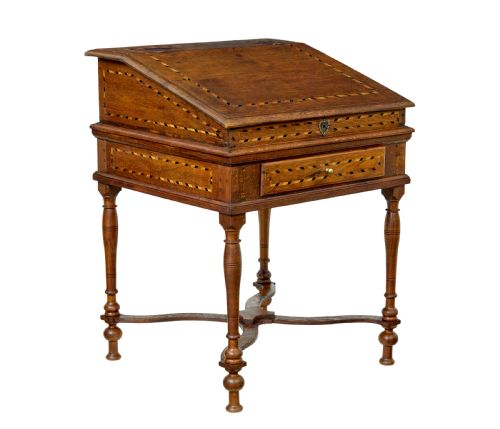
Marquetry Writing Slope
Marquetry writing slopes are portable and fitted wooden desks decorated with inlaid wood veneers, offering a dedicated surface for correspondence.
Marquetry Writing Slope
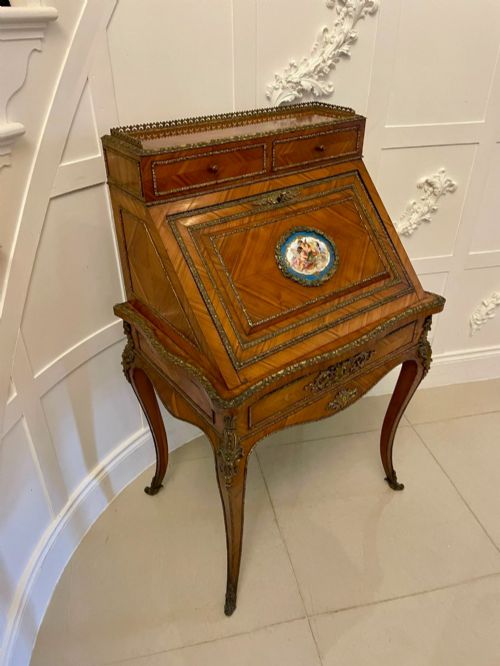
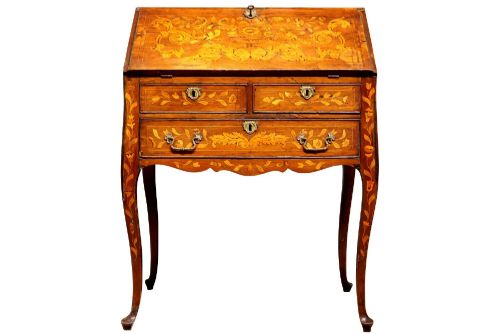
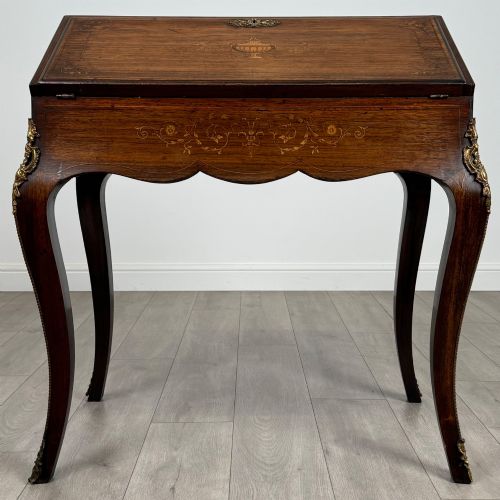
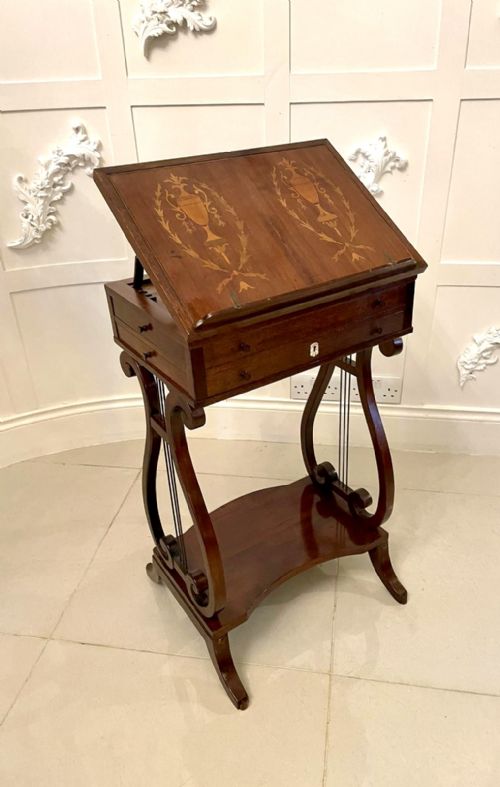
A marquetry writing slope is a portable desk featuring intricate wood inlay patterns across its sloping lid and exterior surfaces. These boxes open to reveal a fitted interior designed for paper, pens, and ink.
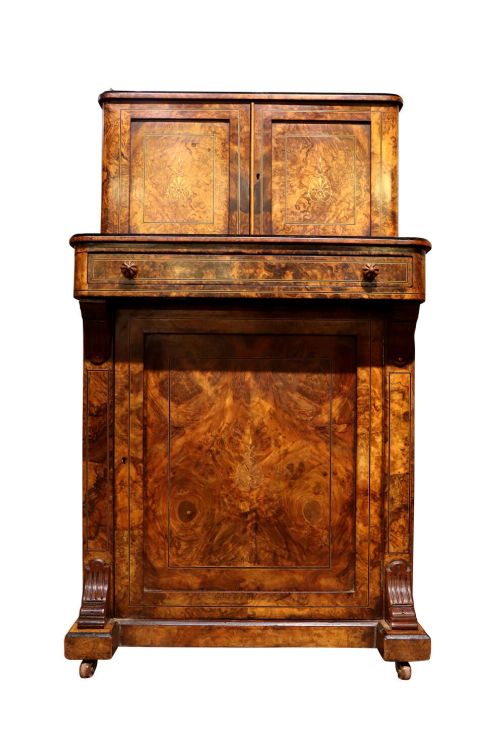
Buyers searching for marquetry writing slopes will frequently encounter Victorian pieces, alongside Georgian examples and continental styles. Walnut, burr walnut, and rosewood form the primary bodies for these decorative surfaces.
How They Were Made
Cabinet makers applied fine veneers of walnut, rosewood, mahogany, and satinwood over solid secondary timbers. Marquetry inlay utilised contrasting wood types cut meticulously to form floral or geometric motifs.
Brass mounts, ormolu, and brass stringing often reinforced the corners and edges of the wooden carcasses, complementing the organic grain of the burr walnut and mahogany bases.
Marquetry Writing Slope Retail Price Guide 2026
Typical asking prices for marquetry writing slope among the pieces listed under this phrase on Sellingantiques today, from the lower quarter to the upper quarter. They describe what is for sale here now, not the wider market.
What Varies in Quality
The precision of the marquetry cutting dictates the visual clarity of the botanical or geometric scenes on the lid. Tighter joints between contrasting wood veneers separate accomplished workshop production from simpler output.
Internal fittings, such as concealed drawers, velvet-lined writing surfaces, and the retention of original brass hardware, indicate the original tier of manufacture for each slope.
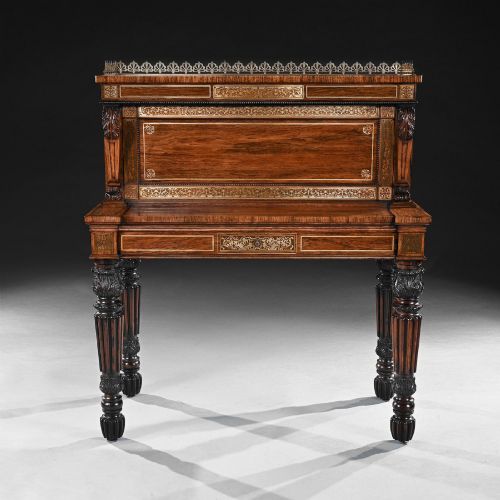
Gillows Oxford Street Workshop
The Marquetry Writing Slope Glossary
- Marquetry inlay
- The decorative technique of applying fitted pieces of wood veneer to a structure to create pictorial designs. This method defines the surface decoration of many Victorian and 18th-century desks.
- Burr walnut
- A prized timber harvested from walnut tree growths that produces swirling, highly figured grain patterns. Cabinet makers selected this wood for the primary exterior panels of quality writing boxes.
- Ormolu
- Gilded bronze mounts applied to furniture edges and corners for decorative accent. French revival pieces frequently incorporate these cast metal elements.
- Tunbridge ware
- Small wooden objects decorated with mosaic patterns assembled from tiny tinted wood blocks. These detailed geometric mosaics often frame the lids of slope boxes.
Marquetry Writing Slope: Frequently Asked Questions
How were writing slopes used?
These portable boxes served as personal desks for travellers and home writers alike. Owners placed the angled lid on a table or their lap to provide a firm surface for writing letters.
Inside the box, fitted compartments held inkwells, sanders for drying ink, and stacks of stationery. When closed and locked, the slope kept private correspondence secure.
What is the difference between a slope and a Davenport?
A writing slope is a portable box placed on top of a table or desk for writing. It lacks integrated legs and is designed to be moved easily from room to room.
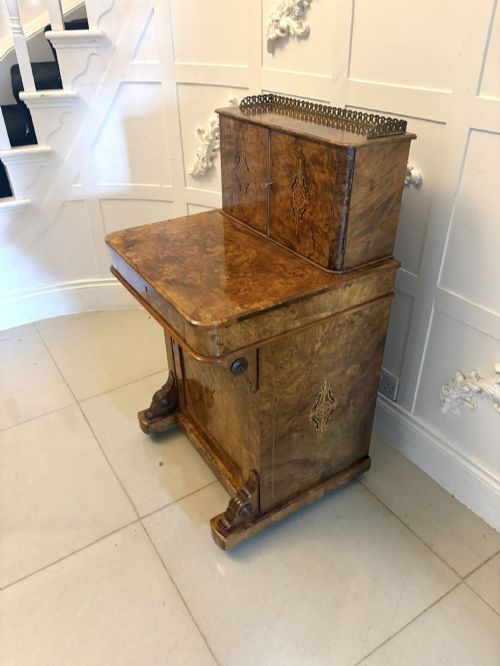
By contrast, a Davenport is a compact stationary desk featuring a built-in set of drawers beneath a sloped writing surface. Davenports provide a permanent writing station rather than a portable case.
How do I tell Victorian slopes apart from earlier ones?
Victorian examples frequently utilise burr walnut veneers combined with elaborate floral marquetry or Tunbridge ware banding. They often date from the mid to late 19th century.
Earlier pieces from the 18th century and the Regency period tend to feature simpler brass binding, mahogany or rosewood bodies, and restrained stringing rather than dense floral marquetry.
Where should I place a slope in my home?
Writing slopes sit comfortably on side tables, chests of drawers, or study desks where their decorative lids remain visible. Keeping them in stable room conditions prevents the wood veneer from drying out.
Opening the slope occasionally allows you to display the fitted stationery compartments and velvet writing surfaces to visitors.