

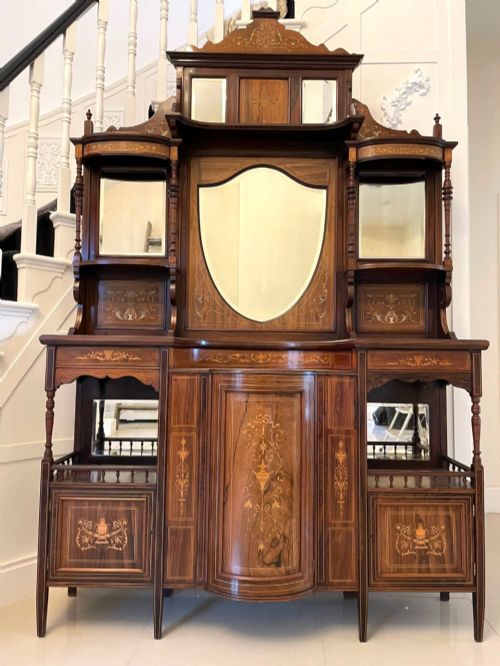
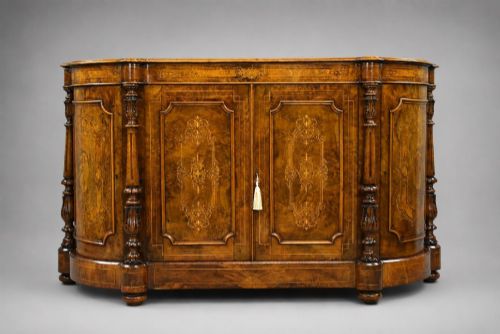
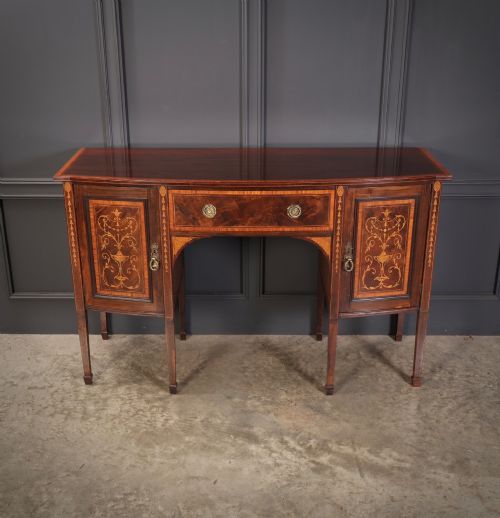
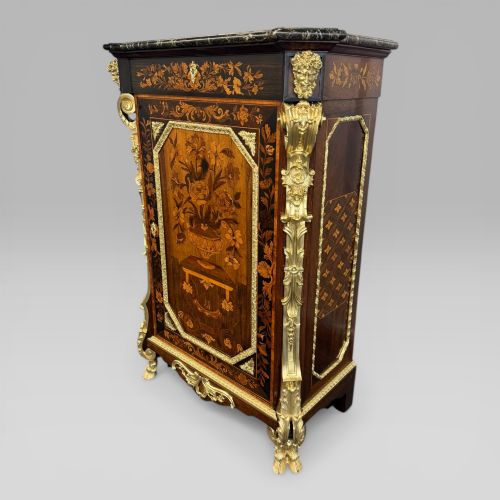
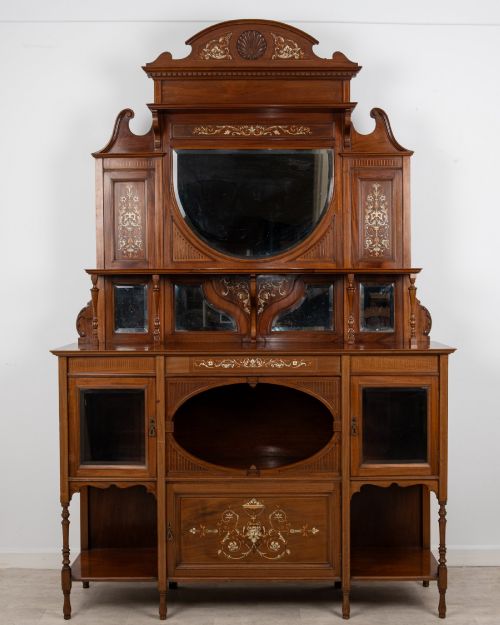


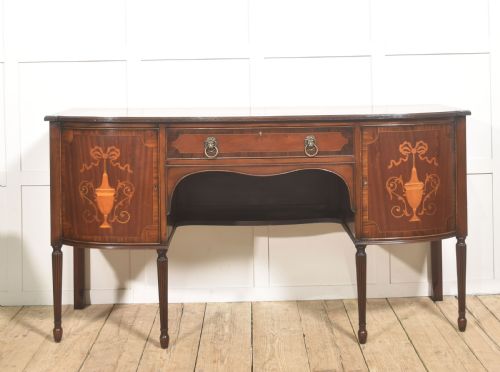


Marquetry Wooden Credenza
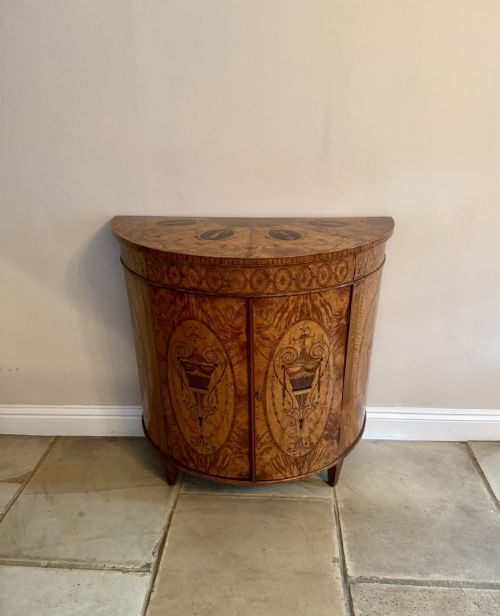
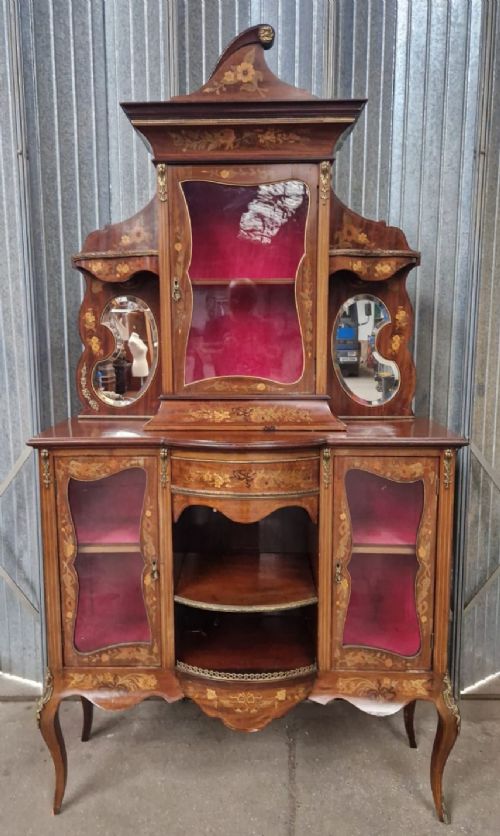
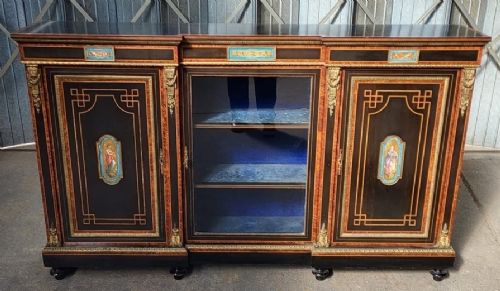
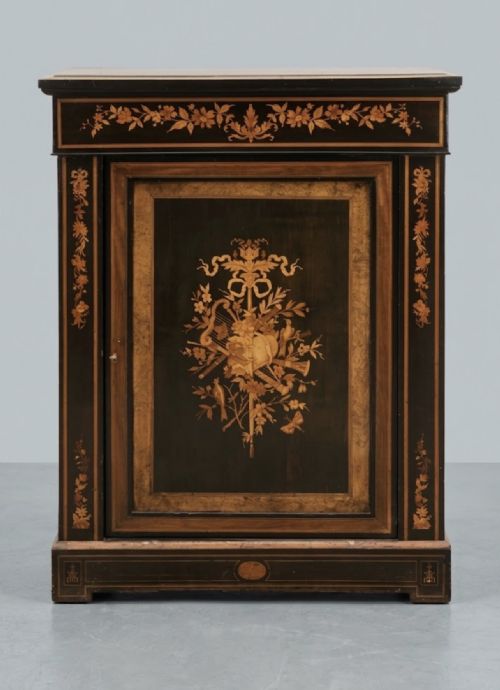
A marquetry wooden credenza brings intricate timber work and grand proportions to a room, offering display space and enclosed storage.
Marquetry Wooden Credenza
When you search for a marquetry wooden credenza, you encounter substantial display furniture designed for formal rooms. These pieces originate across the eighteenth, nineteenth, and early twentieth centuries, spanning Victorian, Georgian, and Edwardian periods.
The versions most common on this page are Victorian burr walnut and mahogany pieces featuring detailed floral or geometric inlay. Alongside traditional credenzas, the selection includes related forms such as side cabinets, chiffoniers, and sideboards sharing similar decorative vocabularies.
Origins stretch across English workshops as well as continental makers in France, Italy, Spain, and Austria. The forms range from serpentine commodes and bow-front sideboards to glazed pier cabinets and breakfront units.
Materials and construction
Cabinet makers utilised foundational hardwoods such as mahogany, walnut, and oak, often applying decorative veneers of burr walnut, satinwood, and king-wood to visible surfaces. Marquetry designs were formed by cutting contrasting timbers and boxwood inlay into precise pictorial or abstract patterns.
Mounts in cast brass and ormolu often accent corners, pilasters, and panel borders, while glass panels and marble tops appear on select continental and high Victorian examples.
Marquetry Wooden Credenza Retail Price Guide 2026
Typical asking prices for marquetry wooden credenza among the pieces listed under this phrase on Sellingantiques today, from the lower quarter to the upper quarter. They describe what is for sale here now, not the wider market.
Several pieces include hidden compartments and secret drawers tucked away behind ornate marquetry panels.
Distinctions in craftsmanship
Quality rests upon the precision of the marquetry cutting and the stability of the timber underneath. Finer examples display tight, seamless joins in the inlaid veneers without lifting or excessive shrinkage.
The sophistication of the internal carcase construction, the weight of the cast ormolu mounts, and the preservation of the original polished surface separate standard utility items from exhibition quality work.
Edward Holmes Baldock·Whytock & Reid of Edinburgh·Gordovil Spain·Pietro Ferrario
The Marquetry Wooden Credenza Glossary
- Marquetry
- Decorative veneer work assembled in patterns or pictures using thin slices of wood. This technique relies on contrasting natural timber colours to build up complex designs on cabinet doors and tops.
- Ormolu
- Gilt bronze mounts applied to furniture for decorative effect. Makers used these cast metal elements to frame panels and highlight architectural corners.
- Credenza
- A low cabinet typically enclosed by doors, originating as a side table for food and evolving into a grand display piece. Victorian iterations frequently incorporate glazed central sections and mirrored backs.
- Burr walnut
- Timber taken from a tree growth that produces swirling, highly figured grain patterns. Cabinet makers prized this wood for creating dramatic visual movement on primary surfaces.
- Chiffonier
- A compact sideboard or cabinet featuring shelves or a raised superstructure. These pieces became common during the nineteenth century for smaller reception rooms.
Marquetry Wooden Credenza: Frequently Asked Questions
What is a marquetry wooden credenza?
A marquetry wooden credenza is a low storage and display cabinet decorated with fitted wood veneers. These pieces typically feature enclosed cupboards and sometimes central glass doors.
They emerged as prominent interior furnishings during the nineteenth century, drawing on earlier Georgian and continental cabinet-making traditions.
How do I date a credenza?
Dating relies on timber choice, construction methods, and stylistic cues such as Victorian or Edwardian revival motifs. Secondary woods inside the carcase and the style of the brass or ormolu mounts provide further chronological clues.
Makers' stamps or labels, when present, offer definitive attribution to specific firms or workshops.
Where should I place a credenza?
These cabinets suit dining rooms, grand hallways, or living spaces where their surface and interior capacity can be utilised. Their decorated fronts make them suitable as focal points against main walls.
Direct sunlight should be avoided to protect sensitive veneers and historic polished finishes from fading.
How do I care for antique marquetry?
Maintenance requires stable indoor humidity and temperature to prevent the wood and delicate veneer inlays from warping or cracking. Dusting with a dry cloth and applying appropriate furniture wax preserves the polish.
Harsh chemical cleaners must be avoided entirely to protect the historic surface layer.