


Marquetry Slope Desk
A marquetry slope desk brings intricate timber inlay and a sloping writing surface together, offering a practical writing space framed by floral or geometric patterns.
Marquetry Slope Desk
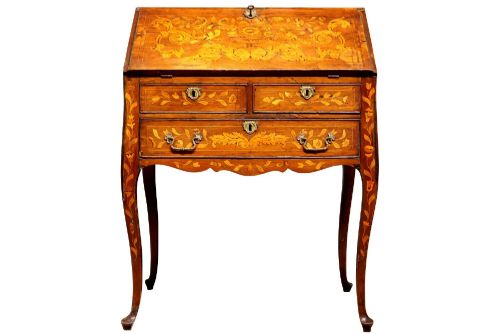
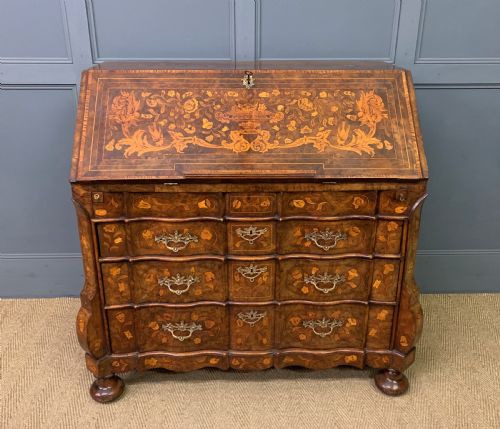
A marquetry slope desk represents a distinct group of writing furniture designed with angled lids and ornamented surfaces. Pieces meeting this description span several centuries, with Victorian examples appearing alongside Georgian and 18th Century Dutch designs.
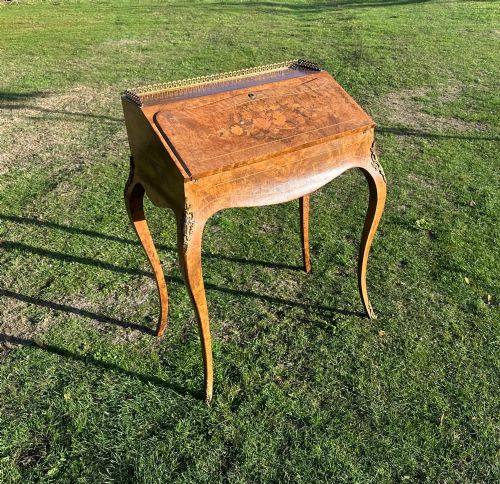
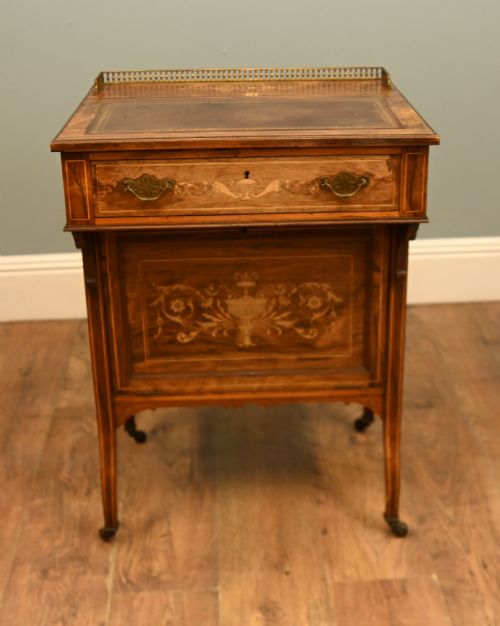
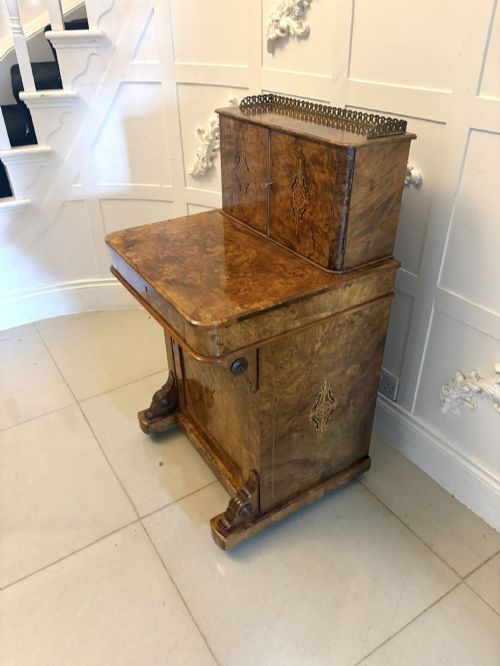
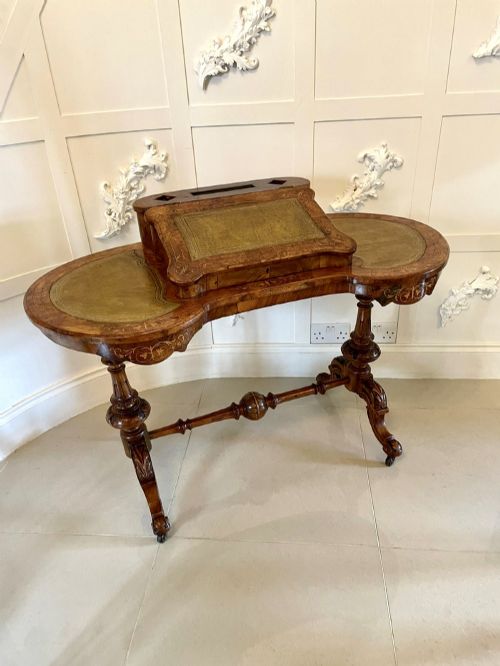
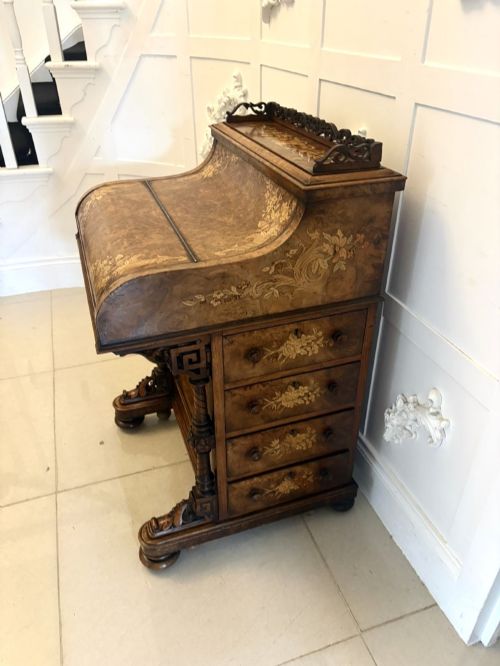
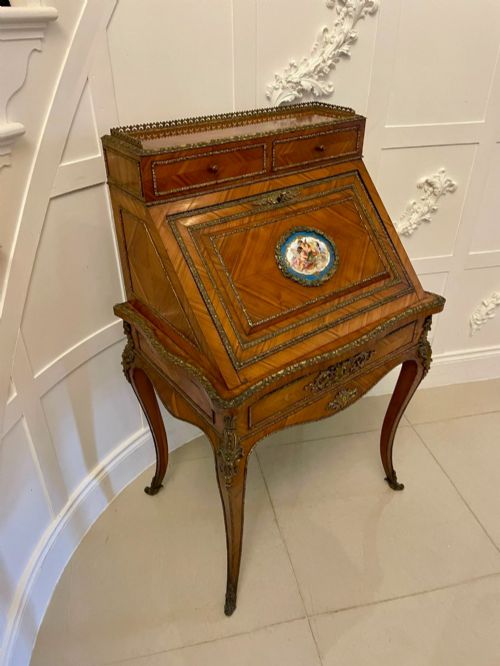
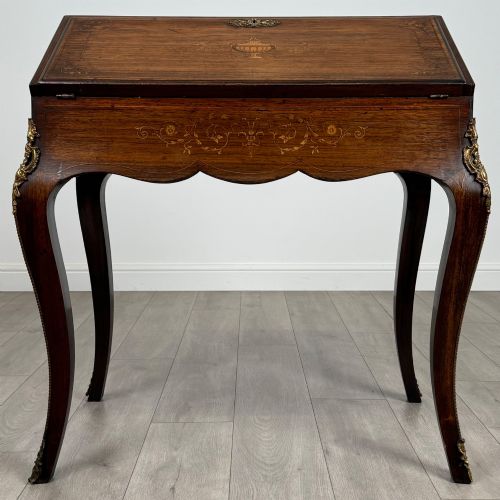
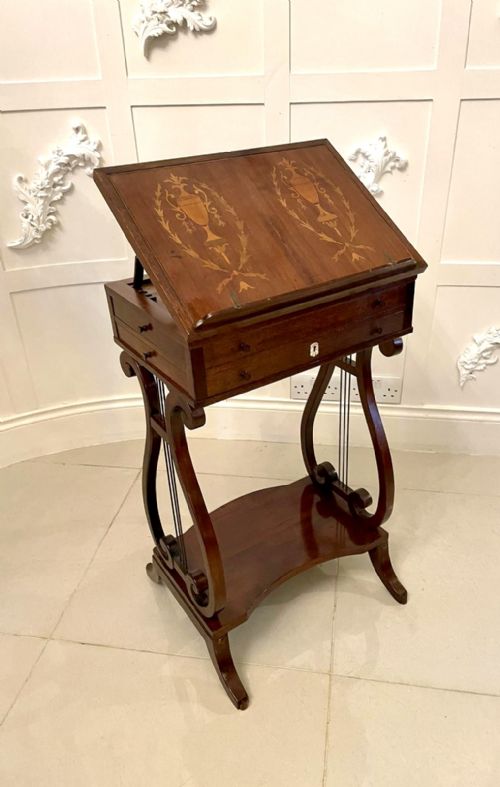
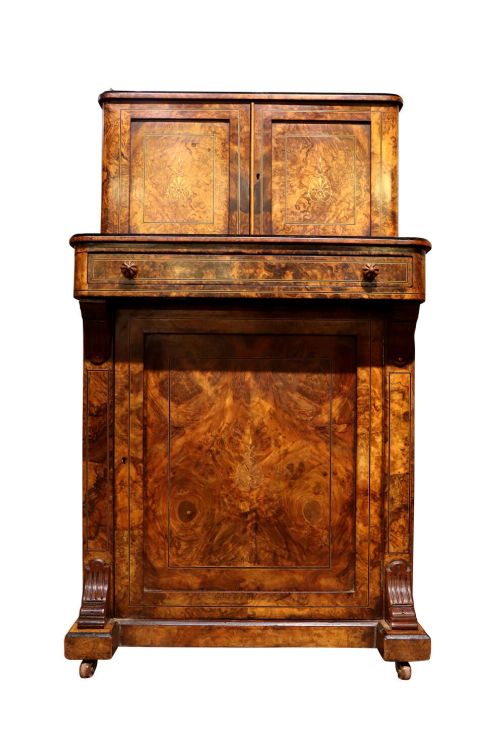
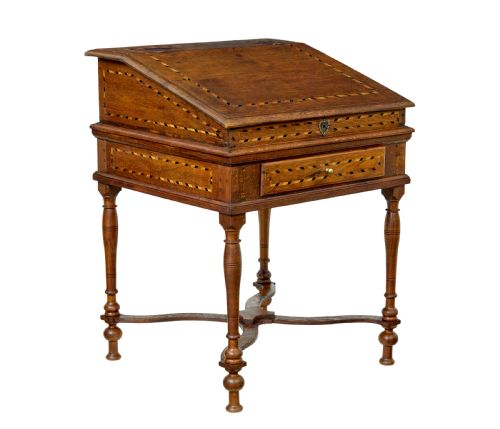
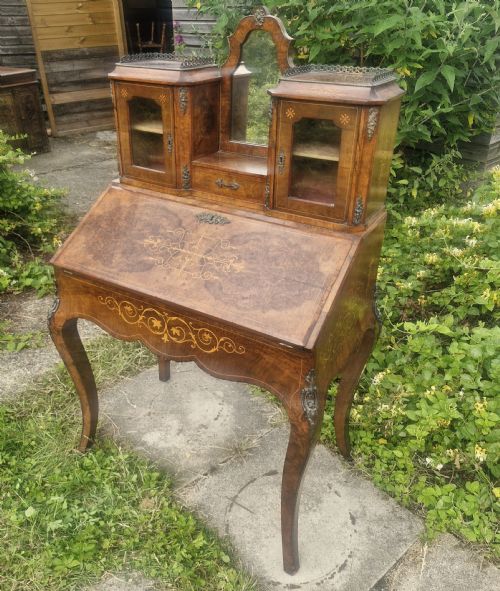
The forms on this page include traditional writing slopes, bureau de dame desks, and Davenport desks featuring inlaid marquetry decoration. Buyers encounter walnut, burr walnut, rosewood, and mahogany as the primary timber carcases for these writing pieces.
Origins vary from English workshops to French ateliers and Dutch cabinetmakers, incorporating styles from Louis XV Revival to Sheraton Revival. Each form provides a compact writing platform combined with internal compartments or stationary storage.
How They Were Made
Craftsmen built the carcases using solid timbers such as mahogany, oak, or walnut, frequently applying veneers of burr walnut, satinwood, and rosewood to exterior surfaces. Marquetry inlay was then hand-cut from contrasting wood species and fitted into precise recesses to create floral or geometric motifs.
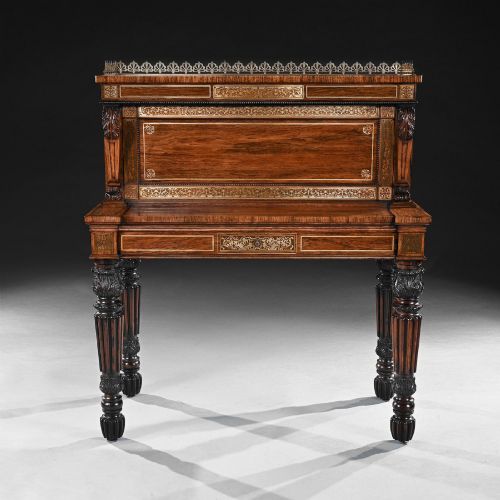
Metal mounts in brass or ormolu were cast and applied to corners, edges, and escutcheons, while interiors often incorporated fitted leather writing surfaces. Writing boxes and slopes relied on flush brass hinges and lock mechanisms let directly into the wood.
Marquetry Slope Desk Retail Price Guide 2026
Typical asking prices for marquetry slope desk among the pieces listed under this phrase on Sellingantiques today, from the lower quarter to the upper quarter. They describe what is for sale here now, not the wider market.
Listings feature writing furniture across Victorian, Georgian, and Regency periods, utilising burr walnut, mahogany, and rosewood.
What Varies in Quality
The standard of timber selection largely defines the quality of a marquetry slope desk, with figured burr walnut and dense rosewood sitting above plain secondary woods. Finely balanced veneer matching across the slope lid reveals the skill of the original cabinetmaker.
The complexity and precision of the marquetry inlay itself separate standard production from superior work. Crisp execution in contrasting woods and clean integration of brass mounts or Tunbridge ware details distinguish the finest examples.
Gillows Oxford Street Workshop
The Marquetry Slope Desk Glossary
- Marquetry inlay
- Decorative patterns formed by fitting contrasting veneers into a prepared wooden surface. This technique creates pictorial designs of flowers and foliage.
- Writing slope
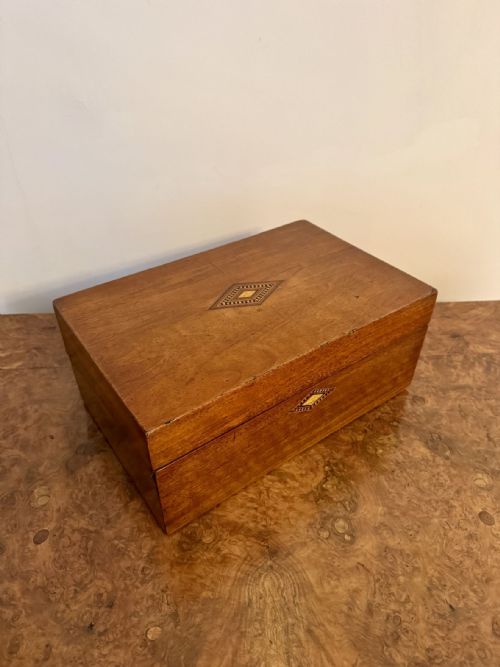
- A portable or stationary box with an angled lid that opens to reveal a slanted writing surface. Interiors usually contain compartments for inkwells and pens.
- Burr walnut
- Timber taken from walnut tree growths that produces highly figured, swirling grain patterns. It is frequently utilised for high-status Victorian desk veneers.
- Bureau de dame
- A small lady's writing desk, often featuring a sloping fall-front or cylinder top above cabriole legs. These pieces typically incorporate delicate marquetry and brass mounts.
- Davenport desk
- A compact writing desk featuring a stationary box on top and a sloped writing surface that slides forward. Drawers commonly open to one side of the pedestal base.
Marquetry Slope Desk: Frequently Asked Questions
How do I use a marquetry slope desk?
Lift the angled lid to access internal storage compartments for paper, pens, and inkwells. The sloped surface provides a comfortable angle for handwriting.
Many styles include built-in drawers or pull-out sections to keep writing implements organised. Close and lock the lid when finished to protect correspondence.
Where were these desks placed?
These pieces sat in principal reception rooms, private libraries, and boudoirs as functional writing furniture. Smaller forms like Davenport desks and writing slopes worked well in domestic settings where floor space was limited.
Freestanding versions allowed placement in the centre of a room, while bureau desks positioned against walls served administrative duties.
How do I care for the wood surface?
Maintain the timber by applying appropriate wax polish sparingly and buffing gently with a soft cloth. Keep the desk away from direct sunlight and heat sources to prevent veneer lifting.
Protect the leather writing insert from moisture and sharp implements. Clean brass mounts carefully without abrasive cleaners to preserve the metal finish.
How do I distinguish Victorian from Georgian examples?
Georgian pieces often display simpler mahogany or walnut carcases with restrained stringing and solid proportions. Victorian examples frequently utilise burr walnut veneers, elaborate floral marquetry, and heavier brass mounts.
Stylistic revivals during the Victorian era also borrowed heavily from earlier French and Dutch designs, adding richer surface ornamentation.