





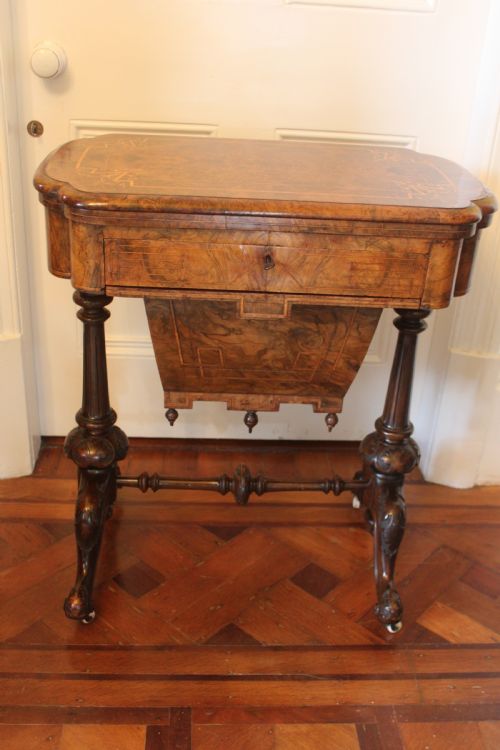
Marquetry Sewing Box Table
A marquetry sewing box table combines fine inlaid timber with practical compartments for needlework and small treasures, offering elegance and utility.
Marquetry Sewing Box Table
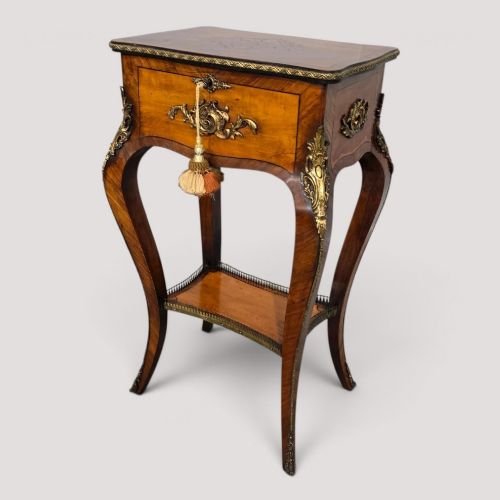
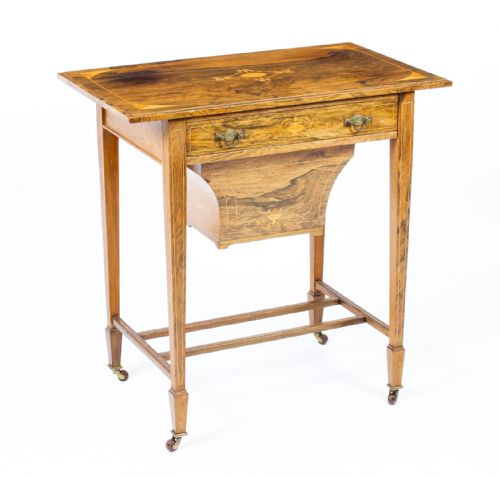
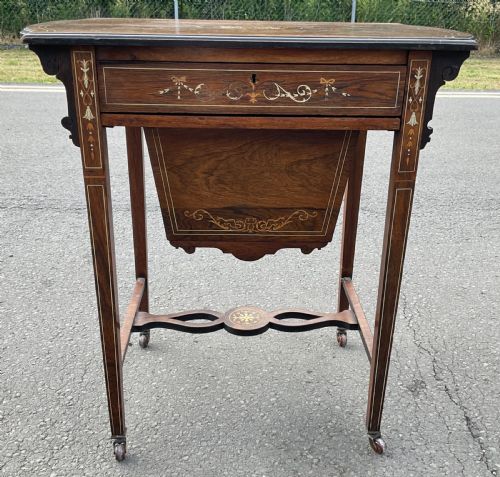
A marquetry sewing box table is an intricate piece of Victorian or Edwardian furniture designed to hold needlework, games, or small valuables. These items appear in forms such as occasional tables, work tables, games tables, and jewellery cabinets.
Most examples found here date from the mid nineteenth century through to the early twentieth century, spanning the Victorian and Edwardian eras. Makers often utilised French Rococo Revival styles alongside classic English proportions.
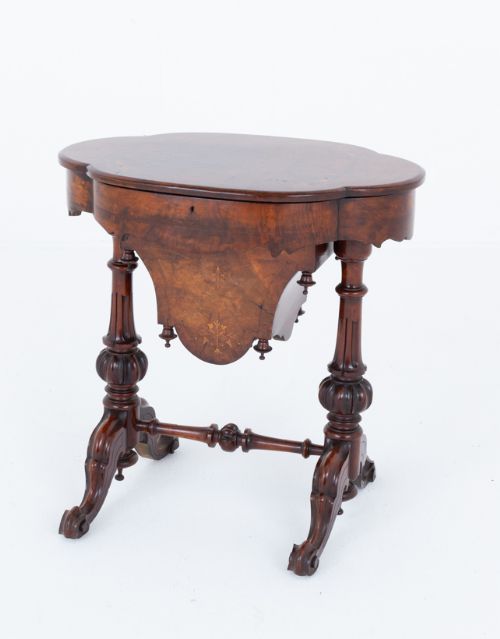
The primary forms on this page include walnut and burr walnut sewing tables featuring compartments and lift-out trays beneath the lids. Oval, trumpet, and cone-shaped work boxes provide diverse silhouettes for domestic interiors.
How they were made
Timbers such as walnut, burr walnut, mahogany, and rosewood form the structural foundation of these tables. Artisans applied contrasting veneers of boxwood and satinwood to create elaborate wood inlay and marquetry patterns across the surfaces.
Brass hardware secures internal compartments, locks, and hinges, while careful joinery ensures the stability of multi-functional game and writing surfaces. The combination of dense hardwoods and delicate veneers requires precise cabinetmaking techniques.
Marquetry Sewing Box Table Retail Price Guide 2026
Typical asking prices for marquetry sewing box table among the pieces listed under this phrase on Sellingantiques today, from the lower quarter to the upper quarter. They describe what is for sale here now, not the wider market.
Some nineteenth-century tables conceal tiny compartments specifically designed for ivory cotton spools and miniature wax blocks.
What varies in quality
The intricacy and precision of the marquetry and wood inlay dictate the visual distinction of each piece. Finer examples display complex floral or geometric motifs executed with diverse contrasting timbers like boxwood and satinwood.
The choice of primary timber significantly affects the character, with burr walnut and rosewood offering rich grain patterns superior to standard mahogany. The complexity of internal fitments, such as fitted sewing trays and dedicated games boards, also defines the standard of craftsmanship.
Waring & Gillow
The Marquetry Sewing Box Table Glossary
- Marquetry
- Decorative veneer work arranged in pictorial or geometric patterns on furniture surfaces. Craftsmen assemble thin slices of various coloured woods to form intricate designs.
- Burr walnut
- A highly figured timber taken from the growth excrescence on a walnut tree. It produces swirling, organic grain patterns prized for decorative table tops.
- Work table
- A small domestic table fitted with drawers, bags, or compartments for sewing and needlework. These pieces served practical purposes in nineteenth-century sitting rooms.
- Satinwood
- A durable, lustrous yellow timber utilised for contrasting inlay work and stringing. It provides bright highlights against darker woods like rosewood and mahogany.
- Trumpet workbox
- A sewing table featuring an octagonal, flared body resembling the bell of a musical instrument. This specific form rests on a slender column and carved tripod base.
Marquetry Sewing Box Table: Frequently Asked Questions
What is a marquetry sewing box table?
A marquetry sewing box table is a compact nineteenth or early twentieth-century furniture piece designed for needlework, featuring decorated inlaid timber surfaces and internal storage compartments.
These tables combine decorative appeal with practical utility, often incorporating games boards, writing surfaces, or removable trays beneath the top lid.
How were these tables used originally?
Victorian and Edwardian ladies utilised these tables to organise threads, needles, and fabric scraps while sitting in the parlour or drawing room.
Many designs also served dual purposes as occasional, writing, or games tables for chess and cards during evening gatherings.
How do I distinguish Victorian from Edwardian pieces?
Victorian tables typically feature darker timbers like burr walnut and rosewood, often displaying elaborate Rococo Revival curves and dense floral marquetry.
Edwardian examples tend to utilise lighter mahogany with refined shell inlay work and simpler, more restrained proportions.
Where should I place a sewing table at home?
These versatile items function well as occasional side tables beside armchairs or sofas in a living room or study.
The enclosed storage compartments make them practical for stashing small contemporary items while maintaining a traditional aesthetic.