




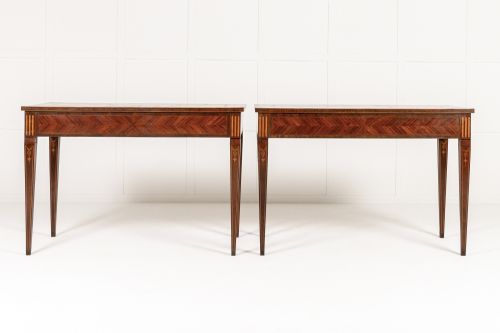
Marquetry Pier Table
A marquetry pier table brings intricate wood inlay and architectural grace to a wall space, offering a refined focal point for any room.
Marquetry Pier Table
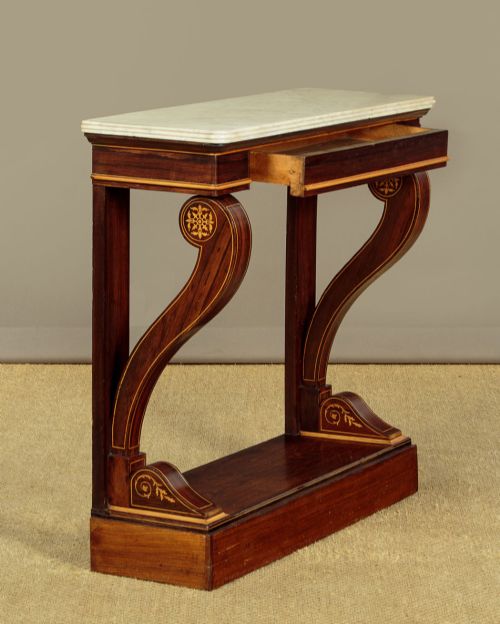
A marquetry pier table is a decorative wall-mounted or console surface designed to sit between windows, often featuring elaborate wood inlay across its top and frame.
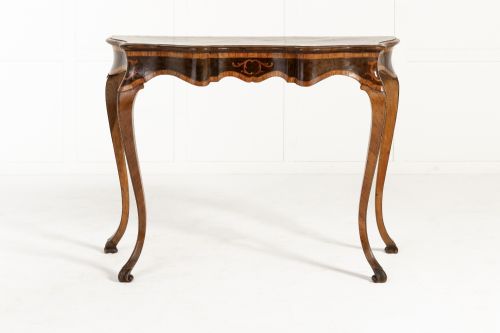
The versions met most frequently on this page span the 18th century, Georgian era, and the 19th century, appearing in demi-lune, serpentine, and rectangular forms.
Origins stretch across English, Dutch, Italian, and French workshops, utilising woods such as satinwood, mahogany, walnut, and rosewood alongside marble tops.
Materials and Construction
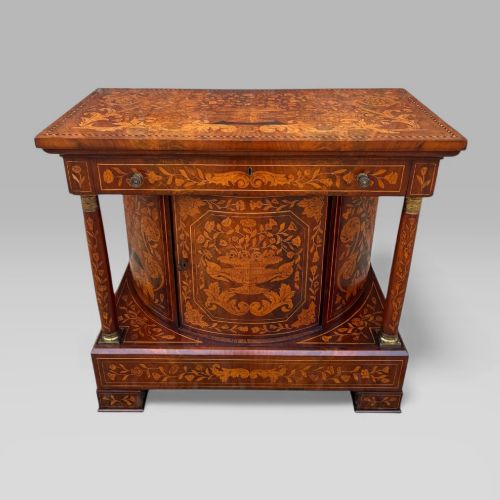
Cabinet makers utilised fine timbers like satinwood, mahogany, walnut, and rosewood as grounds for intricate wood inlay and floral or neo-classical marquetry.
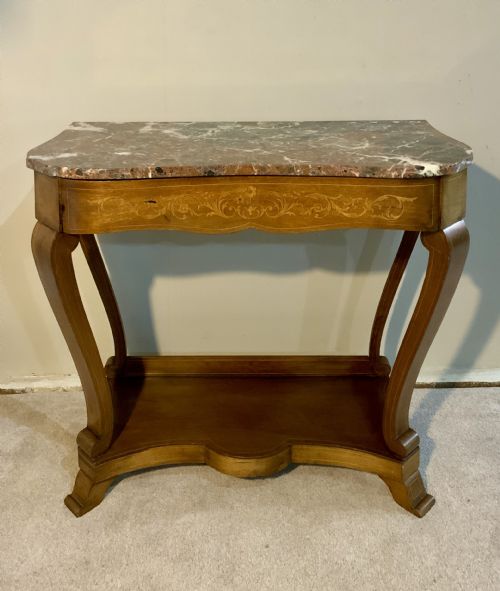
Surfaces frequently incorporated contrasting woods, brass details, and ormolu mounts, paired with heavy marble slabs on top of console and pier tables.
Marquetry Pier Table Retail Price Guide 2026
Typical asking prices for marquetry pier table among the pieces listed under this phrase on Sellingantiques today, from the lower quarter to the upper quarter. They describe what is for sale here now, not the wider market.
Listings feature satinwood, mahogany, walnut, and rosewood, alongside marble tops and ormolu mounts spanning Georgian to Edwardian periods.
Evaluating Quality and Execution
Quality rests in the crispness of the wood inlay and the precision of the botanical or neo-classical patterns set into the satinwood or walnut ground.
Superior examples display balanced proportions in demi-lune and serpentine shapes, combined with carefully chosen timber grains and solid secondary woods.
Donald Ross·Gillows
The Marquetry Pier Table Glossary
- Marquetry
- The art of applying pieces of veneer to a structure to form decorative patterns. This technique defines the surface decoration of the pieces found here.
- Pier table
- A table designed to stand against a wall, typically between two windows beneath a pier glass mirror. They often share forms with console tables.
- Demi-lune
- A half-moon shape used for the tops and frames of side and pier tables. This profile is common in George III and Edwardian examples.
- Ormolu
- Gilded bronze mounts applied to furniture for decorative effect. They appear alongside wood inlay on 19th-century revival pieces.
Marquetry Pier Table: Frequently Asked Questions
How do I tell an 18th-century table from a 19th-century one?
Eighteenth-century examples, such as those from the George III period, typically feature understated neo-classical satinwood inlay and fine proportions. Nineteenth-century pieces often display bolder walnut marquetry or heavier revival styling.
Examining the secondary woods and the style of the floral or geometric veneer helps clarify the period of manufacture.
Where should I place a pier table at home?
A pier table sits best against a prominent wall in a hallway, drawing room, or dining space where its decorated top remains visible. Because many are shallow demi-lune or console shapes, they occupy minimal floor space.
Paring the table with a mirror hung above recreates the traditional architectural arrangement found in historic interiors.
What woods were used to make these tables?
Cabinet makers built the carcases and frames using dense timbers like mahogany, walnut, and satinwood. Rosewood, kingwood, and maple also appear in the detailed veneer work.
Some tables incorporate contrasting wood inlay and gilt bronze or ormolu mounts to highlight the geometric and floral designs.