





Marquetry Pediment Bookcases
Marquetry pediment bookcases combine architectural proportion with intricate inlaid timber work, offering both a commanding presence and refined storage for a fine library.
Marquetry Pediment Bookcases
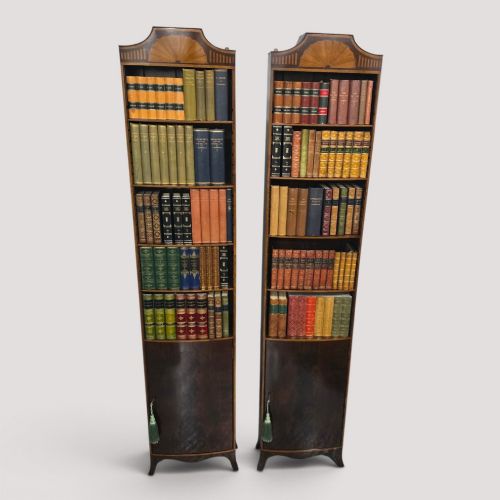
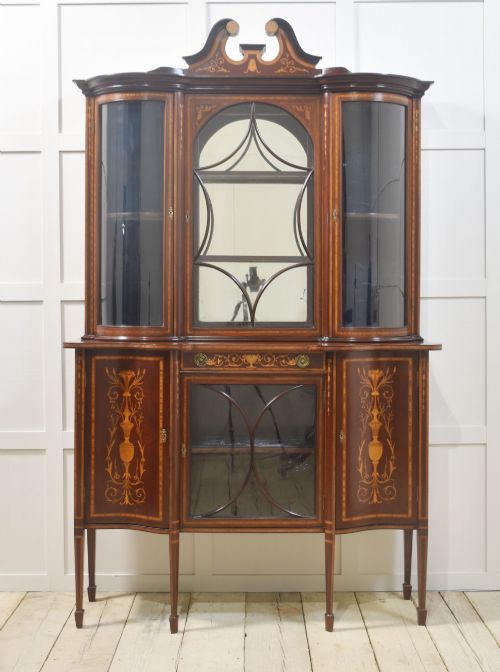
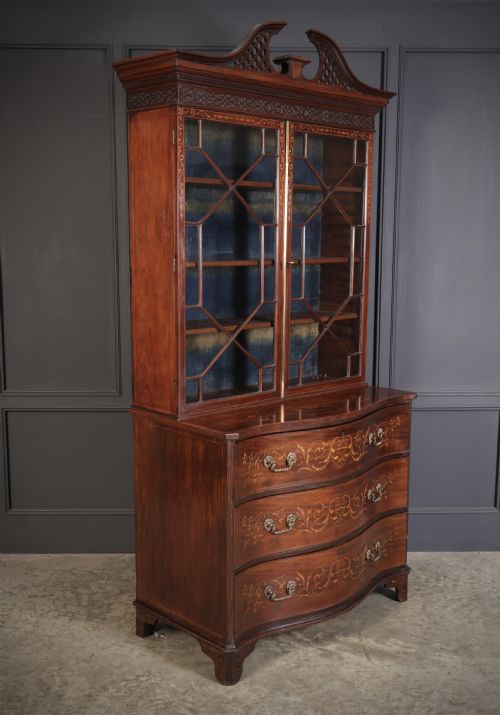
When you search for marquetry pediment bookcases, you encounter sophisticated cabinetry designed to house volumes while displaying decorative wood veneers on the upper architectural crest. These pieces range from substantial bureau and secretaire bookcases to upright display cabinets and standing corner cupboards.
The versions most commonly met on this page date from the Edwardian era and the Sheraton Revival period, alongside pieces from the Georgian and Victorian epochs. Makers utilised styles spanning George III through to Victorian architectural revival, creating formal storage solutions with glass doors and inlaid motifs.
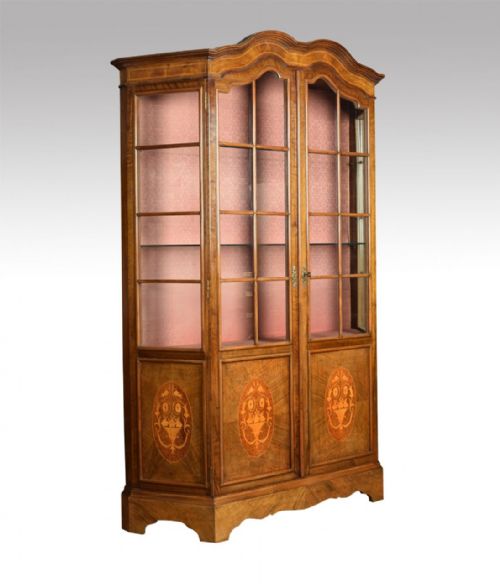
Forms vary from slim open adjustable shelving to glazed cabinet bookcases and corner cupboards. Each variation incorporates the characteristic pediment top and contrasting timber details that define this group of antique furniture.
Materials and construction
The primary framework of these pieces relies on timbers such as mahogany, walnut, oak and harewood, providing a sturdy carcase for the shelves and doors. Craftsmen applied fine veneers of satinwood and fruitwood to the exterior surfaces.
Marquetry inlay and satinwood inlay create intricate floral or geometric patterns across the doors and pediments. Brass hardware and glazed panel doors complete the construction, combining structural integrity with decorative refinement.
Marquetry Pediment Bookcases Retail Price Guide 2026
Typical asking prices for marquetry pediment bookcases among the pieces listed under this phrase on Sellingantiques today, from the lower quarter to the upper quarter. They describe what is for sale here now, not the wider market.
Listings feature pieces spanning the Georgian, Victorian, Edwardian and 1930s periods, constructed from mahogany, walnut, oak and harewood.
Distinctions in quality
Quality rests upon the precision of the marquetry and the crispness of the pediment moulding. Finer examples display seamless timber matching and deeply considered proportion across the cornice and doors.
The integration of secondary timbers and the retention of original brass fittings and glass panes separate standard production from superior cabinet work. The handling of inlaid satinwood and harewood reveals the proficiency of the workshop.
Edwards and Roberts
The Marquetry Pediment Bookcases Glossary
- Marquetry
- Decorative veneer work arranged in intricate patterns using various coloured timbers. This technique creates pictorial or geometric designs on the surface of the cabinet.
- Pediment
- The triangular or arched architectural ornament crowning the top of a bookcase. It draws the eye upward and finishes the upper structure with formal elegance.
- Secretaire bookcase
- A tall storage piece containing a pull-out writing drawer with a fitted interior of small drawers and pigeonholes. It merges a desk with a traditional book cabinet.
- Sheraton Revival
- A late nineteenth and early twentieth century design movement inspired by the neoclassical furniture of Thomas Sheraton. It favours light timbers, satinwood inlay and classical proportions.
Marquetry Pediment Bookcases: Frequently Asked Questions
What is a pediment bookcase?
A pediment bookcase is a tall storage unit featuring an architectural crown at the very top. This decorative crest frames the upper section and adds height to the piece.
Such cabinets often combine open shelving or glazed doors with enclosed lower cupboards. The pediment serves to elevate the visual weight of the furniture.
How do I date an inlaid bookcase?
Dating relies on examining the primary timber, the style of the inlay, and the construction methods used inside the carcase. Edwardian and Sheraton Revival pieces often utilise lighter satinwood against mahogany.
Earlier Georgian examples display heavier proportions and deeper hand-cut dovetails in the drawer construction. Comparing the hardware and glass helps confirm the period.
Where should I place a corner cabinet?
Corner cabinets fit neatly into ninety-degree wall junctions, making efficient use of overlooked space in a room. They work well in dining rooms, studies, or drawing rooms.
Ensure the door swing has adequate clearance from surrounding furniture. Positioning the cabinet away from direct sunlight protects the delicate marquetry veneers.
How do I care for marquetry surfaces?
Marquetry surfaces require regular dusting with a soft, dry cloth to prevent grit accumulation. Avoid placing antique timber near heat sources or damp areas.
Applying a traditional beeswax polish occasionally maintains the lustre of the veneer. This preserves the natural oils in the timber without building up heavy chemical residues.