


Marquetry Open Bookcase
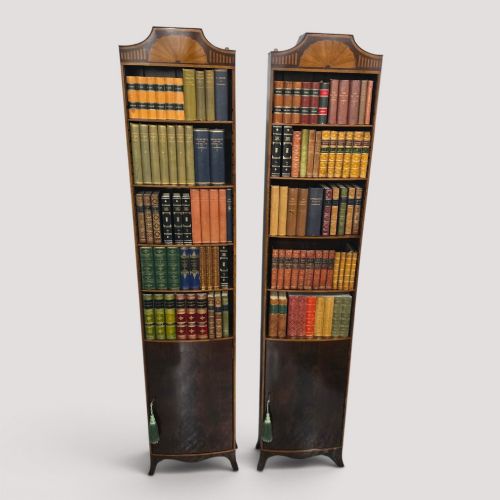
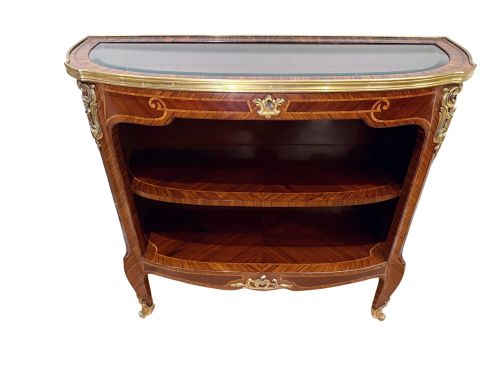
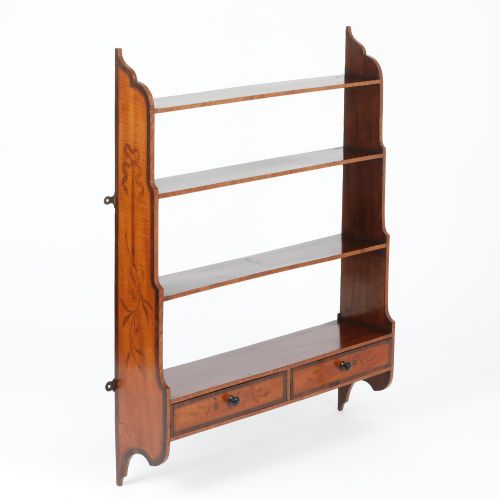
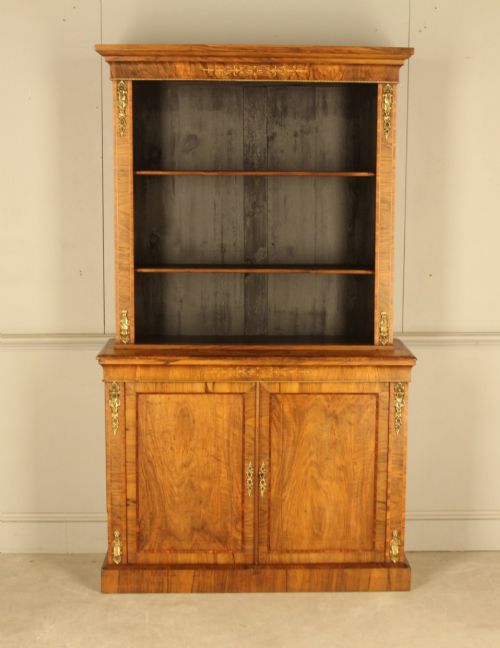
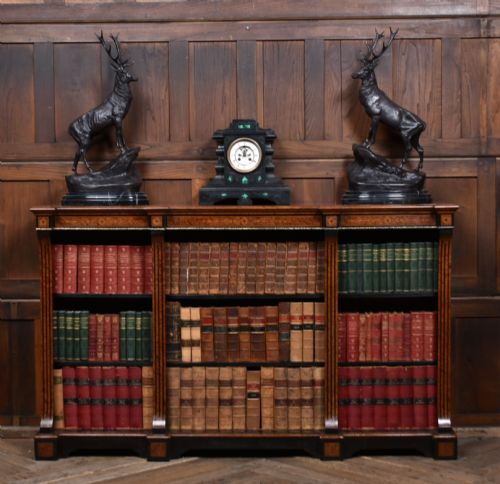
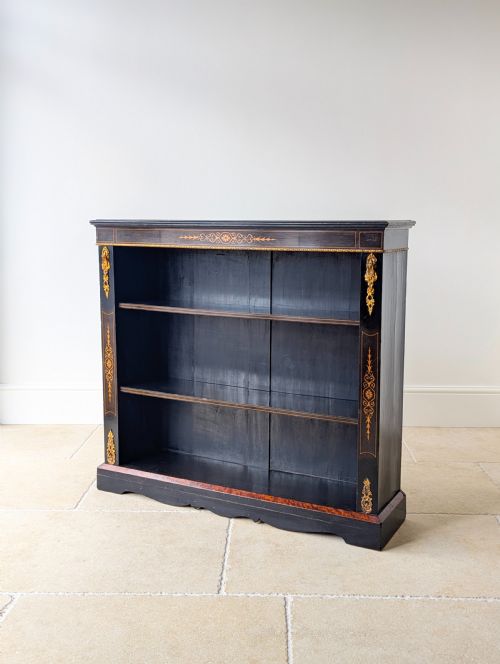
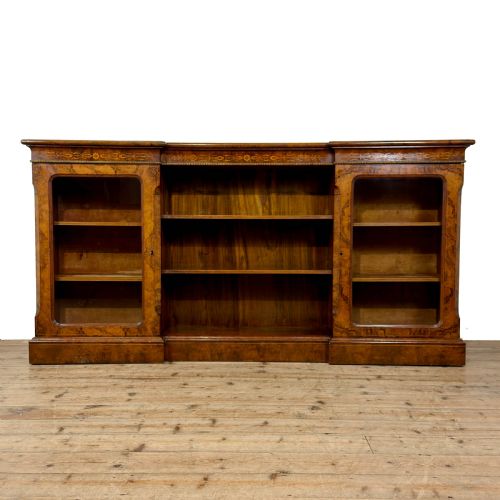
These marquetry open bookcase examples bring together finely figured timbers and intricate inlaid floral panels to hold a library in style.
Marquetry Open Bookcase
When you search for a marquetry open bookcase, you are looking at sturdy display furniture featuring unglazed or partially open shelving fronted by decorative wood-inlaid veneers. The pieces seen here span from the eighteenth century through the Victorian era and into the Edwardian period, capturing centuries of cabinet-making skill.
You are most likely to meet Victorian walnut and mahogany pieces on this page, often decorated with satinwood, boxwood, and brass mounts in revival styles. They range from compact four-tier whatnots and wall shelves to large breakfront and triple-door display cabinets with adjustable open bookshelves.
The form serves as both a practical repository for volumes and a decorative focal point for a room, combining surface artistry with functional tiering. Whether executed in French Rococo Revival or Sheraton lines, each piece displays the distinct aesthetic priorities of its decade of origin.
How they were made
Cabinet-makers built the foundational carcases of these pieces using sturdy timbers such as mahogany, oak, and walnut, providing a stable structure for intricate surface work. Over these core woods, artisans applied delicate veneers of exotic and domestic species including satinwood, kingwood, amboyna, and rosewood.
The characteristic ornamentation relies on precise marquetry, where contrasting woods, boxwood, and shell motifs are cut and fitted together to form floral or geometric scenes. Workshops enhanced these decorative surfaces with cast brass mounts, ormolu accents, and ebonised detailing to achieve the rich contrasts favoured during the nineteenth century.
Several pieces feature four tiers for books, proving that Victorians loved a neat stack just as much as we do.
What varies in quality
The distinction between standard commercial items and finer workshop productions rests heavily on the depth and precision of the marquetry and the choice of timber grains. Pieces featuring dense burr walnut, finely figured satinwood, and hand-cut multi-wood inlay demand significantly more labour than simple geometric banding.
Hardware and structural detailing further separate the tiers of quality, visible in the heaviness of cast ormolu mounts, the integrity of brass fittings, and the refinement of architectural mouldings. Master makers integrated internal adjustments and secondary timbers with a level of joinery that ensures longevity and structural poise.
Shapland & Petter·Victor Raulin·Edwards and Roberts
The Marquetry Open Bookcase Glossary
- Marquetry
- Decorative veneer work where pieces of various coloured woods are fitted together to form pictorial or geometric patterns on a solid carcase. This technique defines the visual appeal of many nineteenth-century display pieces.
- Breakfront
- A cabinet design where the central section projects forward from the flanking wings, creating depth and architectural rhythm across the front. It is commonly found on larger library bookcases.
- Ormolu
- Gilded bronze mounts and ornaments applied to furniture, popular in French-influenced revival styles. These metallic additions highlight corners, friezes, and feet.
- Whatnot
- An open set of freestanding or corner shelves supported by slender columns or uprights, designed for displaying books and small ornaments. They appear frequently in Victorian and Edwardian interiors.
- Satinwood
- A durable, lustrous timber native to India and Ceylon with a golden-yellow sheen, frequently utilised for crossbanding and marquetry panels. It provides a bright contrast against darker woods like mahogany.
Marquetry Open Bookcase: Frequently Asked Questions
What is a marquetry open bookcase?
A marquetry open bookcase is a timber shelving unit featuring accessible, unglazed compartments decorated with intricate wood-inlaid veneer patterns.
These pieces combine functional library storage with the decorative artistry of cabinet-makers from the Victorian and Edwardian periods.
How do I identify a Victorian piece?
Victorian examples often employ dense walnut, ebonised wood, or rosewood, paired with gilt mounts and rich boxwood inlay.
They frequently reflect revival styles such as French Rococo or Sheraton, showing heavier proportions and darker finishes than earlier eighteenth-century work.
Were these bookcases used for books?
These pieces served to hold household libraries, family Bibles, and treasured volumes within easy reach of the sitting room or study.
The open shelving design allowed for both daily reading access and the display of decorative small objects alongside the books.
What is the difference between an open bookcase and a cabinet?
An open bookcase lacks doors on the main shelving sections, offering direct access to the books and internal compartments.
Cabinets and vitrines incorporate glazed or solid wooden doors to enclose the contents, protecting delicate bindings from dust and light.
How should I care for inlaid wood?
Inlaid wood benefits from stable room temperatures away from direct sunlight and heat sources to prevent the veneers from lifting.
Regular dusting with a dry, soft cloth preserves the polished surface without introducing moisture that could harm the delicate marquetry.