
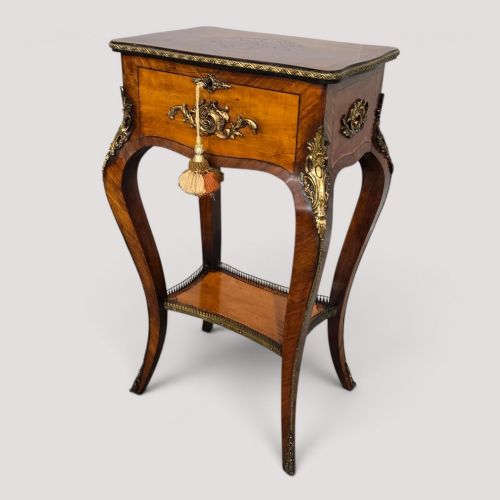
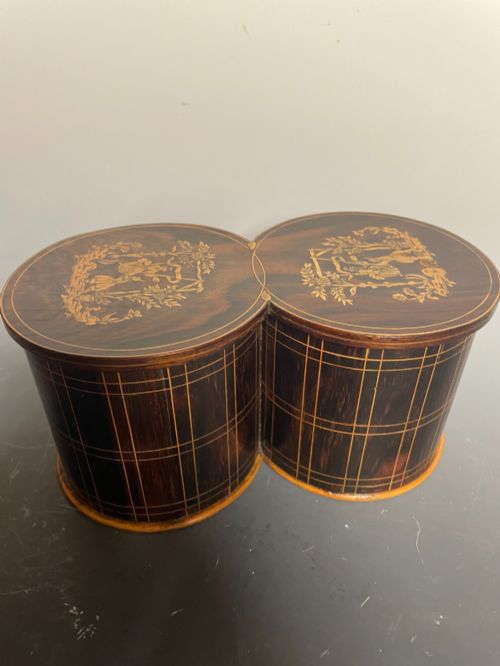
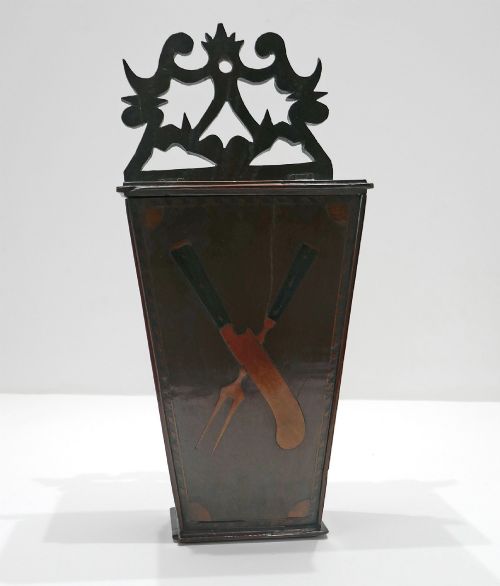
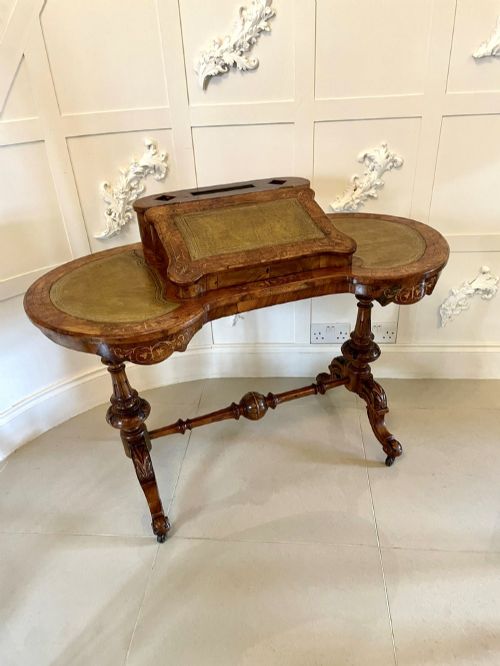
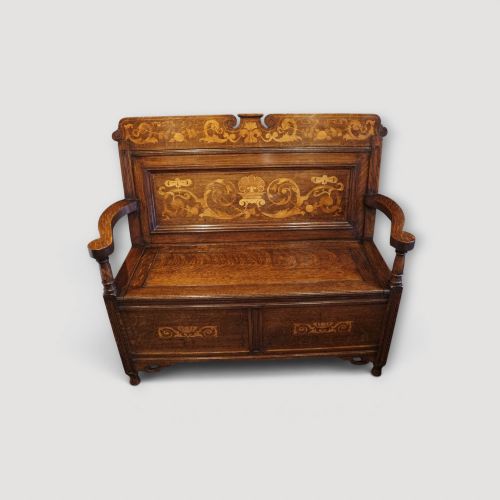
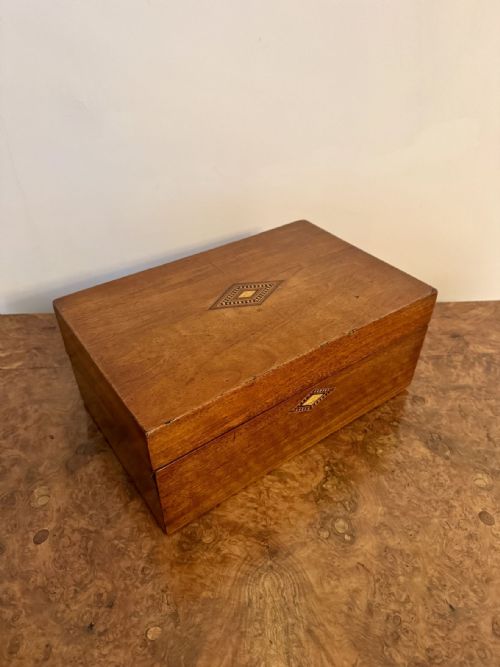
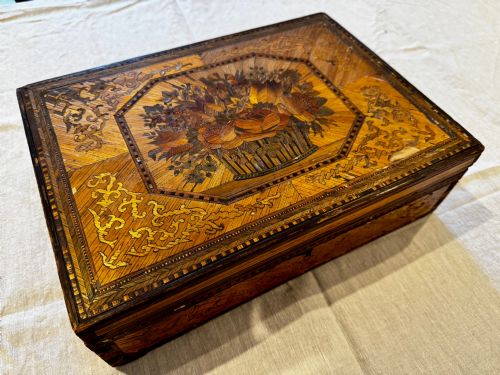
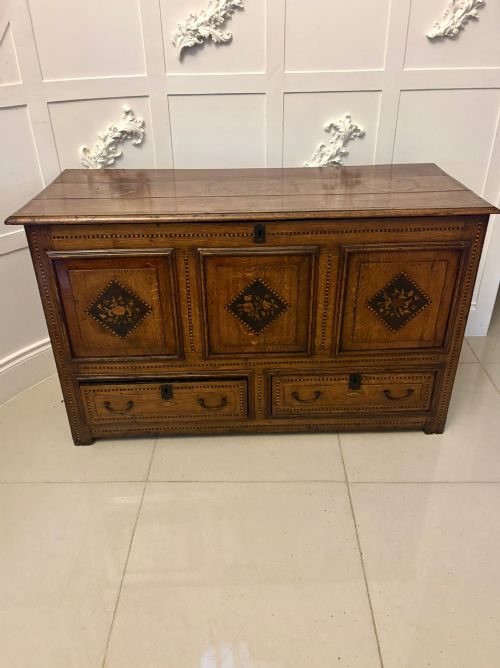
Marquetry Inlay Box
Marquetry inlay box describes wooden containers decorated with detailed sliced veneer patterns, prized for their intricate geometric and pictorial designs.
Marquetry Inlay Box
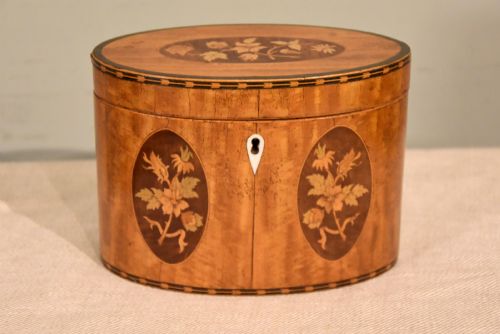
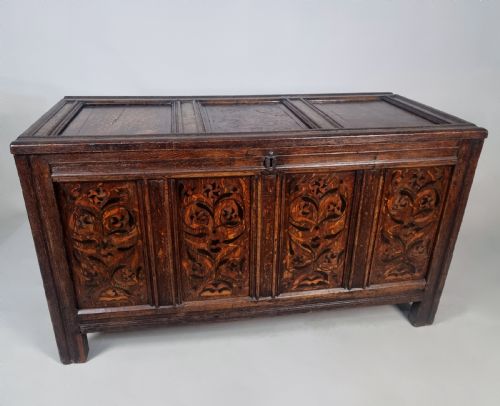
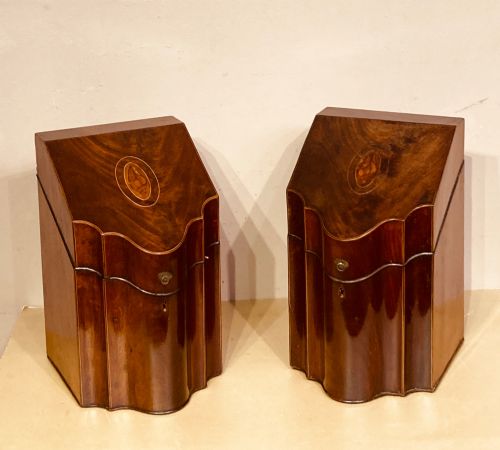
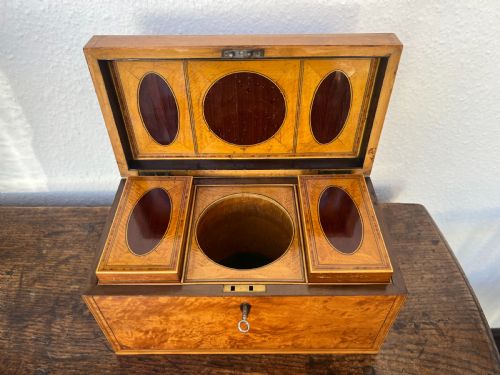
A marquetry inlay box encompasses functional and decorative containers designed to hold tea, stationery, trinkets, or writing materials. These items emerge primarily from the 18th and 19th centuries, spanning the Georgian, Victorian, and Regency periods.
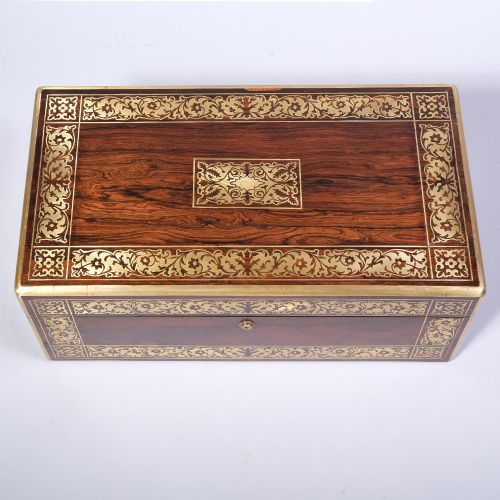
Tea caddies, stationery boxes, and jewellery cases dominate the selection, often taking rectangular, oval, or octagonal forms. Examples range from compact pocket snuff boxes to substantial tabletop cabinets and writing desks.
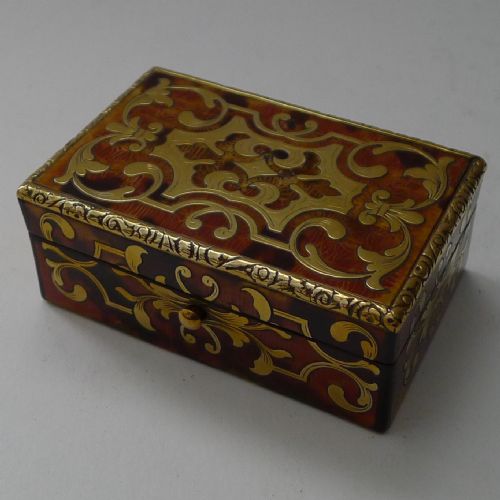
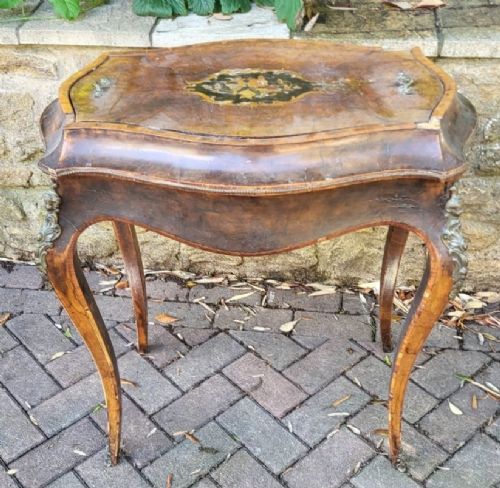
Continental pieces from the Napoleon III era appear alongside English productions, frequently incorporating contrasting woods and brass mounts. The overarching purpose remains the secure and stylish storage of personal valuables.
How they were made
Craftsmen built the core structures from native and exotic timbers such as mahogany, walnut, rosewood, satinwood, and oak. Finer details relied on contrasting woods like boxwood, ebony, and harewood, sometimes accented with bone or mother of pearl.
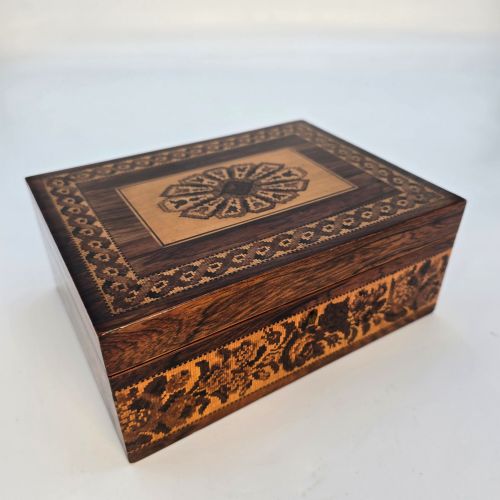
The decorative surface employs veneer slices cut and fitted together to form pictorial scenes or geometric bands before being glued to the solid wood carcase. Specialised workshops utilised precise sawing and fitting techniques, particularly visible in the mosaic wood sections of Tunbridge ware.
Additional hardware in brass or cast metal provided structural reinforcement and hinges, while interior compartments often featured fitted velvet, silk, or mirrored surfaces.
The listings feature 18th, 19th, and early 20th century pieces, predominantly constructed from walnut, mahogany, and rosewood with intricate boxwood details.
What varies in quality
The precision of the veneer work dictates the tier of the piece, with tighter joints and sharper geometric alignment marking superior examples. The complexity of the pictorial or mosaic designs also separates standard containers from masterworks.
Edmund Nye·Henry Hollamby·James Shoolbred & Co.
The Marquetry Inlay Box Glossary
- Marquetry
- The art of applying small pieces of veneer to a structure to form decorative patterns or pictures. This technique defines the visual appeal of these containers.
- Tunbridge ware
- A specific type of woodwork featuring mosaic designs made from many tiny wood blocks. It creates detailed pictorial representations of castles or geometric bands.
- Tea caddy
- A container designed specifically for storing dry tea leaves securely. They often feature internal lidded compartments and lockable lids.
- Veneer
- A thin slice of decorative wood applied to a coarser underlying timber. It allows makers to display rich grain patterns economically.
- Tantalus
- A locked cabinet holding decanters that displays the contents while preventing unauthorised access. They usually feature matching cut crystal bottles.
Marquetry Inlay Box: Frequently Asked Questions
What were tea caddies used for?
Tea caddies served as secure storage containers for expensive tea leaves during periods when tea was a heavily rationed luxury. Servants typically kept the key, measuring out portions for each household use.
Inside, the containers often featured divided compartments with separate lids to keep different tea varieties fresh and dry.
How do I care for antique wood boxes?
Keep wooden containers away from direct sunlight and sudden temperature changes to prevent the veneer from drying and lifting. Dust them gently with a dry, soft cloth rather than using modern chemical polishes.
Maintain a stable room humidity to protect both the delicate wood inlays and the original internal silk or velvet linings.
What is the difference between inlay and marquetry?
Inlay involves setting pieces of material into a recessed cavity carved directly into solid wood. Marquetry covers the entire surface of the carcase with an assembled jigsaw of veneer slices.
Both techniques create decorative patterns, but marquetry allows for more complex pictorial and multi-coloured scenes.
How can I identify a Victorian piece?
Victorian containers frequently utilise walnut or rosewood timbers combined with heavy brass hardware and elaborate boxwood stringing. Stylistic influences often draw from earlier Georgian designs or incorporate specific regional crafts like Tunbridge mosaic work.
Interior fittings from this era commonly include purple velvet, fitted stationery slots, or removable crystal inkwells.