




Marquetry Inlaid Armoire
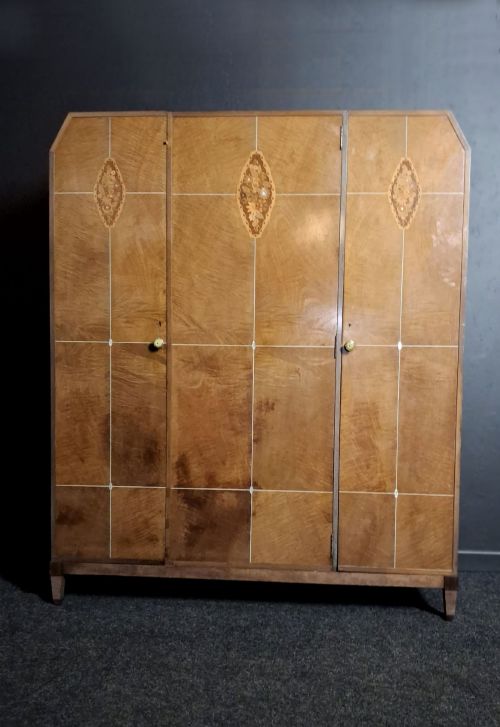
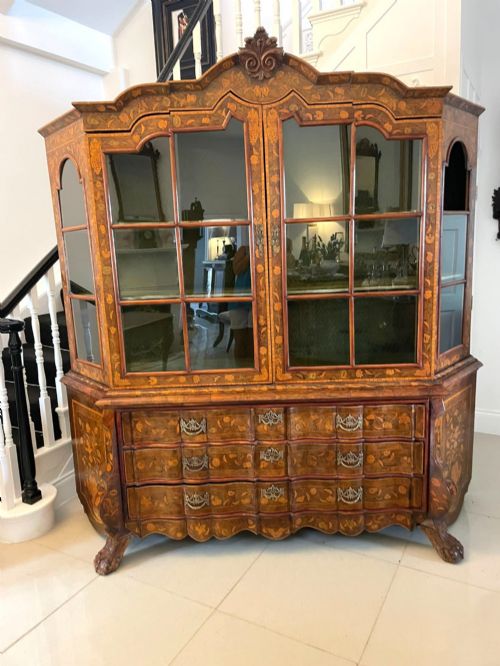
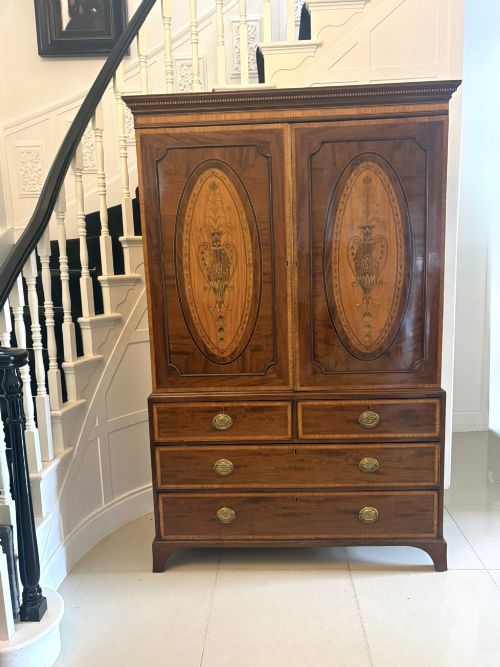
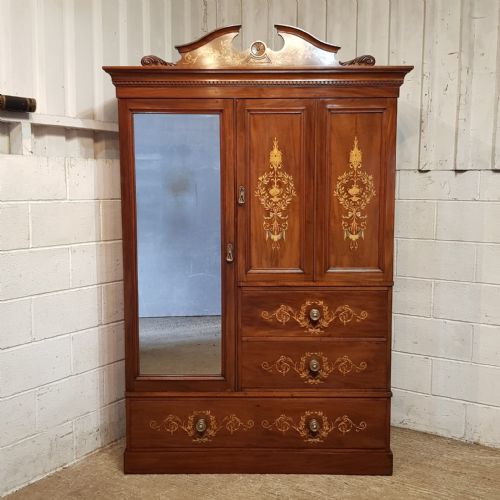
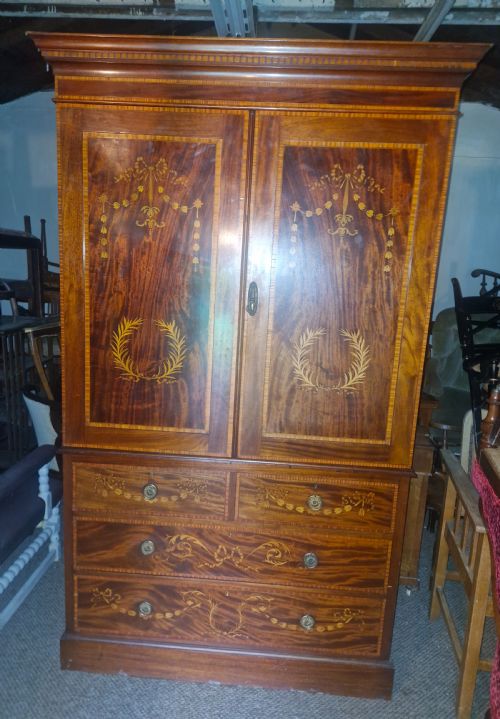
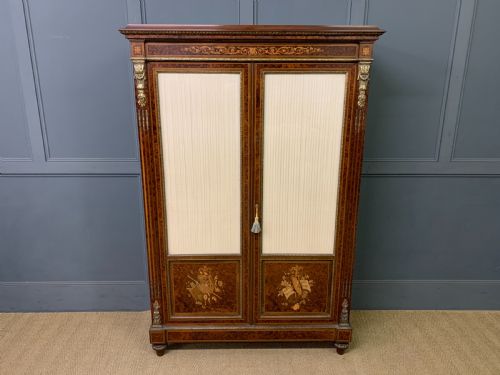
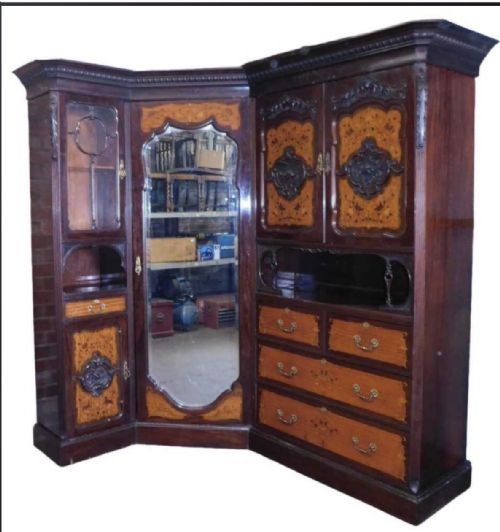
Marquetry inlaid armoire pieces are large storage furniture decorated with complex wood veneers, bringing warmth and intricate pattern into a bedroom.
Marquetry Inlaid Armoire
When you search for a marquetry inlaid armoire, you encounter substantial storage furniture spanning the Georgian, Victorian, and Edwardian periods, alongside Dutch Baroque and French styles. The selection includes wardrobes, linen presses, display cabinets, and bookcases designed for domestic storage.
Mahogany and satinwood predominate among the forms on this page, often built as large breakfront wardrobes, compactum units, or multi-section bedroom suites. Pieces range from eighteenth-century German and Dutch designs to late nineteenth-century Sheraton Revival interpretations.
Buyers frequently find that the line between a traditional armoire and a housekeeper's linen press blurs in these listings, as makers adapted cabinet designs for hanging garments and linen storage alike.
How they were made
Carpenters constructed these carcasses from structural timbers like oak, mahogany, and walnut, providing a stable foundation for decorative veneers. The outer surfaces receive detailed marquetry using contrasting woods such as satinwood, fruitwood, and rosewood, sometimes accented with brass fittings and glass panels.
The technique involves cutting thin sheets of different coloured woods to form floral or geometric patterns, which are then glued onto the cabinet frame. Master cabinetmakers balanced structural integrity with delicate surface decoration to ensure the large doors and panels remained stable over centuries.
Marquetry Inlaid Armoire Retail Price Guide 2026
Typical asking prices for marquetry inlaid armoire among the pieces listed under this phrase on Sellingantiques today, from the lower quarter to the upper quarter. They describe what is for sale here now, not the wider market.
Listings feature pieces built from oak, mahogany, satinwood, rosewood, walnut, and fruitwood across Georgian, Victorian, and Edwardian periods.
What varies in quality
The standard of the marquetry design separates standard production from exceptional cabinet work, seen in the crispness of the floral or geometric motifs and the precision of the veneer joints. Finer pieces employ a richer variety of contrasting timbers, such as amboyna and burr walnut, integrated seamlessly into the primary mahogany or satinwood carcass.
Construction methods also dictate the calibre of the piece, visible in the weight of the timber, the depth of the interior fittings, and the symmetry of the overall proportions. Master workshops achieved a harmonious balance between robust storage capacity and refined surface ornamentation.
Druce & Co.·Gaylayde, B Cohen & Sons·Edwards & Roberts·Gillows of Lancaster·Maples & Co
The Marquetry Inlaid Armoire Glossary
- Marquetry
- Decorative veneer work where pieces of contrasting wood are assembled to form pictorial or geometric patterns on a furniture surface. This technique requires steady hands and precise cutting to ensure tight joints between the various timber species.
- Compactum
- A multi-functional wardrobe designed with various internal compartments, drawers, and hanging space for efficient clothes storage. These fitted interiors represent a clever evolution in Victorian bedroom furniture.
- Linen Press
- A tall storage cabinet featuring upper sliding trays or shelves for linens and lower drawers for garments. Georgian and Victorian examples frequently showcase fine mahogany and satinwood inlay across their double doors.
- Satinwood
- A lustrous hardwood native to India and Sri Lanka, valued for its golden yellow colour and reflective grain. It serves as a primary timber and a contrasting veneer in late eighteenth and nineteenth-century pieces.
- Breakfront
- A cabinet design where the central section projects forward from the flanking outer sections. This architectural arrangement creates depth and visual interest on large wardrobes and bookcases.
Marquetry Inlaid Armoire: Frequently Asked Questions
What is a marquetry inlaid armoire?
A marquetry inlaid armoire is a large freestanding wardrobe or storage cabinet decorated with fitted wooden veneers in floral or geometric designs. These pieces combine practical storage with decorative surface artistry.
Craftsmen utilised various timbers like mahogany, satinwood, and walnut to build these functional items for bedrooms and antechambers across different centuries.
How do I care for my antique wardrobe?
Keep the wood away from direct heat sources and sudden humidity changes to prevent the delicate veneer from lifting or cracking. Regular dusting with a dry cloth helps maintain the finish.
Apply a quality wax polish occasionally to nourish the timber and preserve the subtle lustre of the marquetry work.
Can I dismantle a large wardrobe for moving?
Many large nineteenth-century wardrobes and compactum units were constructed with knockdown sections or removable cornice and plinth mouldings to aid transport. Inspect the internal joints and screw fittings to understand how the carcass disassembles.
Enlist professional help for heavy mahogany or burr walnut suites to avoid damaging the intricate veneer and glass panels.
How do I tell Victorian from Georgian pieces?
Georgian pieces from the eighteenth century typically display restrained proportions, rich mahogany or walnut timbers, and classical architectural details. Victorian examples often feature heavier proportions, mixed revival styles, and extensive satinwood or rosewood marquetry. Nail construction, interior lining papers, and overall carcass design help clarify the period of manufacture.