

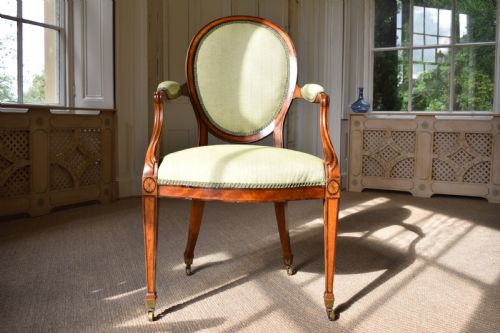
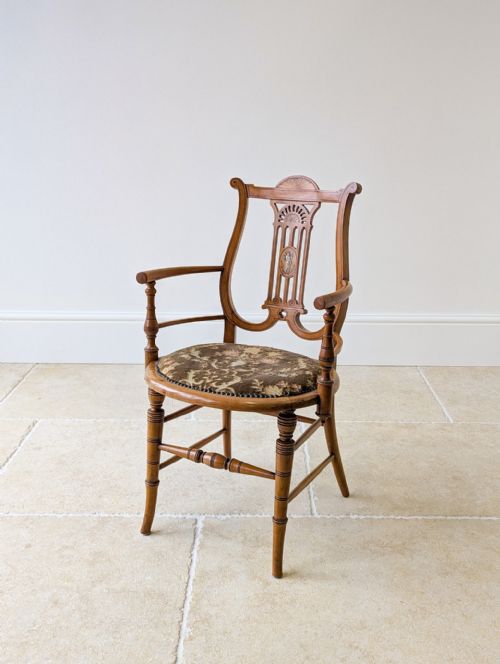
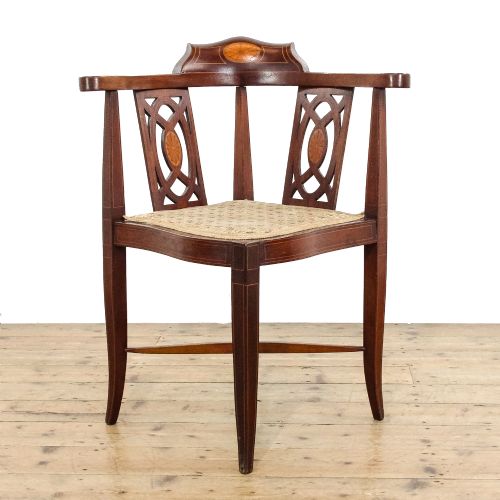

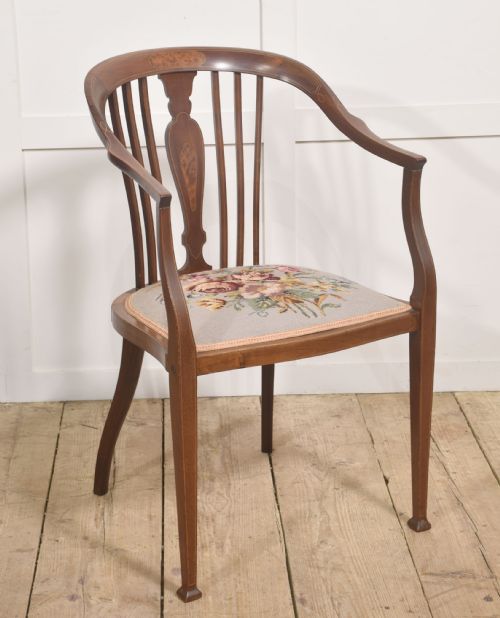


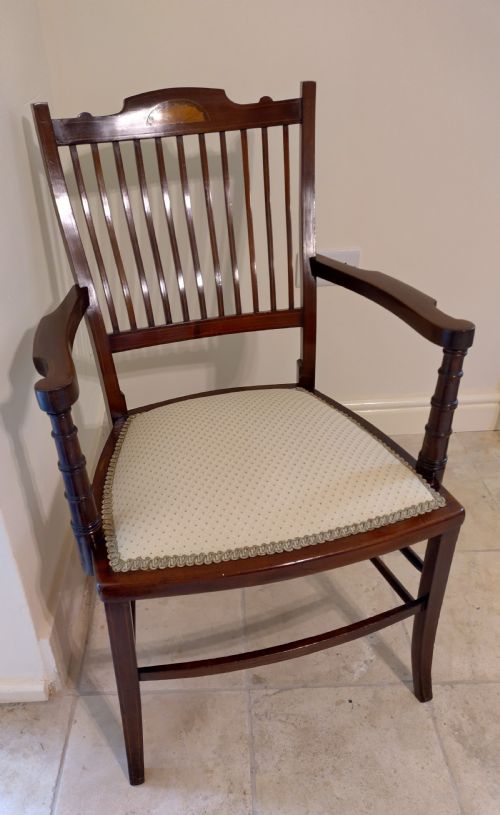

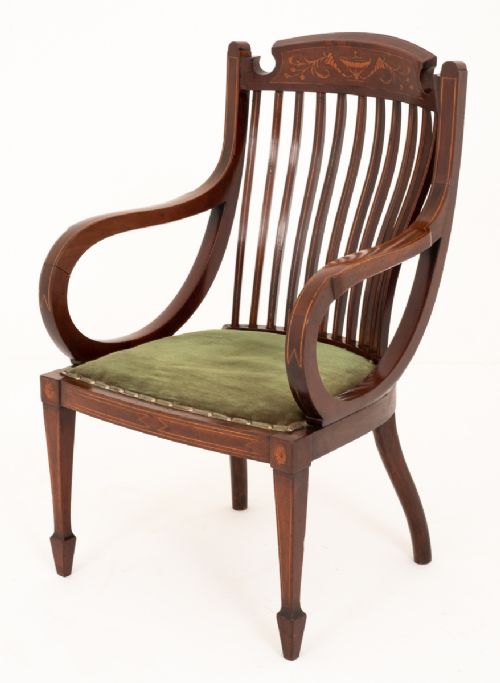
Marquetry Desk Armchair
These marquetry desk armchairs combine substantial seating with detailed floral or geometric wood inlay.
Marquetry Desk Armchair
A marquetry desk armchair provides a supportive seated position at a writing table while displaying decorative wood veneers on the backrest and frame. The selection here leans heavily towards Edwardian and Victorian examples, alongside earlier George III and eighteenth-century Dutch pieces.
Makers produced these chairs in various forms, including elbow chairs, swivel ship chairs, corner chairs, and library armchairs. The primary function remained practical desk work, though many served dual purposes in salons, bedrooms, and morning rooms.
Origins span English workshops of the Sheraton Revival style as well as continental Dutch centres known for elaborate floral patterning. Buyers encounter everything from simple inlaid occasional seating to substantial library chairs upholstered in fabric or re-leathered surfaces.
How they were made
Craftsmen built the structural frames using solid timbers such as mahogany, walnut, and satinwood, ensuring sufficient strength for daily sitting. Cabinetmakers shaped the armrests, legs, and back rails to accommodate both structural rigidity and aesthetic curves.
The characteristic ornamentation relies on marquetry inlay, utilising contrasting woods like boxwood and satinwood to create detailed pictorial or geometric designs. Artisans cut thin veneers of various timbers and fitted them precisely into prepared recesses on the chair frame.
Upholstery involved securing fabric or leather over supportive padding on the seats, sometimes incorporating brass tacks or specialised swivel mechanisms for desk functionality.
Marquetry Desk Armchair Retail Price Guide 2026
Typical asking prices for marquetry desk armchair among the pieces listed under this phrase on Sellingantiques today, from the lower quarter to the upper quarter. They describe what is for sale here now, not the wider market.
Listings feature mahogany, walnut, and satinwood frames decorated with boxwood and marquetry inlay across several centuries.
What varies in quality
The precision of the wood inlay creates the primary distinction between standard production and top-tier examples. Finer pieces show tight joints in the contrasting veneers without excessive filler, maintaining sharp lines in floral or geometric motifs.
The choice of timber and frame construction dictates durability and visual depth. Dense, well-figured mahogany or satinwood frames with robust joinery command greater respect than softer secondary woods.
Proportion and comfort elevate certain armchairs above ordinary seating. Well-balanced arm curves, supportive backrest angles, and harmonious integration of the marquetry distinguish master cabinetwork from simpler commercial output.
Shoolbred·Jenks & Wood
The Marquetry Desk Armchair Glossary
- Marquetry inlay
- Decorative patterns formed by fitting contrasting wood veneers into a prepared surface. This technique allows for complex pictorial or symmetrical designs across the backrest.
- Sheraton Revival
- A late nineteenth-century design movement inspired by the neoclassical furniture of George Thomas Sheraton. Pieces typically feature light timber framing, satinwood, and delicate classical motifs.
- Carver armrest
- A sturdy wooden arm fitted to an armchair or desk chair to provide support. These members are often shaped and polished to match the primary timber frame.
- Corner chair
- A seating form designed to fit into the corner of a room, featuring a diagonal seat and a continuous back rail supported by posts. Many examples include inlaid details on the splats.
- Satinwood
- A durable, yellowish timber prized for its lustrous grain and smooth finish. Cabinetmakers utilised it extensively for banding and contrasting inlays.
- Boxwood
- A dense, pale wood used for fine stringing and intricate inlay details. Its light colour provides sharp contrast against darker woods like mahogany.
Marquetry Desk Armchair: Frequently Asked Questions
How do I date a marquetry desk armchair?
Dating relies on stylistic clues, timber choice, and construction methods visible in the frame. Edwardian and Victorian pieces often show lighter mahogany framing with machine-assisted veneer work, while eighteenth-century examples feature heavier hand-cut Dutch marquetry.
Examining the underside and joinery helps confirm the period. Earlier chairs display traditional hand tools marks, whereas later revival pieces often incorporate standardised nineteenth-century manufacturing techniques.
Can I use these chairs at a modern desk?
Most antique desk armchairs function well at standard writing tables, provided the seat height and under-desk clearance match your needs. Many original designs were built specifically for office and library use.
Buyers should check the arm height to ensure the chair slides comfortably beneath the desk drawer. Some nineteenth-century examples even feature swivel mechanisms designed for working convenience.
What is the difference between an occasional chair and a desk chair?
Desk chairs typically feature sturdier armrests and supportive back angles designed for prolonged sitting while writing. Occasional chairs are lighter, often built for temporary seating in salons or bedrooms.
While both types may feature marquetry inlay, desk variants prioritize ergonomic support and robust frames to withstand daily shifting and movement.
How should I care for marquetry inlay?
Protect inlaid surfaces by keeping them away from direct sunlight and extreme humidity changes, which cause the wood veneers to dry and lift. Regular dusting with a soft, dry cloth preserves the finish.
Apply a microcrystalline wax sparingly to nourish the timber and protect the delicate contrasting woods without sealing moisture into the grain.