




Marquetry Commode Table
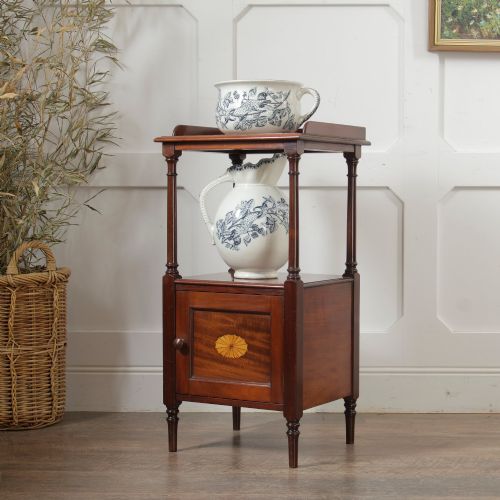
A marquetry commode table brings elaborate wood inlay and substantial storage to a room.
Marquetry Commode Table
When you search for a marquetry commode table, you encounter a variety of forms including bedside cabinets, chests of drawers, and console tables. These pieces originate from periods spanning the eighteenth century through to the early twentieth century, with strong representation from the Victorian and Georgian eras.
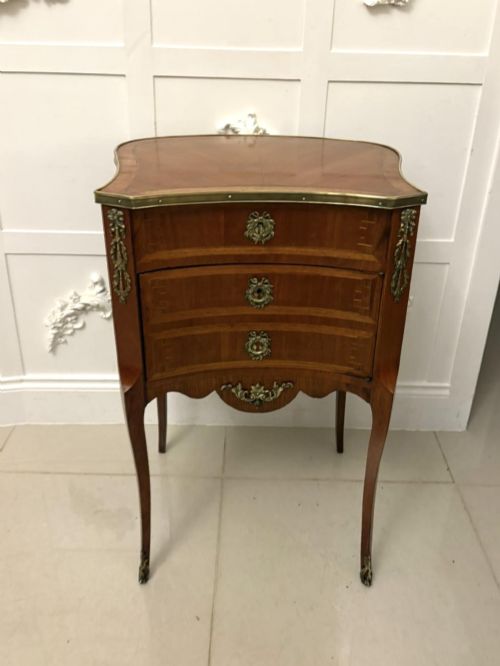
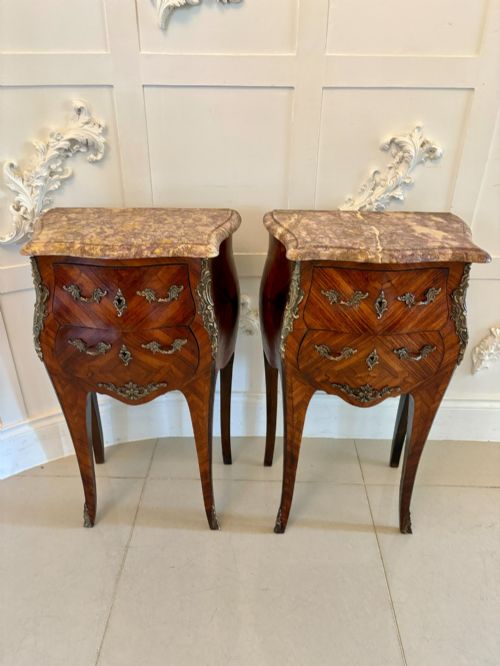
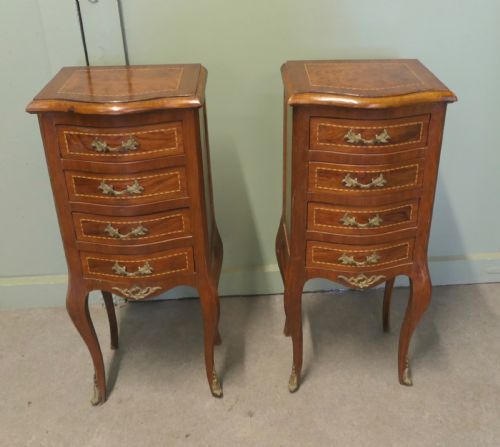
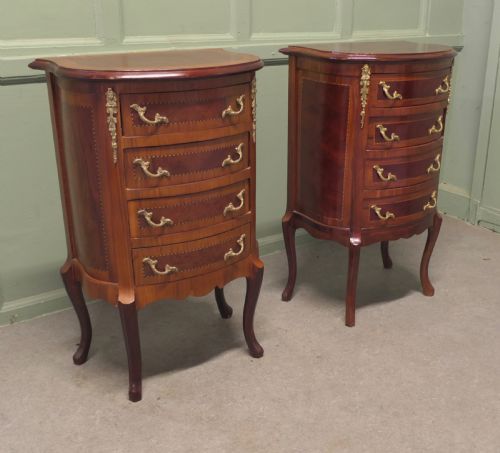
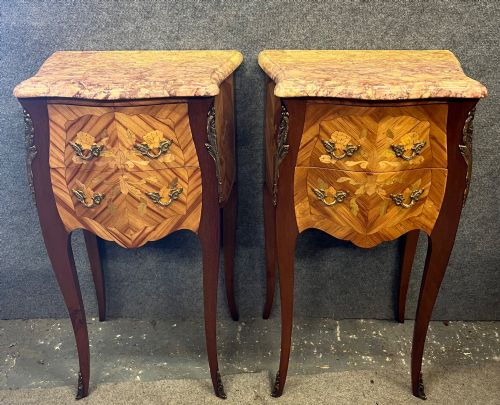
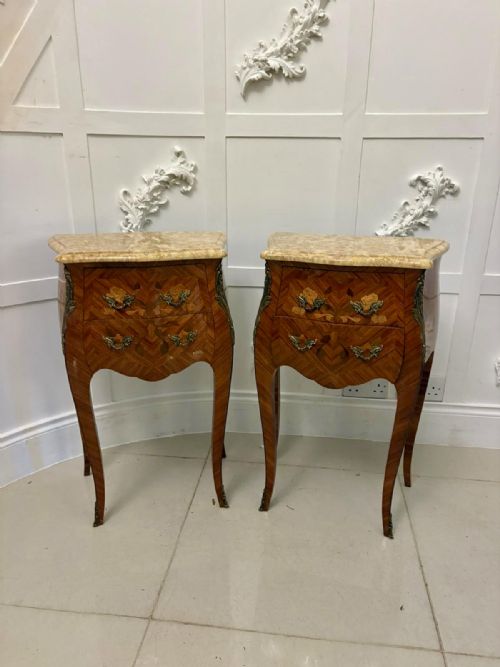
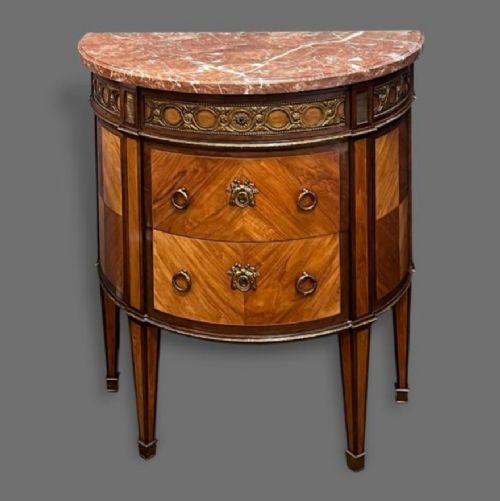
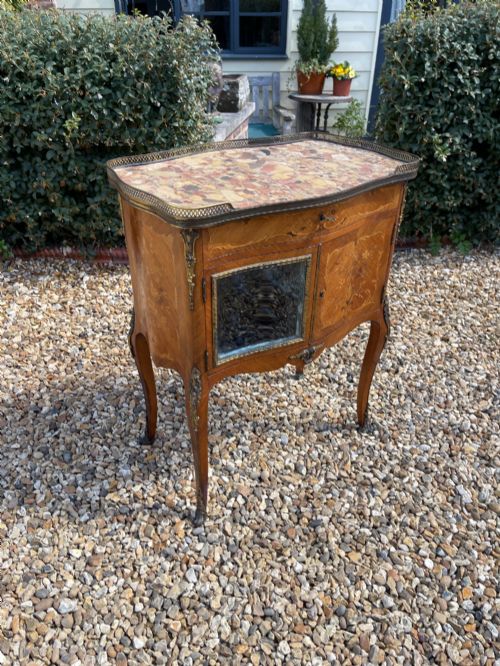
The most common formats on this page are French Louis XV style bedside cabinets and smaller chests featuring intricate wood veneers. Alongside these compact bedside tables, larger commodes and demi-lune side cabinets appear in walnut, mahogany, and satinwood.
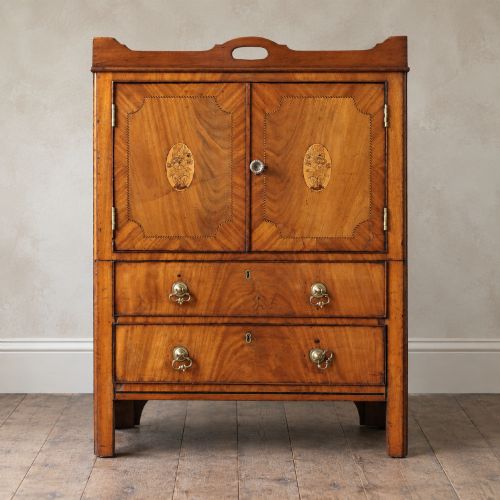
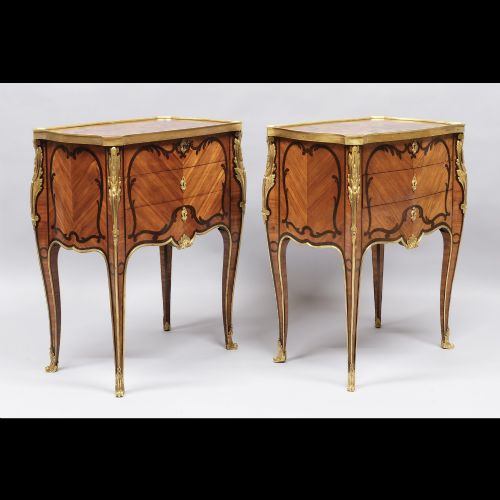
The designs draw heavily upon continental aesthetics, notably French Rococo Revival and Neoclassical styles. Makers utilised diverse shapes, ranging from serpentine and bombé profiles to straight-sided tray top night commodes.
How they were made
Construction relies upon carcases of timber such as mahogany or walnut, overlaid with decorative veneers including kingwood, rosewood, and satinwood. Artisans cut contrasting wood slices to form detailed floral and geometric marquetry patterns across the drawer fronts and cabinet doors.
Many examples incorporate thick marble tops, often shaped to follow the contours of the wooden base in demi-lune or bombé configurations. Cast or chased ormolu and gilt bronze mounts accent the corners, handles, and feet of the more ornate French pieces.
Marquetry Commode Table Retail Price Guide 2026
Typical asking prices for marquetry commode table among the pieces listed under this phrase on Sellingantiques today, from the lower quarter to the upper quarter. They describe what is for sale here now, not the wider market.
Listings feature items from the eighteenth, nineteenth, and early twentieth centuries, constructed in mahogany, walnut, kingwood, and satinwood.
What varies in quality
The refinement of the marquetry cutting and the choice of contrasting timbers dictate the visual impact of the surface. Finer examples display meticulous grain matching and precise pictorial inlay rather than repetitive stamped motifs.
Structural heft and the quality of secondary materials, such as heavy breche d'alep marble slabs and substantial gilt bronze or ormolu mounts, distinguish standard production from exhibition pieces.
Pietro Ferrario·Sormani
The Marquetry Commode Table Glossary
- Marquetry
- The art of applying pieces of veneer to a structure to form decorative patterns or pictures. This technique defines the surface decoration on these tables.
- Commode
- A low chest of drawers or cabinet originating in France. The listings include various sizes ranging from large reception room pieces down to bedside versions.
- Ormolu
- Gilded bronze used for decorative mounts and feet. It provides metallic contrast against dark woods like kingwood and mahogany.
- Bombe
- A swelling, outward-curving contour found on the sides and fronts of certain cabinets and chests. This bulbous shape requires considerable skill in veneer application.
- Demi-lune
- Half-moon shape, applied to tables and chests with a flat back and a curved front. These fit flush against a wall while offering a rounded profile.
Marquetry Commode Table: Frequently Asked Questions
What is a marquetry commode table?
A marquetry commode table is a decorative cabinet or chest of drawers adorned with intricate wood veneer patterns. These furnishings combine practical storage with elaborate surface decoration.
Origins range from eighteenth-century workshops to early twentieth-century revival pieces, predominantly following French and English cabinet-making traditions.
Where were these tables used?
These decorative items served multiple domestic functions across different rooms. Smaller variations functioned as bedside cabinets, lamp tables, or nightstands.
Larger versions stood in reception rooms and hallways as commodes, side cabinets, or console tables, often displaying decorative objects upon their marble surfaces.
How do I distinguish eighteenth-century pieces?
Eighteenth-century examples display construction methods, timber selections, and hand-cut veneers characteristic of the Georgian and Louis periods. Examination of the interior secondary woods provides clues to age.
Later nineteenth- and twentieth-century pieces often revive these earlier styles, using similar materials but exhibiting different manufacturing tolerances and hardware.