



Marquetry Buffet Table
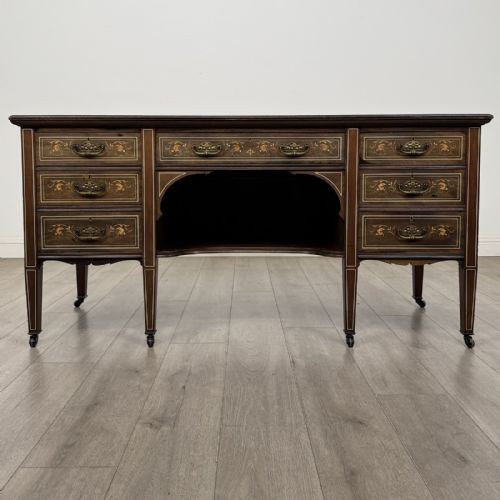
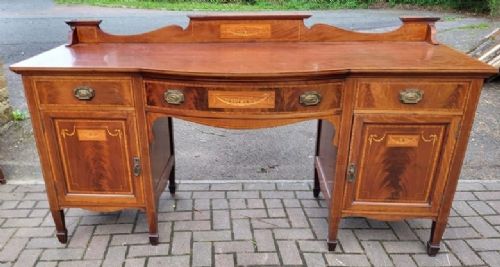
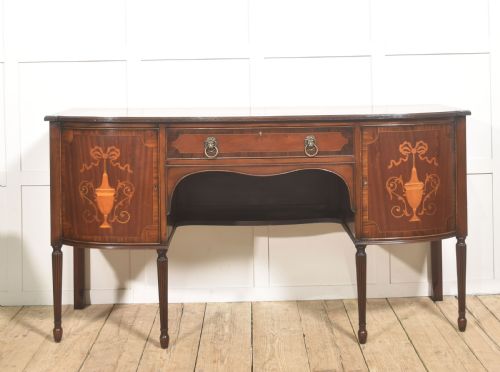
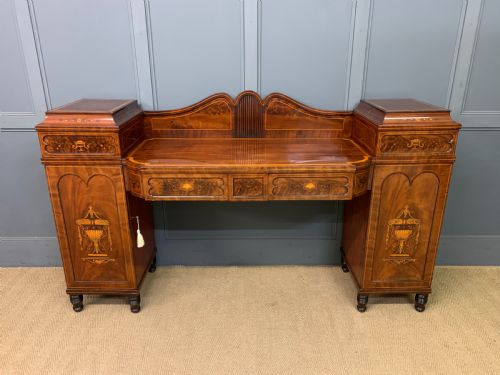
These marquetry buffet table listings bring together mahogany, satinwood and walnut pieces designed for grand dining rooms.
Marquetry Buffet Table
A marquetry buffet table provides formal serving storage and display space for dining rooms, typically taking the form of a sideboard or tiered serving table. When you search for a marquetry buffet table, you encounter sideboards, commodes and dumb waiters spanning the eighteenth century through the Edwardian period.
The pieces appearing here include George III, Sheraton Revival and Edwardian examples executed in mahogany, flame mahogany and walnut. These foundational dining room pieces range from large breakfront sideboards to smaller tiered dumb waiters.
Materials and construction
Cabinetmakers constructed these pieces primarily from solid mahogany and flame mahogany veneers, frequently incorporating walnut for darker tonal variations. Secondary woods provide structural integrity beneath the polished exterior surfaces.
Decorative surface patterns rely on satinwood and boxwood inlay, alongside complex marquetry arrangements. Brass hardware accents the doors and drawers while marble tops appear on specific continental forms like Louis XVI style commodes.
Marquetry Buffet Table Retail Price Guide 2026
Typical asking prices for marquetry buffet table among the pieces listed under this phrase on Sellingantiques today, from the lower quarter to the upper quarter. They describe what is for sale here now, not the wider market.
The listings span from the 18th Century through the Edwardian era, featuring mahogany, walnut, and satinwood.
Assessing quality and execution
Quality reveals itself in the precision of the satinwood and boxwood inlay work, where crisp botanical or geometric motifs integrate seamlessly into the mahogany groundwork. Finer pieces demonstrate superior timber selection, utilising heavily figured flame mahogany veneers across the primary facades.
Structural refinement distinguishes the master cabinetmaker's output from simpler provincial work, particularly in the joinery of curved breakfront frames and tiered dumb waiter columns. The sophistication of the marquetry design and the preservation of the original polished surface dictate the standing of each piece.
Howard And Sons
The Marquetry Buffet Table Glossary
- Marquetry
- Decorative veneer work arranged in pictorial or geometric patterns using various coloured woods. This technique requires meticulous hand-cutting and fitting of individual wooden segments.
- Satinwood
- A durable hardwood yielding a lustrous, golden-yellow grain often utilised for contrasting stringing and inlay. Cabinetmakers favoured it for bright decorative details against dark mahogany.
- Breakfront
- A cabinet or sideboard facade featuring a central section that projects forward from the flanking wings. This architectural arrangement creates depth and shadow across the frontal elevation.
- Dumb waiter
- A tiered serving table fitted with multiple rotating or stationary circular shelves supported by a central pillar. These pieces stood beside dining tables to hold dishes without requiring servants.
- Flame mahogany
- Timber cut from the fork of the mahogany tree where the branch meets the trunk, producing a distinctive flickering flame pattern. This highly decorative veneer appears on principal display surfaces.
Marquetry Buffet Table: Frequently Asked Questions
What is a marquetry buffet table?
A marquetry buffet table refers to formal dining room serving furniture decorated with intricate wood veneer patterns. These pieces function as sideboards, commodes or tiered serving surfaces.
They provide enclosed storage and display space, incorporating materials like mahogany, satinwood and walnut with detailed boxwood inlay.
How do I date an antique sideboard?
Dating relies on examining the prevailing architectural styles, construction methods and timber choices visible across different periods. Eighteenth-century examples feature distinct proportions compared to later Edwardian and Sheraton Revival revivals.
Cabinetmaking techniques and secondary woods inside the drawers also help confirm the era of manufacture.
Where were these pieces used?
These serving pieces originated in formal dining rooms and reception halls of substantial residences. They held silver, glassware and serving dishes during large meals.
Smaller tiered versions stood beside dining tables to serve courses without constant domestic assistance.
How do I care for mahogany and marquetry?
Maintain these polished wood surfaces by keeping them away from direct sunlight and sudden temperature fluctuations. Regular dusting with a soft, dry cloth preserves the finish.
Apply high-quality beeswax sparingly when the timber appears dry, avoiding modern liquid silicones entirely.