

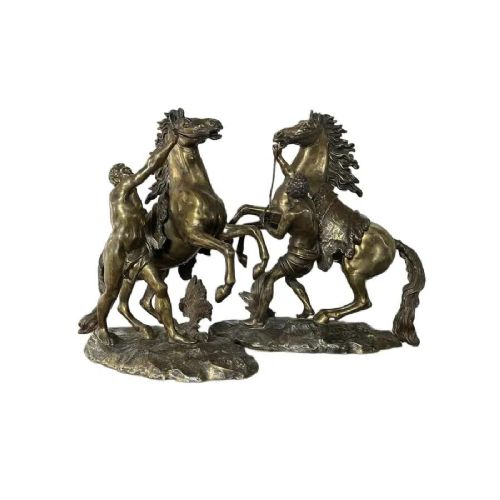
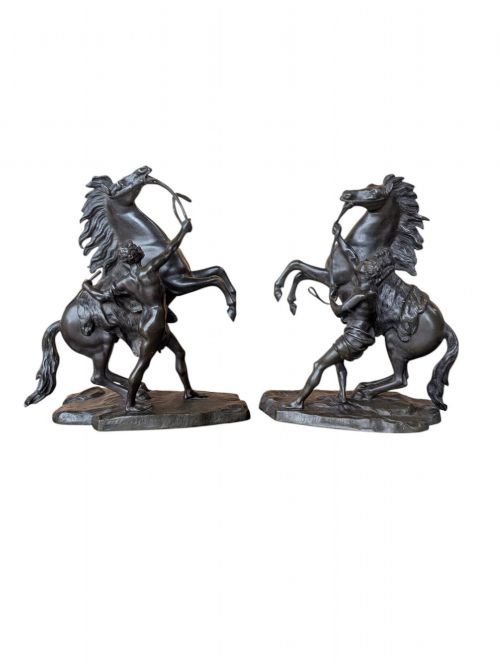
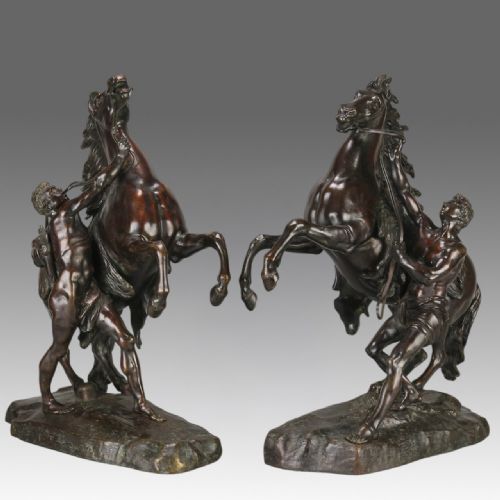


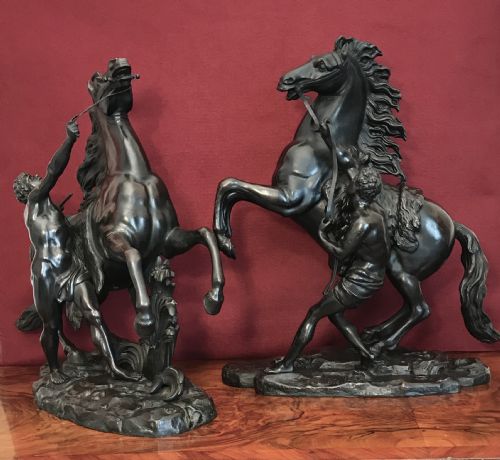
Marly Horses Statues
These marly horses statues capture the dramatic tension of rearing equine sculpture, bringing classical French equestrian design into the room.
Marly Horses Statues
These marly horses statues represent the famous monumental equine sculptures designed originally for the royal chateau of Marly, depicting handlers restraining powerful rearing stallions. You will most frequently encounter these pieces cast as pairs, capturing the symmetric energy of the original French Neoclassical design.
The selections span the nineteenth century through the Victorian era and into the nineteen twenties, showing how the subject endured across generations. Sculptures and figurines appear in both matched pairs and single figures, reflecting various interpretations of the original Coustou composition.
Originating largely from French nineteenth century workshops, these bronzes and figures bring distinct neoclassical weight to a study, mantelpiece, or hallway. The physical presence of each piece relies heavily on the muscular rendering of the horses and the strained posture of the accompanying groom.
Materials and casting methods
Foundry work relies heavily on bronze, patinated bronze, and bronzed metal, alongside alternative media such as spelter and glazed porcelain. Makers applied dark patinas or painted finishes to highlight the musculature of the horses and the drapery of the groom.
Castings after Guillaume Coustou demonstrate traditional foundry techniques of the period, often incorporating signatures or attribution to makers like Charles Crozatier. Royal Dux examples introduce ceramic traditions, utilising fine glaze and porcelain shaping to render the same equine subject.
Marly Horses Statues Retail Price Guide 2026
Typical asking prices for marly horses statues among the pieces listed under this phrase on Sellingantiques today, from the lower quarter to the upper quarter. They describe what is for sale here now, not the wider market.
Even when cast in metal, the grooms in these sculptures still manage to look thoroughly exasperated by the rearing horses.
Assessing the cast and finish
The definition in the cast separates finer examples from simpler metalwork, particularly in the rendering of facial expressions, veins, and harness details. Sharper definition in the bronze casting preserves the intense struggle between the horse and handler intended by the original sculptor.
Surface finish and patina integrity dictate the visual depth of the metal, where original patination shows gentle ageing rather than flat modern coatings. Heavier bronze compositions command greater presence than lighter spelter or bronzed metal alternatives.
Charles Crozatier·Royal Dux
The Marly Horses Statues Glossary
- Patinated bronze
- Bronze treated with chemical solutions to produce a specific surface colour, ranging from deep brown to golden tones. This finish protects the metal and accentuates sculptural detail.
- Spelter
- A zinc alloy commonly utilised as a less costly substitute for bronze in nineteenth-century figures. It is often given a bronzed finish to mimic heavier metal.
- Neoclassical
- A style drawing inspiration from classical antiquity, dominant in French art and sculpture. It emphasises noble simplicity and dramatic yet controlled movement.
- Glaze
- A glassy coating applied to ceramic figures and fired to mature the surface. In porcelain pieces, it provides both colour and a protective glossy seal.
Marly Horses Statues: Frequently Asked Questions
What are Marly horses?
Marly horses are iconic equine sculptures originally commissioned for Louis XIV, depicting powerful rearing stallions restrained by grooms. The design is celebrated for its dramatic tension and anatomical precision.
Copies and interpretations were widely produced by nineteenth-century foundries, making the motif a staple of neoclassical interior decoration.
Are these figures sold as pairs?
Many examples appear as balanced pairs, reflecting the original twin installation commissioned for the watering place at Marly. Symmetrical pairs were designed to face one another across a hall or mantelpiece.
Single figures also occur, offering a more compact option for smaller spaces while retaining the strong equine silhouette.
How do I identify bronze from spelter?
Bronze is heavier, colder to the touch, and rings with a clear tone when tapped gently. It accepts traditional patination deeply and resists bending.
Spelter is softer, lighter, and often reveals a silvery grey metal beneath worn areas of its bronzed surface coating.
Where should I place these statues?
These substantial figures suit prominent locations such as a large mantelpiece, a library table, or a dedicated pedestal. Their strong vertical lines draw the eye upward in traditional interiors.
Keep them away from direct heat sources and moisture to preserve the stability of the metal patina or porcelain glaze.