






Market Scene Painting
These market scene painting works capture the vibrant bustle of daily commerce, offering collectors a window into historical town squares and local trade.
Market Scene Painting
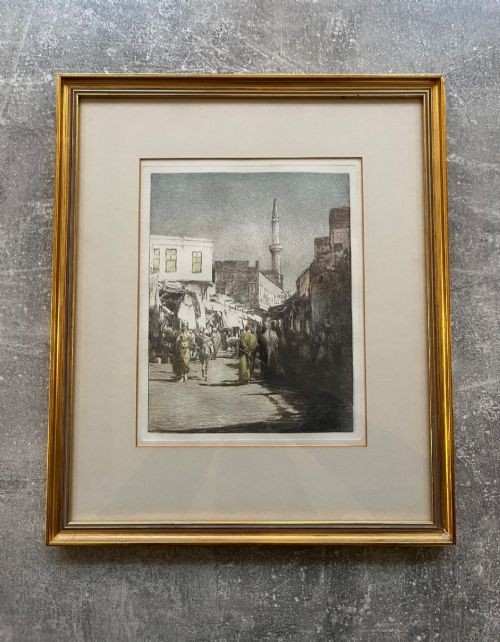
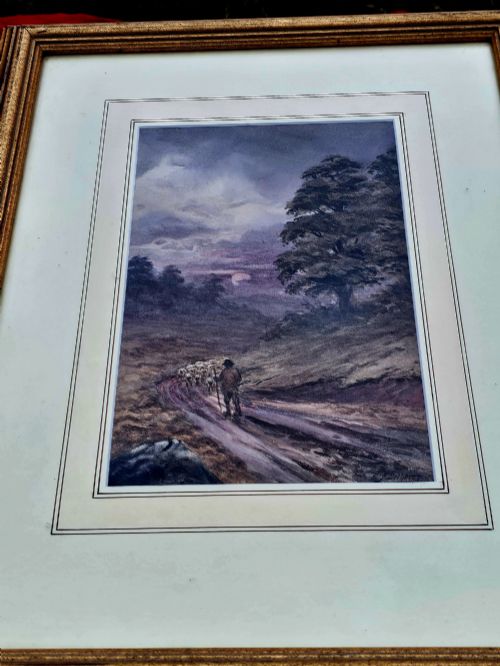
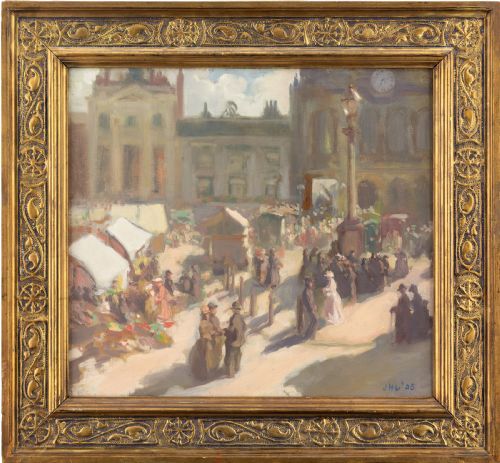
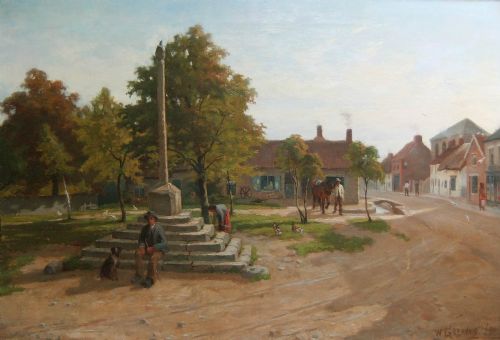
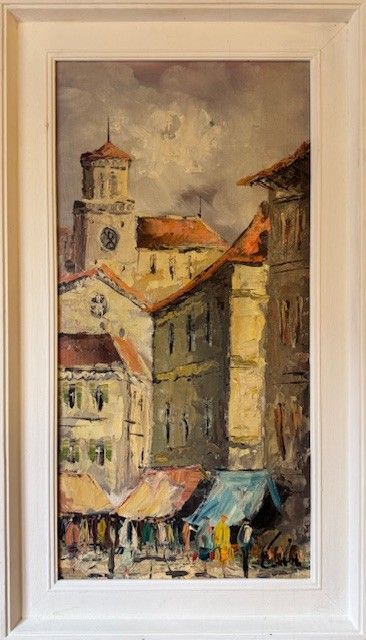
When you search for market scene painting, you encounter works capturing the daily bustle of town squares, local trade, and rural commerce from various historical periods. The examples on this page span from the nineteenth century through to the mid-twentieth century, recording public life across Britain, France, Belgium, and beyond.
Most pieces meet you in oil on canvas, oil on panel, or watercolour on paper, framed in giltwood or simple wood surrounds. You will find British Impressionism, Victorian realism, and mid-century interpretations sitting side by side, reflecting how different artists recorded the movement and atmosphere of a busy trading day.
How they were made
Artists relied primarily on oil paint applied to canvas or wood panels, alongside watercolours worked on paper. These mediums allowed painters to capture shifting light across crowded public squares and the varied textures of produce stalls and garments.
Many works incorporate tempera on canvas or utilise traditional giltwood frames that complement the tonal balance of the composition. The handling ranges from tight Victorian detail to the looser brushwork characteristic of British and continental impressionism.
Market Scene Painting Retail Price Guide 2026
Typical asking prices for market scene painting among the pieces listed under this phrase on Sellingantiques today, from the lower quarter to the upper quarter. They describe what is for sale here now, not the wider market.
Several canvases manage to make bustling vegetable sellers look like dignified senators.
What varies in quality
Quality rests in the handling of light, atmosphere, and human movement within a crowded composition. Stronger works manage depth and perspective skilfully, making the figures and architecture feel grounded rather than flat.
The sensitivity of the palette and the preservation of the original medium dictate the visual impact of the piece. Finer examples retain crisp brushwork and harmonious colour relationships that convey the genuine energy of a historic trading day.
Thomas Ellison·John Hodgson Lobley·William Greaves·Cornelis Christian Dommersen·Ernst Louizor
The Market Scene Painting Glossary
- Watercolour
- A painting method where fine pigment is suspended in a water-based, translucent solution. It is typically applied to paper to achieve luminous, delicate effects.
- Oil on Canvas
- A technique using pigments bound in a drying oil, most commonly linseed, applied stretched woven fabric. This combination allows for rich blending and textured impasto work.
- Giltwood
- Wood carved and coated with a thin layer of gold leaf or metallic gilt powder. It is frequently found on traditional picture frames from the nineteenth and early twentieth centuries.
- Genre Scene
- An artwork depicting aspects of everyday life by portraying ordinary people occupied in common activities. These compositions offer valuable social history alongside artistic merit.
- Impressionism
- A nineteenth-century painting style marked by relatively small, thin, yet visible brush strokes and an open composition. It emphasises accurate depiction of light and its changing qualities.
Market Scene Painting: Frequently Asked Questions
What periods do these paintings cover?
The works span from the late nineteenth century through the Edwardian era and into the mid-twentieth century. Artists recorded bustling public squares using styles ranging from Victorian realism to mid-century impressionism.
This broad chronological spread allows collectors to trace how painters adapted their techniques to capture the energy of local commerce across different decades.
Where were these market scenes set?
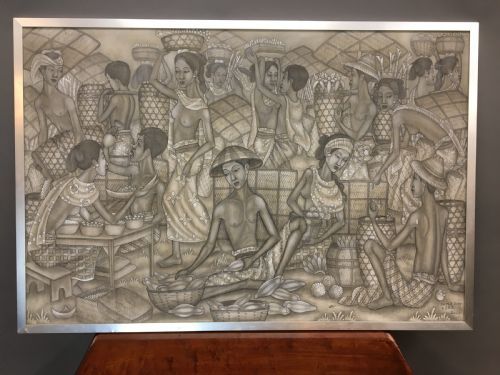
The locations stretch across British towns like Whitby and Huddersfield, as well as continental European settings in France, Belgium, and the Netherlands. You will also find international examples originating from Bali and Haiti.
Each region brings distinct architectural backdrops and local costume to the composition, anchoring the mercantile activity in a specific geographic tradition.
How should I frame and display them?
Many works arrive in their original giltwood or wood frames, which complement the period aesthetic of the canvas or paper. Hanging them away from direct sunlight protects watercolours and oils from fading over time.
Providing stable indoor humidity levels ensures that both the paper supports and the wooden panels remain preserved for years to come.
What is the difference between oil and watercolour here?
Oils are painted on canvas or wooden panels, offering heavier texture, richer depth of colour, and greater durability. Watercolours are worked on paper, presenting a lighter, more translucent quality that relies on the white of the paper for luminosity.
Both mediums were utilised effectively by artists of the period to capture the shifting light and lively atmosphere of a busy marketplace.