



Maritime Weather Instrument
A maritime weather instrument is a practical tool for measuring atmospheric conditions at sea, prized for its robust build and historical utility.
Maritime Weather Instrument
A maritime weather instrument encompasses barometers, barographs, pocket forecasters, and marine stick barometers designed to record pressure and atmospheric changes. When you search for maritime weather instrument, you encounter pieces originating primarily from the Victorian and Edwardian eras, reflecting the high period of maritime navigation and scientific instrument making.
Most examples hail from the Victorian period, frequently showing specific maker signatures from London workshops alongside specialised designs such as RNLI type aneroid barometers and typhoon barometers. These objects bridge the gap between functional marine equipment and decorative interior pieces.
Materials and construction methods
Makers housed these sensitive mechanisms in durable woods like mahogany, oak, rosewood, and beechwood to withstand humid marine environments. Brass and chrome provided sturdy outer rims, bezels, and bulkhead cases that resisted corrosion on deck.
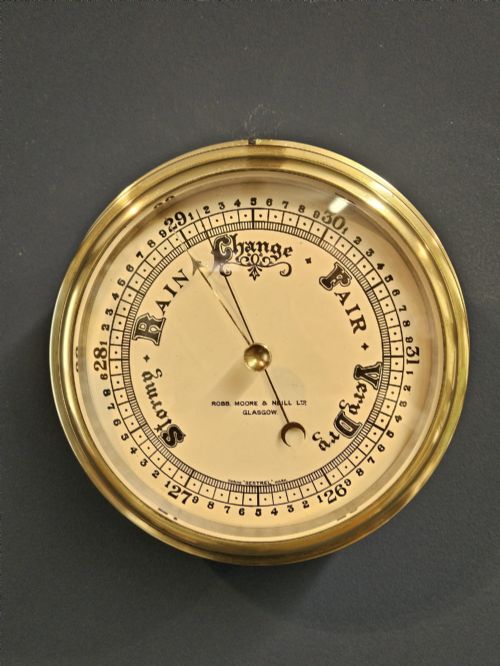
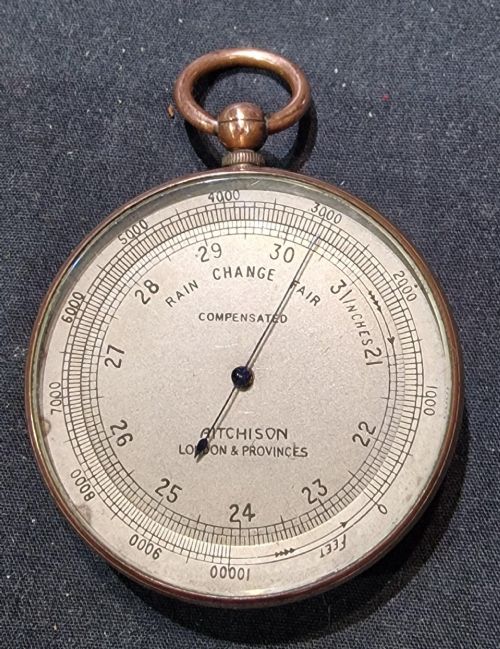
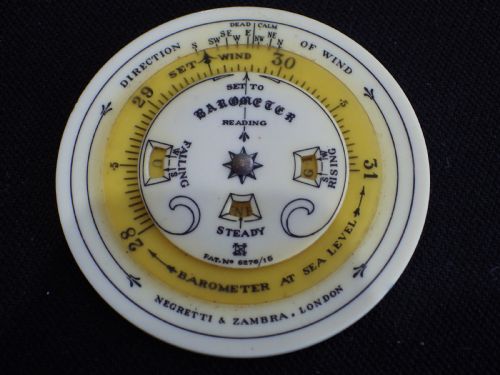
Dials were commonly fashioned from silvered metal with crisp, engraved graduations, often protected by thick bevelled glass lenses. Internal movements combined steel and brass components, while pocket versions sometimes integrated celluloid and enamel details for portable forecasting.
Maritime Weather Instrument Retail Price Guide 2026
Typical asking prices for maritime weather instrument among the pieces listed under this phrase on Sellingantiques today, from the lower quarter to the upper quarter. They describe what is for sale here now, not the wider market.
Listings span the Victorian and Edwardian eras, utilising brass, mahogany, oak, and silvered metal across barometer and clock forms.
Assessing quality and craftsmanship
Quality rests in the precision of the maker's movement and the crispness of the engraved silvered metal dial. Finer instruments originate from established scientific instrument houses, offering superior mechanical reliability and clearer graduations.
Cabinetwork distinguishes the range, with dense hardwoods like mahogany and rosewood showing superior joinery compared to simpler secondary timbers. Original boxes, instructions, and matched pairs like bulkhead clocks elevate the integrity of the piece.
GAUPP & CO HONGKONG & SINGAPORE·Elliott Brothers 449 Strand London·NEGRETTI & ZAMBRA·M Pillischer of Bond Street London
The Maritime Weather Instrument Glossary
- Barometer
- An instrument measuring atmospheric pressure, used by mariners to forecast changes in weather. It forms the core of most marine weather apparatuses.
- Barograph
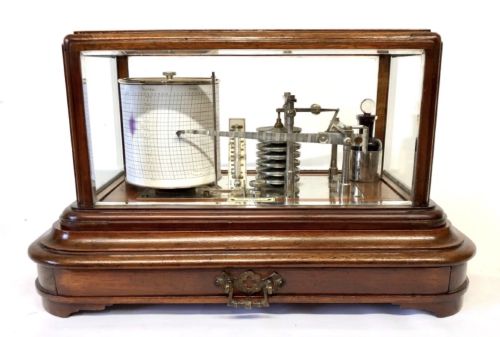
- A recording barometer that graphs atmospheric pressure over time onto a revolving drum. This provides a continuous visual history of weather patterns.
- Bulkhead barometer
- A sturdy weather instrument designed to be fixed directly to the wall of a ship cabin or chartroom. These typically feature heavy brass bezels and mounting flanges.
- Stick barometer
- A tall, vertical barometer relying on a column of mercury to indicate pressure shifts. Marine versions often used gimbal mountings to stay level on rolling seas.
- Aneroid barometer
- A barometer that uses a small, flexible metal box called an aneroid cell to measure pressure without liquid mercury. This design allowed for portable pocket instruments and robust ship models.
Maritime Weather Instrument: Frequently Asked Questions
What is a maritime weather instrument?
A maritime weather instrument is a scientific device used to measure atmospheric pressure and forecast weather conditions, built specifically for use at sea or styled in a nautical aesthetic.
These pieces include wall-mounted bulkhead barometers, portable pocket forecasters, and complex mahogany barographs dating from the Victorian and Edwardian periods.
How were these instruments used at sea?
Mariners relied on these instruments to anticipate sudden weather shifts, storms, and typhoons by monitoring changes in barometric pressure.
Bulkhead models were secured in ship cabins to remain stable during voyages, while pocket versions allowed captains to take readings on deck or ashore.
How do I style a maritime weather instrument at home?
These instruments suit studies, hallways, or living rooms, particularly when mounted on wood-panelled walls or placed on mahogany surfaces.
Pairing a bulkhead barometer with a matching clock creates a classic nautical arrangement that reflects traditional maritime decor.
How do I tell Victorian from Edwardian pieces?
Victorian instruments often feature heavier rosewood or oak housings and ornate brasswork associated with mid to late nineteenth-century craftsmanship.
Edwardian examples frequently introduce lighter woods, cleaner lines, and alternative materials like chrome as the twentieth century progressed.