




Maritime Desk Instrument
These maritime desk instrument examples combine brass, glass, mahogany and leather to bring navigation into the study.
Maritime Desk Instrument
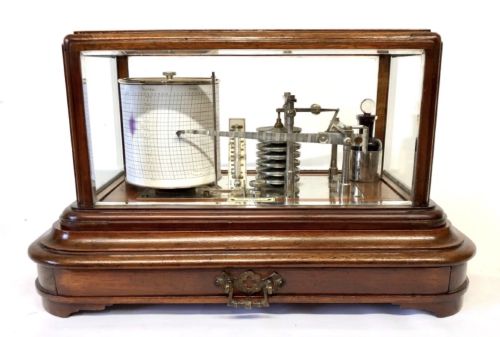
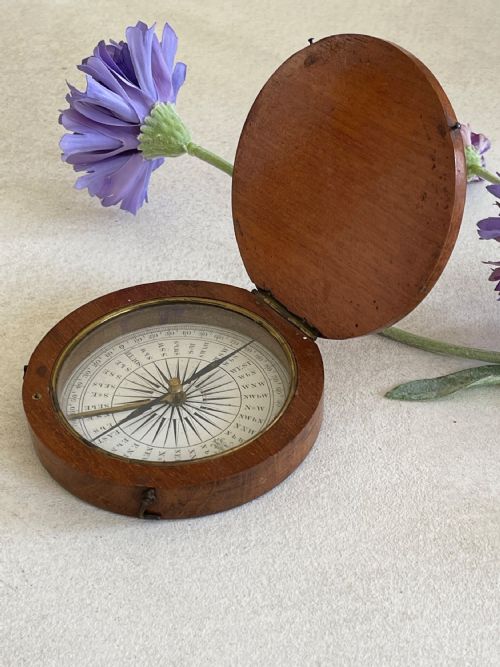
A maritime desk instrument represents the practical tools of navigation and meteorology adapted for interior use, spanning barographs, compasses, hourglasses and tabletop telescopes.
The version most commonly met on this page is the brass-fitted mahogany cased instrument, frequently dating from the Victorian and nineteenth century periods.
Collectors encounter scientific instruments, barometers, hourglasses, pocket compasses and tabletop telescopes originating from Georgian, Regency, Edwardian and Victorian workshops.
Materials and construction
Maker workshops utilised durable brass and polished mahogany or oak to house delicate mechanisms, compass cards and optical lenses.
Leather dressing and nickel plating appeared on later telescopic and exploratory equipment to protect the metal tubes from wear during handling.
Materials documented across the collection include glass, brass, leather, mahogany, wood, oak, steel, and sand.
Distinguishing quality
The upper tier of pieces displays crisp maker signatures, such as Cary London or John Gilbert, alongside precise mechanical adjustments and clean glass optics.
Simpler or unsigned pieces lack the refined graduation of compass dials and the precise optical clarity found in specialised London-made instruments.
GAUPP & CO HONGKONG & SINGAPORE·Cary London·John Gilbert
The Maritime Desk Instrument Glossary
- Barograph
- A self-recording barometer that graphs atmospheric pressure onto a revolving drum. This mechanical device relies on vacuum chambers to track weather shifts.
- Spyglass
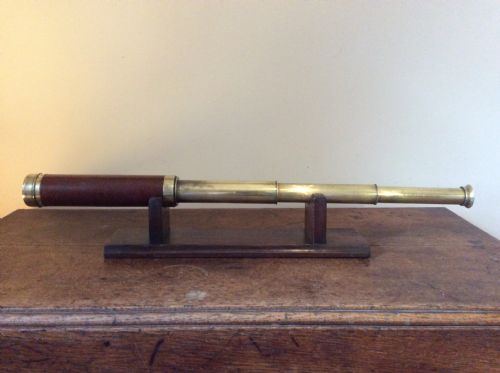
- A small hand-held refracting telescope. These optical instruments typically feature brass draws wrapped in leather.
- Decagonal
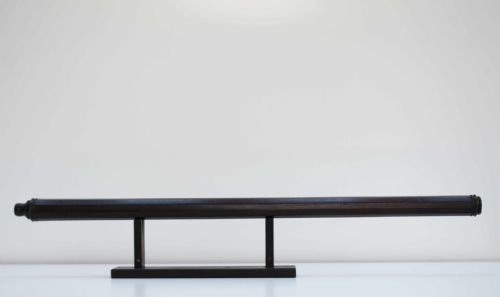
- Having ten sides. This geometric shape appears on specific eighteenth-century telescope barrel bodies.
- Non achromic
- An optical lens design that predates the correction of chromatic aberration. These early lenses produce slight colour fringes around bright objects.
- Gaupp and Co
- A colonial firm operating in Hong Kong and Singapore. Their workshop retailed scientific and meteorological instruments to travellers.
Maritime Desk Instrument: Frequently Asked Questions
What is a maritime desk instrument?
These pieces are navigational and weather-measuring devices adapted for tabletop use in studies and offices.
They combine brass, glass, wood and leather to serve both functional and decorative roles.
How were brass telescopes used indoors?
Tabletop telescopes allowed owners to view distant objects from a study window or observe weather conditions across open land.
Mounted on adjustable stands, these instruments provided steady magnification without requiring hand-held support.
How do I identify a Victorian piece?
Victorian examples frequently pair heavy brass fittings with polished mahogany cases and robust mechanical builds.
Maker signatures and style descriptions in the listings help confirm this nineteenth-century origin.
Are these instruments still accurate?
Many barographs and compasses retain their mechanical capability, though older optical glass serves primarily for study and display.
These pieces function best as historical study objects rather than precise modern navigational tools.